Invest1 publisher2 min readPublished
Qatar's two-month LNG milestone rebuilds two of its three daily cargoes
QatarEnergy is aiming at half of pre-conflict capacity a month after safe passage through Hormuz is confirmed and about 80% two months in. The two Ras Laffan trains Iranian missiles hit sit outside both figures.
The Investor · Invest desk
What happened
- QatarEnergy's roadmap targets about 50% of pre-conflict LNG production capacity within one month of safe passage through the Strait of Hormuz being confirmed, and around 80% within two months.
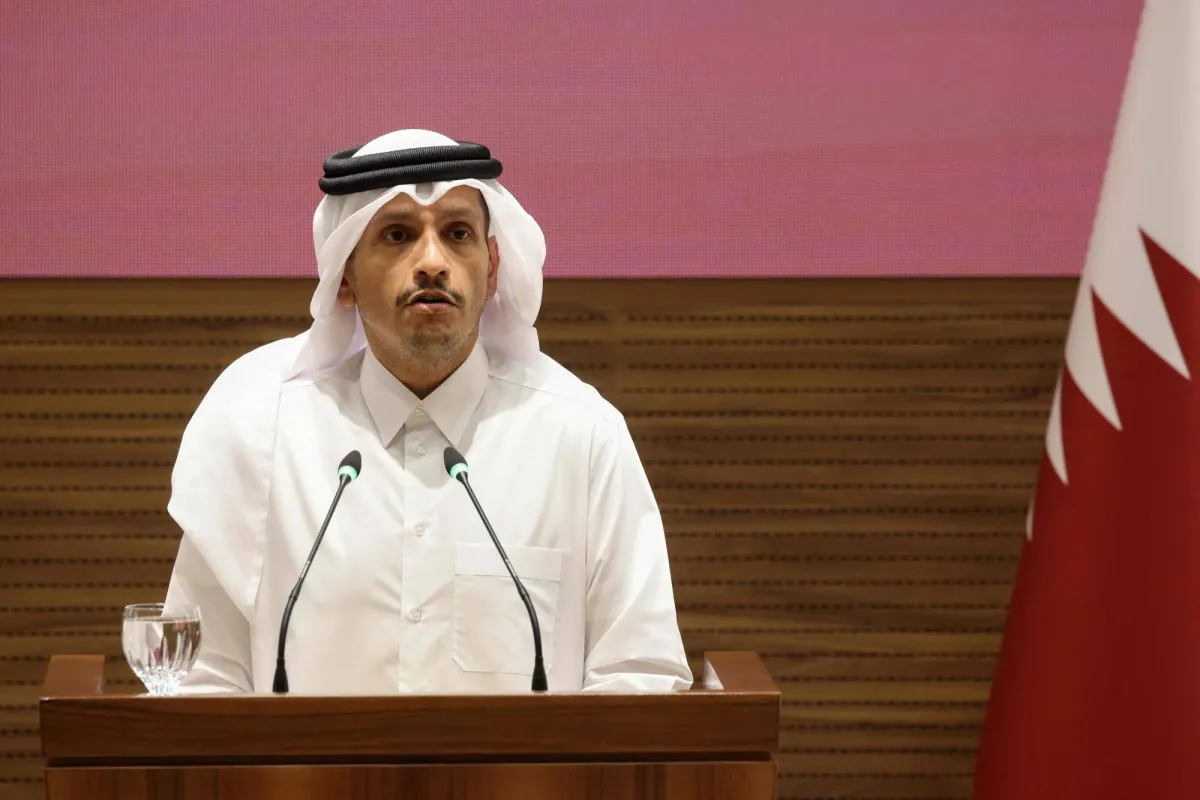
- Prime Minister Sheikh Mohammed bin Abdulrahman al-Thani confirmed the government's commitment to that timeline while excluding facilities damaged by Iranian missile strikes from the near-term window.
- Iranian missiles hit two liquefaction trains at Ras Laffan, Qatar's primary export hub, and those two trains account for approximately 17% of the country's total export capacity.
- Repairs to the struck trains are projected to take three to five years, leaving that capacity offline for the better part of this decade.
- Output curtailments began in early March 2026 as shipping disruption made cargo movements untenable, pulling flows well below a pre-conflict baseline of roughly three LNG cargoes a day.
Compiled by The InvestorSomething wrong?How this is made
Why it matters
- constraint A buyer who models a return to February 2026 volumes off the two-month milestone is working from the wrong base: the ceiling stays about a third below pre-conflict, roughly one cargo a day, until Ras Laffan is rebuilt.
- contradiction The same account puts the 80% against pre-conflict capacity in one line and against undamaged facilities in another, and which one holds decides whether the residual gap is 20 points or 33.6.
- decision Traders sequencing positions have to price insurers, tanker supply and receiving-terminal slots before they price Doha's ramp, because those set when the one-month clock starts at all.
- cost Asian and European spot buyers have already paid the spike; the three-to-five-year piece asks them to carry a smaller premium for years. That is a term-contract problem.
Start with the base those percentages are measured against. Take the struck trains out and about 83% of the pre-conflict base is what the near-term schedule covers [1]. Eighty per cent of 83 is 66.4 [2]. Set that against a baseline of roughly three LNG cargoes leaving per day [6] and the two-month milestone comes to about two cargoes a day [4], the one-month milestone to about one and a quarter [5]. The gap at two months is 33.6 points of pre-conflict capacity, or roughly one cargo a day [7].
The 80% target is worded two ways in the same account. Cryptobriefing's account gives the roadmap as approximately 50% of pre-conflict production capacity within a month of safe passage and around 80% within two [1], then says the 80% applies to undamaged facilities under restored shipping conditions, with the struck trains outside that calculation entirely [10]. The two readings sit 13.6 points of pre-conflict capacity apart, about 0.4 cargoes a day [6]. A buyer pricing a two-month restart needs to know which one Doha meant.
Both milestones run from confirmed safe passage. The report does not say when that comes [15]. The clock belongs to shipping insurers, tanker availability and the receiving terminals [12], in a channel roughly 33 kilometres across at its narrowest that normally carries about 20% of the world's oil and LNG shipments [13][2]. Equipment assessments and tanker arrangements are the work in hand [9].
Qatar is the world's second-largest LNG exporter [8], and I would treat the 17% as the durable number and the 50-then-80 curve as an insurance and navigation question. The counter-argument is in the same source: curtailments began in early March 2026 because shipping stopped [6], and the hostilities that began in late February 2026 shut the Strait as a viable corridor [7], so a reopening gives back far more volume than the two trains ever carried, and the Asian and European prices that moved sharply higher [11] can fall a long way while a three-to-five-year repair queue is still open [5].
If the 80% turns out to be measured against pre-conflict total capacity and not the undamaged base, the multi-year gap is 13.6 points smaller than the figure above [6]. If the Ras Laffan repairs land at three years instead of five [5], the shortfall is one contract cycle. Cryptobriefing says spot markets will need to price the structural reduction over an extended period whatever the near-term recovery does [14].
What to watch
- The date Doha confirms safe transit through the Strait, since both milestones run from that confirmation and not from any ceasefire.
- Whether QatarEnergy restates the 80% target against pre-conflict total capacity or against undamaged trains only.
- A narrowed repair estimate for the two Ras Laffan trains, the one figure that changes the multi-year deficit.