Science1 publisher2 min readPublished
Penn State lab modifies sterile-filtration membranes to remove microbes from injectable drugs
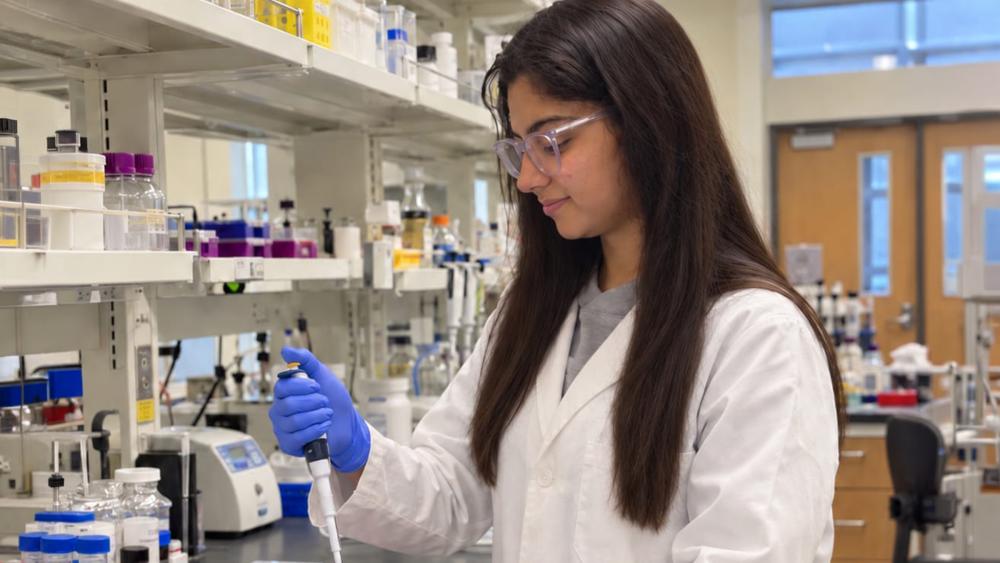
Penn State engineers are surface-modifying sterile-filtration membranes to remove microbes from injectable drugs, in work published in Biotechnology Journal. Doctoral candidate Shreya Kapila's own test for a new filter is that it removes organisms while leaving little of an expensive drug behind in the membrane.
The Scientist · Science desk
What happened
- Kapila, a chemical engineering doctoral candidate, does the work in the laboratory of Andrew Zydney, who holds the Bayard D. Kunkle Chair in chemical engineering at Penn State.
- The U.S. Food and Drug Administration recently recalled epinephrine injections, used for severe allergic reactions, because their sterility could not be assured.
- Kapila said drug products can pick up bacteria, fungi, particulate matter and other impurities at different steps of manufacturing.
- She called aseptic processing a particularly expensive way to make sterile drugs because different activities can require separate facilities or controlled areas.
Compiled by The ScientistSomething wrong?How this is made
Why it matters
- exposure Patients take the risk directly. Injectables go straight into the body, where Kapila said microbial contamination can have serious consequences.
- constraint Drugs that cannot tolerate heat lose the fastest way to kill microbes, so filtration and aseptic handling have to provide more of their sterility assurance.
- decision Switching to a modified membrane would mean validating a sterilization step again, and manufacturers would weigh that cost against any gain in microbe removal.
Kapila defines sterility as the complete absence of viable microorganisms [14]. She said the goal is "not only to achieve sterility, but also to maintain the chemical, physical and functional properties" of a drug [6]. She lists purity, potency, physical stability and particle or droplet size among those properties [15].
Droplet size is where the two goals can pull against each other. According to Kapila, gamma irradiation may degrade some formulations, including nanoemulsions. These are liquid formulations whose oil droplets typically measure about 20 to 200 nanometers, and irradiation can make the droplets grow [8]. A membrane used on a product like that has to remove microorganisms and leave the droplets as they were.
The second cost is the drug itself. Filtration can leave some product in the filter or the tubing [10]. Kapila said "a low-yield process can be especially costly when the active pharmaceutical ingredient is expensive or available only in limited quantities" [11].
The Q&A describes the approach [2]. It does not report how the modified membranes compared with unmodified ones on microbe removal or on yield, what surface chemistry was used, or whether a filtration step played any part in the epinephrine recall [1]. Without the first of those, there is no effect size to judge. Without the last, the recall shows the stakes and nothing about where the failure happened.
Kapila described the payoff in two parts: "Improving these processes can therefore have both safety and economic benefits" [12]. I think the work should be judged on those two terms. The case holds if the paper shows fewer organisms getting through a modified membrane than through an unmodified control, with product yield no worse than a standard filter's.
What to watch
- The Biotechnology Journal paper's removal figures for modified against unmodified membranes, and which test organisms were used.
- Yield data on a real formulation, especially one with an expensive or scarce active ingredient, showing how much product the modified membrane holds back.
- Whether FDA recall records for the epinephrine injections identify the step where sterility assurance failed.