Science1 publisher2 min readPublished
Bonn economists tie eastern Germany's uniform farmland to bigger grassland losses in the 2018 drought
University of Bonn economists found that uniform farmland in eastern Germany caused more grassland to go unproductive during the 2018 drought. That makes field layout a drought risk farms can change, though the published summary does not say how big the effect is.
The Scientist · Science desk
What happened
- University of Bonn economists led by Marco Ferro and Jan Börner studied how landscape diversity shaped grassland drought tolerance in Germany's 2018 heat wave.
- The diversity they tested was the range of crop species in a landscape and its share of green infrastructure, such as small trees and orchards.
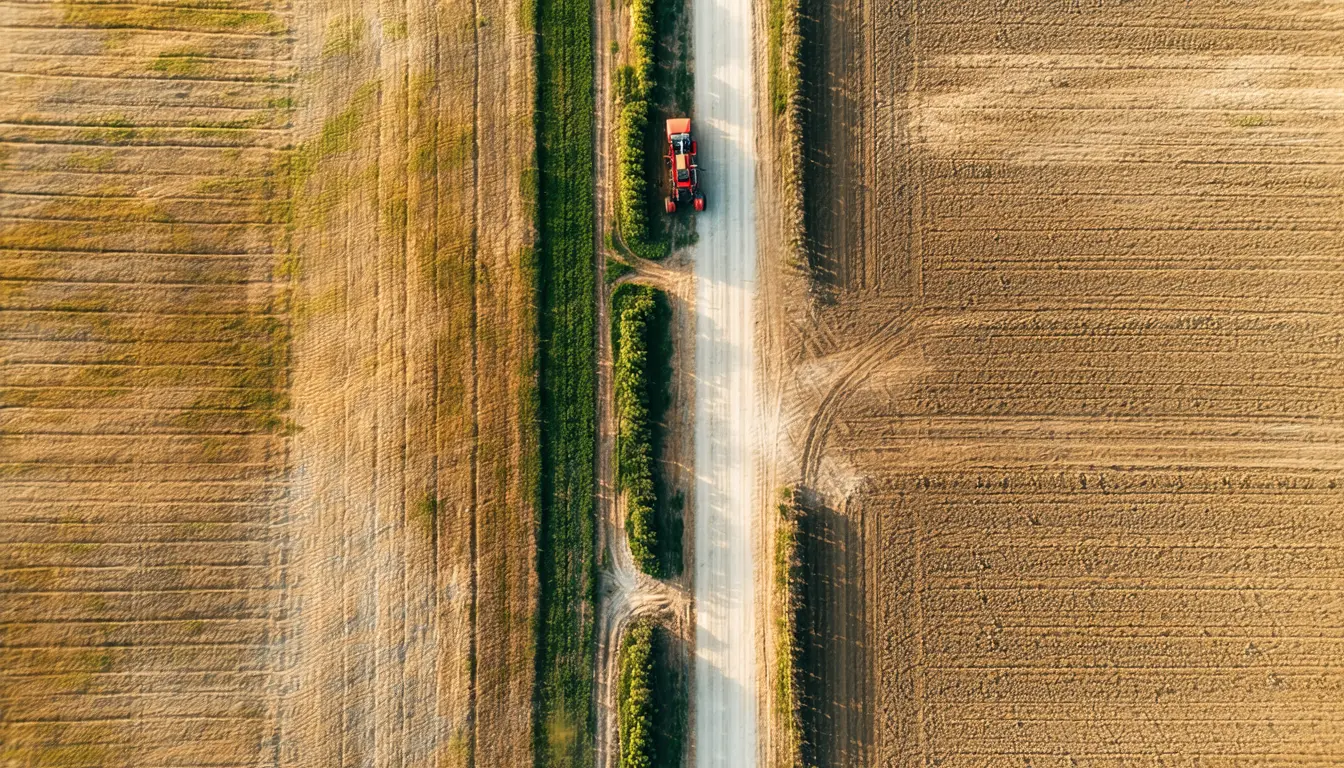
- They compared eastern Germany, where restructuring after 1945 left large farms and uniformly used fields, with the smaller, more varied farms of the west.
- In the more uniform east, a greater share of grassland could no longer be used effectively during the drought, and plant biomass yields declined.
Compiled by The ScientistSomething wrong?How this is made
Why it matters
- decision Crop mix and tree cover around pastures become a drought-planning choice for farms and farm policy, backed by an estimate designed to show cause.
- exposure Regions farmed in large, uniformly used blocks, as eastern Germany is, carry more grassland drought risk as droughts and heat waves grow more frequent.
- cost Diversifying could cost large farms the efficiency their size gives them, so the business case turns on a comparison of drought and normal years that is still missing.
The study rests on a difference in landscapes that was fixed decades before the drought [1][2]. East and west were shaped by postwar history, so the 2018 weather had no part in producing the contrast. Even so, a straight east-west comparison would pick up every other way the two regions differ. The Bonn team said its main effort went into measuring the influence of landscape structure "while simultaneously accounting for other factors that can also affect the severity of a drought's impact" [8].
The team worked from satellite and other remote sensing data. They used a method that, in their words, "allows for a clearer distinction between cause and effect." With it they asked whether monotonous landscapes actually cause more grassland to become unproductive in a drought, or whether the two simply turn up together [4]. The Q&A does not include the estimator or the size of the effect. The paper's title presents it as an estimate of "the causal effect of agricultural landscape simplification" on Germany's grasslands during the 2018 compound drought and heatwave [13].
The researchers offer a physical explanation. "One reason for this is that landscapes with less diverse land uses are less able to store water during a drought," they said [7].
The yield number comes from a model. To put the satellite results in farm terms, the team ran a plant growth model to estimate how much biomass could be lost to drought in a less diverse landscape [6]. So the loss figure is a modelled estimate of plant growth, and it covers one drought year in one country [1][6].
I think the evidence supports a narrower claim than "diversity reduces drought risk." It supports a causal link between simplified landscapes and lost grassland function in 2018, from a design built to separate cause from coincidence [4][5]. The researchers read it more broadly, saying the study shows "increased diversity at the landscape level can improve ecosystem function and the resilience of farms to extreme events, as well as help ensure agricultural yields" [12]. That puts the finding in the language of farm risk.
The study does not settle whether diversity pays for itself. The researchers say so: "it is unclear whether the disadvantages of large, less diverse farms during severe droughts can be offset by their advantages in normal years" [9]. Large farms can operate more efficiently because of their size, they note [10]. They also say the question is becoming more important as droughts and heat waves become more frequent and severe [11].
What to watch
- Whether the full AJAE paper reports an effect size large enough to matter against the efficiency large farms gain in normal years.
- Follow-up work, which the Bonn team calls for, weighing large farms' normal-year advantages against their losses in severe droughts.
- Studies of other drought years or countries testing whether the 2018 German result holds beyond one east-west comparison.