Product1 publisher3 min readPublished
Radiant locks in TRISO to the early 2030s, treating fuel as the binding constraint
Standard Nuclear will fabricate fuel for the Kaleidos microreactor through the early 2030s. The interesting part is what the deal implies about where microreactor programs actually stall.
The Product Desk · Product desk
Drafted by a language model from the sources cited here and checked against its claim ledger before publication. How we use AISend a correction
What happened
- Standard Nuclear will fabricate TRISO fuel for Radiant under an agreement covering planned Kaleidos deployments through the early 2030s, giving Radiant a dedicated fuel supplier.
- Fuel availability remains a critical challenge for advanced nuclear developers; a reactor cannot reach customers without a reliable source of qualified fuel.
- Tori Shivanandan, Radiant's president and COO, said: "Securing the fuel supply chain is a strategic advantage to deploying at scale."
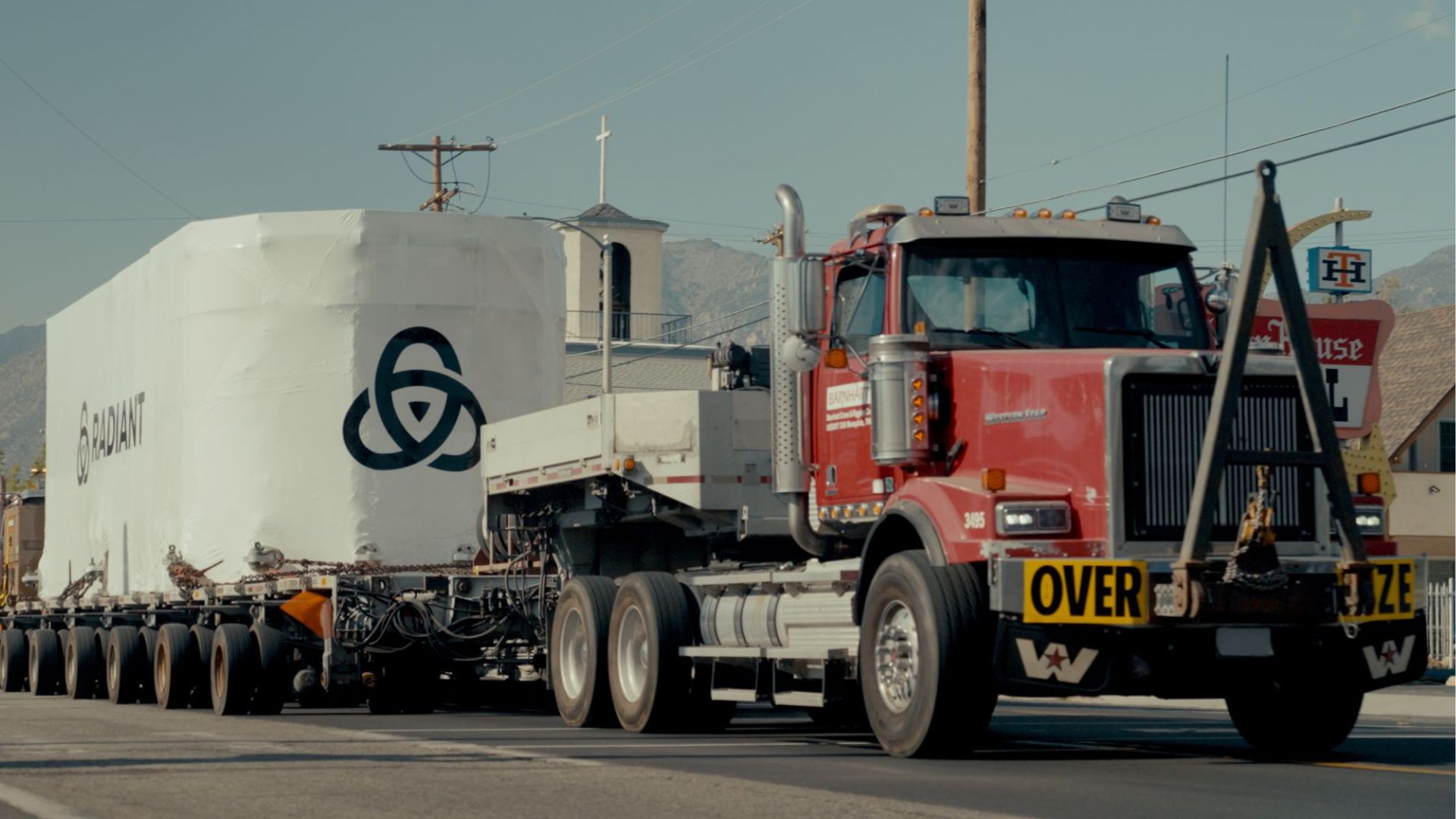
- Kaleidos is a 1-megawatt microreactor designed for transport to customer sites, and can be moved by land, sea or air.
- Each Kaleidos unit can operate for up to five years before refueling.
Compiled by The Product DeskSomething wrong?How this is made
Why it matters
Radiant has signed Standard Nuclear to fabricate TRISO fuel for its Kaleidos microreactor under an agreement covering planned deployments through the early 2030s [1]. Read as procurement it is unremarkable; read as a statement of priorities it says that a company with a reactor in a national-lab test bay and orders on the books thinks its scarcest input is qualified fuel [2][9][12].
The company's own framing is explicit. Radiant president and COO Tori Shivanandan said that "securing the fuel supply chain is a strategic advantage to deploying at scale" [3]. The source account puts it more bluntly: a reactor cannot reach customers without a reliable source of qualified fuel [2].
The physical requirement is not trivial. Kaleidos is a 1 MW unit designed to be transported to customer sites, with a run of up to five years between refuelings and a planned 20-year operating life [4][5][6]. On those figures, each reactor implies roughly four core loads across its service life [7]. Equinix has signed a commercial agreement for 20 units, which is about 20 MW of capacity and, on the same arithmetic, on the order of 80 fuel loads over the fleet's life [12][13][14]. Fabrication capacity, not reactor assembly, is what that curve tests.
Radiant is going further than an offtake. It plans to control the broader fuel cycle so that customers handle neither fresh nor spent fuel on site, managing fueling, refueling and storage through its own facilities [15][16]. A 300,000 square foot site in Oak Ridge, Tennessee is intended to cover reactor production, fueling and fuel storage [17]. That is a decision to absorb the least glamorous and most permit-heavy part of the business rather than assume a market will exist to buy it from.
The reactor side is running in parallel. Kaleidos is undergoing full-scale testing at Idaho National Laboratory's DOME facility, where the Department of Energy selected Radiant through a competitive process and granted exclusive access for one year [9][10]. Engineers will test at full scale and full power over extended runs using the same reactor design and fuel specifications intended for customer deployments [11]. Radiant has also secured a project with the Department of the Air Force and the Defense Innovation Unit to develop and operate a microreactor at Buckley Space Force Base [18].
Two cautions. First, the reported account of the agreement gives no contracted volumes, no price and no figure for Standard Nuclear's production capacity, which are the numbers that would show whether supply is genuinely secured or merely designated [19]. Second, Radiant still has to finish testing, establish repeatable manufacturing and work through regulatory requirements before broad deployment [20]. A fuel contract removes one dependency; it does not compress the others.
What to watch: whether the DOME campaign at full power surfaces engineering problems that smaller demonstrations would not [8][11], whether Standard Nuclear demonstrates fabrication at a repeatable rate rather than a qualified sample, whether the Oak Ridge site clears the licensing needed to store fuel, and whether the Equinix agreement converts into dated unit deliveries [12]. The one-year DOME window is the nearest hard clock in the program [10].