Oxide raises $445M to pay for parts while rack orders wait to ship
Oxide Computer raised a $445 million Series D to pay for parts and manufacturing on rack orders before they ship. Its operations produced taxable income in the spring, so the new equity is for taking more orders without exposing the business to a supply disruption.
The Engineer · Build desk
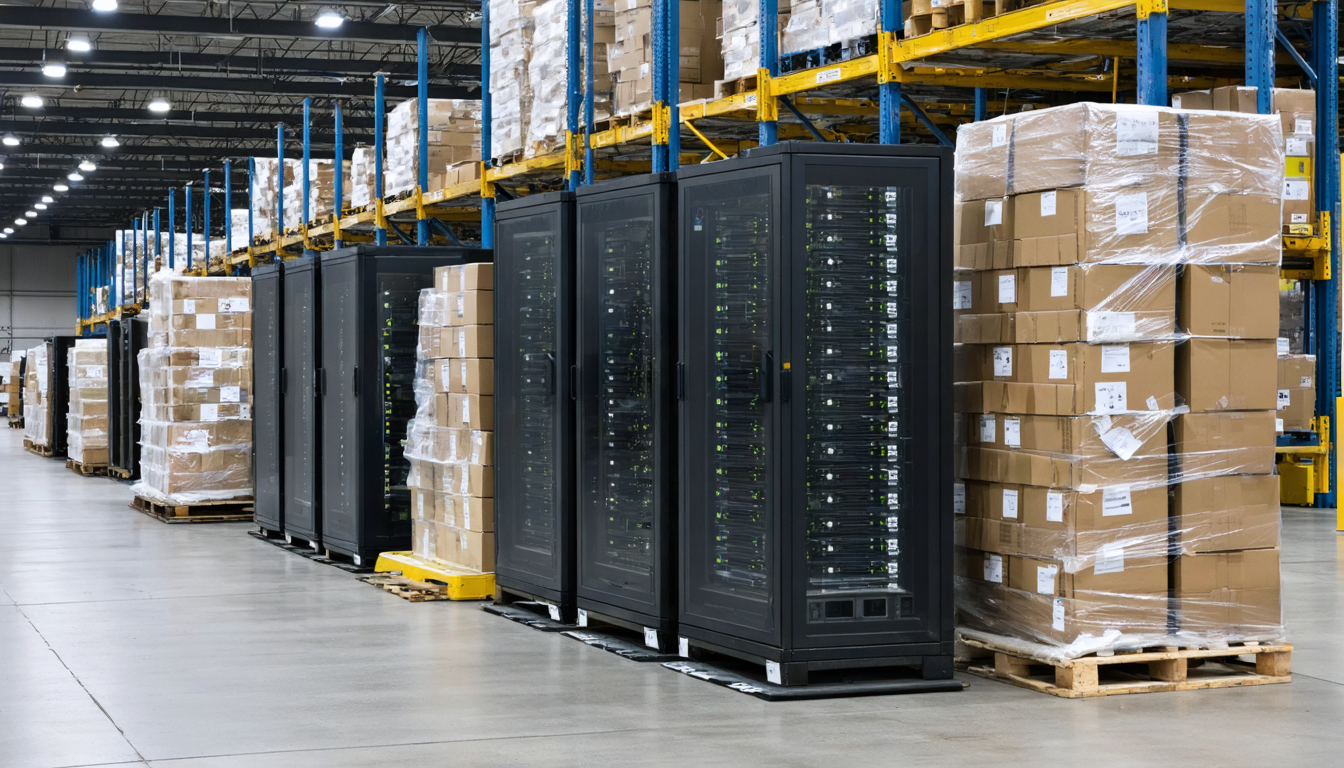
Bar comparison of Oxide Computer's funding rounds: Series B raised $100 million, Series C raised $200 million and the new Series D raised $445 million.
Amount raised in each Oxide funding round, as announced
| Item | Value | Claim |
|---|---|---|
| Series B | $100 million | 8 |
| Series C | $200 million | 8 |
| Series D | $445 million | 1 |
What happened
- According to an SEC Form D filing, the equity offering sold $444,999,052, with the first sale dated July 20, 2026, before Oxide announced the round on October 9.
- Eclipse led the round, existing backers including Jane Street and Riot Ventures took substantial portions, and Atreides Management and AMD came in as new investors.
- Oxide's systems use AMD EPYC processors, and the company says AMD, which it calls a strategic investor, had already supported software work to enable its platform.
- In a 2019 post, Cantrill argued that hardware and software should be designed together and that hyperscaler rack-level designs should be available to a wider market.
Why it matters
- What it costs cost New equity now carries the cash Oxide spends on each added order before the customer pays, a timing risk RuntimeWire says would otherwise fall on suppliers, customers or existing cash flow.
- What it limits constraint For a seller that buys and builds well ahead of delivery, profit did not decide how many orders Oxide could safely take; the size of its cash buffer did.
- Who's exposed exposure AMD now sits on both sides of Oxide's parts bill, as the processor vendor inside its systems and as a shareholder in the company buying those processors.
Next story · Product · 2d ago
AMD's Helion rack design comes in CPU-only and CPU-GPU versions for agentic AIConfirmed2 publishers
Oxide's product design puts the timing problem on its own books. The company sells compute, storage, networking and management software built as one system for a customer's own data center or colocation facility [11]. Before an order becomes a delivered rack and collected cash, Oxide has to pay for the components and the manufacturing [10]. RuntimeWire, which reported the round, wrote: "A backlog can indicate demand; it also creates a cash requirement." [12]
Tuck and Cantrill said ordinary operations generated taxable income in the spring, and that the large backlog still needed substantial cash for components and manufacturing [2]. The two statements fit together. A growing order book spends cash on parts before finished systems bring any back, whatever the income line shows. In the founders' account, Oxide has to purchase and manufacture its hardware long before it ships, a requirement that holds while demand rises [13].
The limit Oxide describes applies to new orders. According to the company, cash from operations, prior financing and debt facilities cover the current backlog [9]. More demand was the problem. Oxide says it would have had to exercise real caution before accepting it, so that a supply disruption or an economic shock could not put the business at risk [9]. A seller holding parts for racks it has not yet built carries both of those risks at once. I think equity is the right instrument for that exposure, given that debt is already part of how Oxide funds the backlog it has [9].
The record supports working capital as the reason for the raise. It does not show that most of the money goes to parts. Oxide lists four uses: filling existing orders, accepting new ones, expanding manufacturing capacity and investing for the long term [3]. Only the first two are working capital in the narrow sense. The company did not disclose the backlog's value, its revenue, its order volume, how much of the round goes to inventory and manufacturing, or a valuation [4][7].
At $445 million [1], the Series D is large against Oxide's own history. It follows a $100 million Series B and a $200 million Series C [8]. That makes it about 1.5 times those two rounds combined [17], and the three total $745 million [18]. When the founders announced the Series C, they said that financing was meant to reduce capital risk and protect Oxide's independence [8].
What to watch
- Oxide disclosing its backlog value or revenue, the figures needed to judge how far $445 million stretches the order book.
- Announcements of new manufacturing capacity, the first sign of how the round splits between factory spending and inventory.
- Any new or enlarged debt facility, a signal that order growth is outrunning the equity buffer.
Clarity's read
What the record supports and how the coverage leans. The claims behind it follow.
Reality
- Evidence60
- Adoption35
- Hype gap+25
- Incentives65
- Confidence60
Perspective Coverage
3 publishers- Builder
- Builder 18%
- Operator
- Operator 30%
- Investor
- Investor 52%
Claim ledger
Ranked by verification strength, evidence, and original report placement.
- [1]
Oxide Computer said on October 9 it raised a $445 million Series D to finance the stretch between taking orders for its rack-scale computers and delivering them.
- [2]
Co-founders Steve Tuck and Bryan Cantrill said ordinary operations generated taxable income in the spring, while a large order backlog still required substantial cash for components and manufacturing.
- [3]
The Series D is intended to let Oxide fill existing orders, keep accepting new ones, expand manufacturing capacity and invest for the long term.
- [4]
Oxide did not disclose the backlog's value, revenue, order volume, or how much cash the round will allocate to inventory and manufacturing.
- [5]
Eclipse led the round; existing investors US Innovative Technology Fund, Riot Ventures and Jane Street took substantial portions, Friends and Family Capital and Counterpart also participated, and new investors included Atreides Management and AMD, which Oxide characterized as a strategic investor.
- [6]
Oxide says AMD had previously supported software work to enable its platform, and Oxide's system uses AMD EPYC processors.
- [7]
The SEC filing lists 15 investors but does not identify the purchasers; neither Oxide nor the filing disclosed a valuation.
- [8]
The Series D follows Oxide's $100 million Series B and $200 million Series C; in announcing the Series C, the founders said the financing was meant to reduce capital risk and protect Oxide's independence.
- [9]
Oxide says it can meet its current backlog with cash from operations, prior financing and debt facilities, but would have had to exercise real caution in accepting additional demand to avoid putting the business at risk from supply disruptions or economic shocks.
- [10]
Oxide has to pay for physical components and manufacturing before it can turn a customer order into delivered equipment and cash collected.
- [11]
Oxide's system combines compute, storage, networking and management software designed as one system for a customer's own data center or colocation facility.
- [12]
A backlog can indicate demand; it also creates a cash requirement.
- [13]
Oxide's founders say the hardware has to be bought and built well ahead of delivery, even as demand grows.
- [14]
The new capital buys Oxide room to take more orders without asking component suppliers, customers or existing cash flows to absorb all of the timing risk.
- [15]
An SEC Form D filing records $444,999,052 sold in the equity offering and lists July 20, 2026 as the first sale date.
- [16]
In a 2019 post, Cantrill argued that hardware and software should be designed with each other in mind and that the rack-level designs used by hyperscalers should be available to a wider market.
- [17]
The $445 million Series D is about 1.5 times the Series B and Series C combined.
- [18]
Oxide's Series B, C and D total $745 million.
Sources
2 independent publishers whose own reporting we read for this story.
- dev.toOxide Computer raises $445M Series D at scale for on-prem AI clouds
1 article · October 9, 2026
- Our $445M Series D | Oxide Computer Company
oxide.computer
1 article
- runtimewire.comOxide Computer raises $445M to buy hardware before delivery
1 article · October 9, 2026
Topics and entities
Topics
- On-premises cloud infrastructure
- Working capital in hardware businesses
- Rack-Scale Computing
- Venture Funding Rounds
Entities
- Jane Street
- Atreides Management
- US Innovative Technology Fund
- AMD
- AMD EPYC (Zen 2 / Zen 3)