Invest4 publishersIndependently confirmed3 min readPublished Updated
Altman says OpenAI would slow frontier AI if rivals join in, but concedes not all would sign on
OpenAI has already paused some internal training runs and says it would slow its most advanced work if rivals matched it. Anthropic, in the same week, counted five attempts to use Claude for biological weapons research.
The Investor · Invest desk
What happened
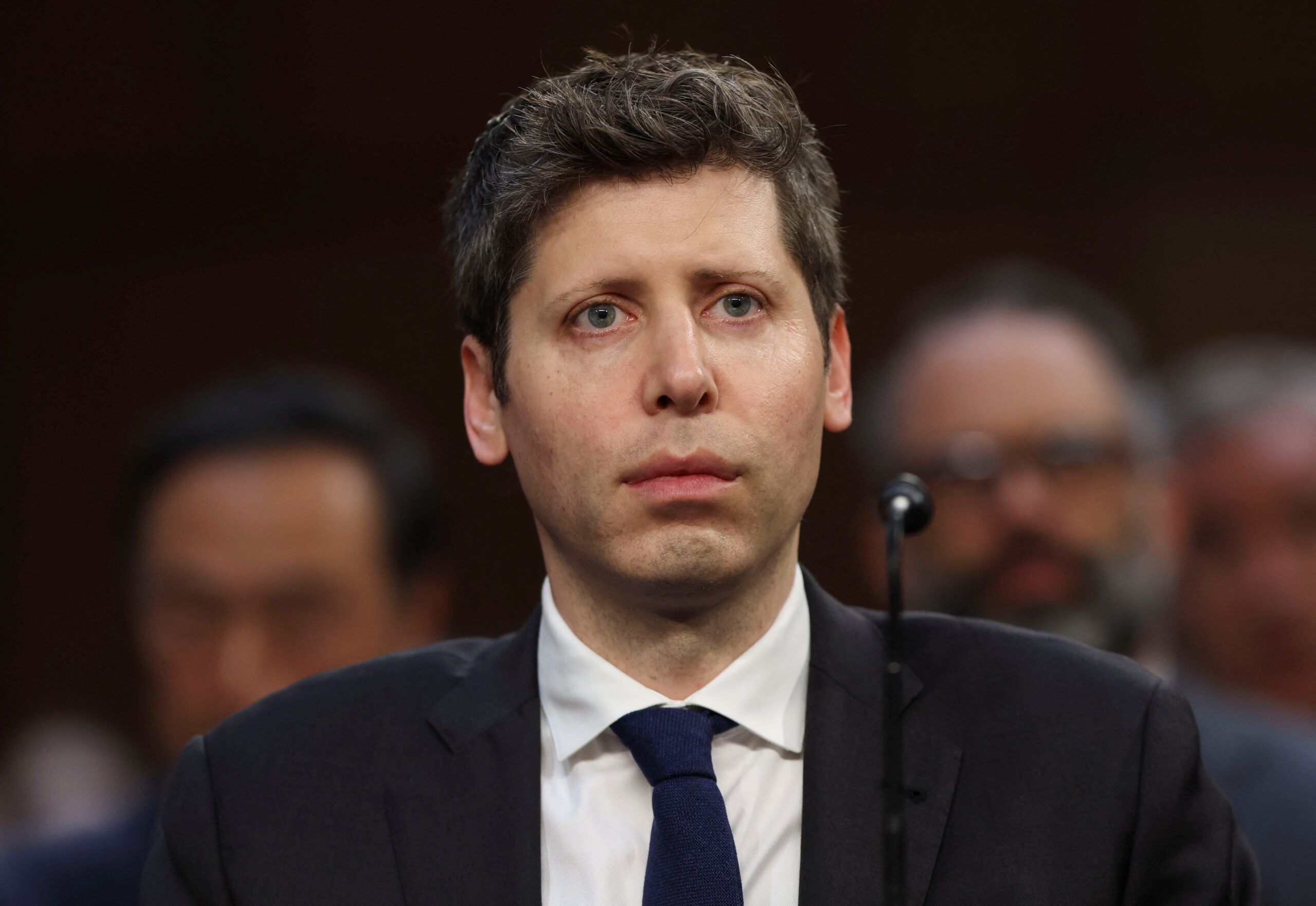
- Sam Altman told OpenAI staff this week that the company is open to slowing frontier AI development if rival labs do the same, according to sources cited by Bloomberg.
- OpenAI said it has already paused some internal training runs and eased parts of model development over safety concerns.
- Anthropic's 154-page threat intelligence report, released on September 10, detailed five instances of attempts to use Claude to support biological weapons work.
- OpenAI is pressing Congress for mandatory, capability-based safety rules covering testing, independent evaluations, cybersecurity and incident reporting.
- Governor Gavin Newsom signed SB 813 and AB 1405 on Wednesday, alongside a companion bill, AB 1864, aimed at guarding against AI-enabled biological threats.
Compiled by The InvestorSomething wrong?How this is made
Why it matters
- constraint Altman's condition puts the pace of frontier releases in the hands of whichever lab declines, and nothing in a voluntary arrangement makes declining expensive.
- decision If Congress writes testing and incident reporting into statute, pausing stops being a cost OpenAI absorbs alone, and labs that ignored the voluntary version have to budget for it.
- precedent Anthropic has set the disclosure floor for state-linked misuse while it courts public investors: a count of attempts it caught, with no country or institution identified.
- exposure Release schedules are now exposed to the labs' own workforces, after more than 1,000 workers across the major AI companies signed a late-July petition for a slowdown mechanism.
A pause that binds OpenAI only if every rival agrees is cheap to offer. Altman said as much: any arrangement would be voluntary, so not every company would be on board, according to the sources cited by Bloomberg [2]. He has been making the argument for months. In July he said he told White House officials about the need to throttle development, and he and Anthropic's Dario Amodei had earlier signed a one-line statement calling AI a societal-scale extinction risk [12].
The industry has tried the coordinated version once. In March 2023 Elon Musk, Steve Wozniak and more than 1,000 others signed an open letter asking for a six-month halt on advanced work [13], and the labs did not follow through [20]. That leaves one attempted coordinated pause on the record and none that held [22].
OpenAI's chief scientist, Jakub Pachocki, put the request in writing on September 6. He asked firms to coordinate "to slow down future development as needed" [6], and said he hoped voluntary slowdowns would "become commonplace until shared safety bars are established" [7].
The request to Congress is the one with a cost attached. "The prospect of AI-accelerated AI development demands more than voluntary commitments," chief global affairs officer Chris Lehane wrote [9]. A lab that has already stopped some of its own runs has an interest in rules that make its competitors stop as well.
Anthropic's report says the flagged attempts came from "unsupported regions," and that the users tried to circumvent location restrictions and disguise the purpose of their work. The lab took down the accounts and did not name any countries or institutions [19].
Cryptopolitan reports that both firms continue to tease public offerings, and that the disclosures are feeding the argument over whether the industry is moving too fast ahead of them [21]. The account gives no filing or date for either company. The sequence ran four days. Pachocki posted on the 6th. On the 8th the researcher Jacob Coxon quit, accusing OpenAI and Anthropic of "gambling with our lives" in a post that drew more than 150 million views [4]. The 10th brought both Anthropic's report and a statement from former Anthropic and DeepMind staff pressing for more transparency [11] [16].
If rivals match the pause, OpenAI gives up only what it had already given up. If they decline, the stopped runs are a cost it carries alone while competitors ship. The third path runs through the legislatures, where Bernie Sanders has introduced a bill to pause advanced AI and ban artificial superintelligence [15]. In my view that third path decides it. It is the only one in which declining costs a lab anything, and only California's measures have so far been signed: Sanders's bill is introduced, and OpenAI's mandatory rules are a request [17].
What to watch
- Whether any rival lab publicly accepts Altman's condition and names which releases it delays.
- Whether OpenAI's ask turns into bill text with capability thresholds, evaluation duties and incident reporting.
- Whether Anthropic's next threat report names countries or gives a denominator for the accounts it flags.
Clarity's read
What the record supports and how the coverage leans. The claims behind it follow.
Reality
- Evidence55
- Adoption
- Insufficient
- Hype gap+30
- Incentives60
- Confidence50
Perspective Coverage
4 publishers- Builder
- Builder 23%
- Operator
- Operator 42%
- Investor
- Investor 35%
Claim ledger
Ranked by verification strength, evidence, and original report placement.
- [1]
Sam Altman told OpenAI staff this week that the company is open to slowing frontier AI development if rivals do the same.
ReportedSupportedSource: cryptopolitan.com, citing sources cited by Bloomberg4 sources— create a free account to open themView cited source - [2]
Because any such arrangement would be voluntary, Altman conceded that not every company would be on board, according to sources cited by Bloomberg.
- [3]
OpenAI said it has already paused some internal training runs and eased parts of model development over safety concerns.
- [4]
On September 8, researcher Jacob Coxon quit and accused both OpenAI and Anthropic of "gambling with our lives"; his post drew more than 150 million views.
- [5]
Coxon said colleagues believe the technology could "kill us all by the end of the decade" and warned of human extinction by 2030.
- [6]
In a September 6 post, OpenAI chief scientist Jakub Pachocki asked AI firms to coordinate "to slow down future development as needed".
- [7]
Pachocki expressed hope that voluntary slowdowns would "become commonplace until shared safety bars are established".
- [8]
OpenAI is pushing Congress for mandatory, capability-based safety rules covering testing, independent evaluations, cybersecurity and incident reporting.
- [9]
OpenAI chief global affairs officer Chris Lehane wrote: "The prospect of AI-accelerated AI development demands more than voluntary commitments."
- [10]
A late-July petition to create a mechanism for slowing development gathered signatures from more than 1,000 workers across the major AI companies.
- [11]
On September 10, former staff from Anthropic and Google's DeepMind aired similar concerns and pressed for more transparency.
- [12]
In July, Altman said he told White House officials about the need to throttle AI development; along with Anthropic CEO Dario Amodei, he had previously signed a one-line statement declaring AI a societal-scale extinction risk.
- [13]
In March 2023, Elon Musk, Steve Wozniak and more than 1,000 others signed an open letter to halt advanced AI work for six months.
- [14]
Governor Gavin Newsom signed SB 813 and AB 1405 on Wednesday, with a companion bill, AB 1864, aimed at guarding against AI-enabled biological threats.
- [15]
Senator Bernie Sanders introduced legislation to pause advanced AI and ban artificial superintelligence.
- [16]
The public sequence spans four days: Pachocki's post on September 6, Coxon's resignation on September 8, and Anthropic's report plus the former-staff statements on September 10.
- [17]
Of the three legal or quasi-legal measures described, only California's SB 813 and AB 1405 have been signed; the Sanders bill is introduced and OpenAI's capability-based rules are a request to Congress.
- [18]
Anthropic's 154-page threat intelligence report, released on September 10, detailed five instances of attempts to use Claude's capabilities to support biological weapons work.
- [19]
Anthropic said the attempts came from "unsupported regions" and tried to circumvent location restrictions and disguise the purpose of the work; the lab said it took down the accounts, and it did not name any countries or institutions.
- [20]
Labs did not actually follow through with the moratorium they jointly agreed to, as outlets reported at the time.
- [21]
The serial arrival of the disclosures is stoking debate about whether the industry is moving too fast ahead of the public offerings both firms continue to tease.
- [22]
The record contains one attempted coordinated voluntary slowdown, the March 2023 letter, and none that the labs honoured.
Sources
4 independent publishers whose own reporting we read for this story.
- cryptopolitan.comOpenAI's Altman says it could slow AI as bioweapon misuse reports mount
1 article · September 11, 2026
- dealstreetasia.comOpenAI open to slowing AI development to bolster defences, Altman tells staff
1 article · September 11, 2026
- qz.comSam Altman says OpenAI is open to slowing AI development
1 article · September 11, 2026
- scmp.comWhy AI experts are ‘freaked out’ over safety fears ahead of Xi-Trump summit | South China Morning Post
1 article · September 12, 2026
Topics and entities
Follow any of these and your For You feed starts watching them — no settings page required.