Science1 distinct publisher3 min readPublished
The Marine Biological Association's case for the boom rests on underwater video, eggs, juveniles and 120 surveyed divers, while the shellfish landings that fell alongside it are so far timing rather than attributed cause.
The Scientist · Science desk

Compiled by The ScientistSomething wrong?How this is made
Ninety-six and a half percent of 120 respondents works out to 115.8 people, and 55.4 percent to 66.5, so neither figure was computed on the full response set [1]. That is a reporting detail rather than a flaw, but it is a reminder of what a diver survey is: a measure of detection by people who chose to answer, not a measure of how many animals are down there. The depth result has the same shape. Most reported encounters were at 10 metres or shallower [5][2], which is also where recreational divers spend their time.
The parts of the case that do not depend on volunteers are the stronger ones. Eggs and juveniles showed the animals bred successfully in British waters [9], video recorded octopuses moving across reefs where shellfish crews set their gear [6], and crews reported opening traps to find octopuses eating the captured crabs and lobsters [7]. That last observation supplies a mechanism, and a plausible one, since a pot concentrates prey and an octopus can walk in.
What it does not supply is a fraction. Landings respond to effort, weather, market and stock as well as predation, and the coincidence in time between the bloom and the drop [8] leaves open how much of the missing crab and lobster the octopuses ate. Bryce Stewart of the Marine Biological Association described the drivers themselves as an open research question [11]. Researchers suspect the influx began south of Britain, with young octopuses drifting on currents from breeding grounds around the Channel Islands and northern France, and warmer seawater helping the arrivals establish [10].
The predator side carries a wrinkle that the photographs cannot resolve. The bloom species is the common octopus, Octopus vulgaris [1], and Risso's dolphins do eat octopus, squid and cuttlefish [13]. But earlier work identified a different animal, the curled octopus Eledone cirrhosa, as the most important prey species for Risso's in British waters [15]. Josh Symes of the University of Exeter, who tracks the dolphins by photo ID, called the images a glimpse into their feeding ecology and their response to changing prey availability [12]; a single frame records contact between animals, and contact alone does not confirm a meal.
The regional assessment did the harder statistical thing by adjusting for how long observers looked, and its authors offered more cuttlefish and octopus in coastal water as a candidate explanation for rising sightings [16]. But correcting for effort only removes the influence of how long someone watched; it does not tell you whether the animals being seen are more numerous or simply closer to shore. Risso's around the British Isles already come into water shallower than roughly 20 metres [14][3], so animals moving inshore can lift an encounter rate without any change in how many exist.
Whether the southwest animals are a distinct local group is being approached with two methods that answer different questions. DNA from 72 dolphins stranded between 1992 and 2016 put them in a single genetic group across sampling locations, with six mitochondrial versions unique to the British Isles and closest to those around the Azores [17][18]. That is roughly three samples a year [4], and mitochondrial lineages integrate over generations. Photo ID works on the scale of survey seasons, and there fewer than 3 percent of dolphins photographed off western Scotland reappeared in northern Scotland images [19]. One gene pool over many generations is entirely compatible with individuals that rarely commute.
At least 75 years of records counted back from 2025 reaches to about 1950 [5], so the claim is about the length of the record, not about the species' history in these waters [2].
Ranked by verification strength, evidence, and original report placement.
The encounter came amid the largest surge in octopus numbers recorded off southwest England in at least 75 years, an event researchers call a bloom.
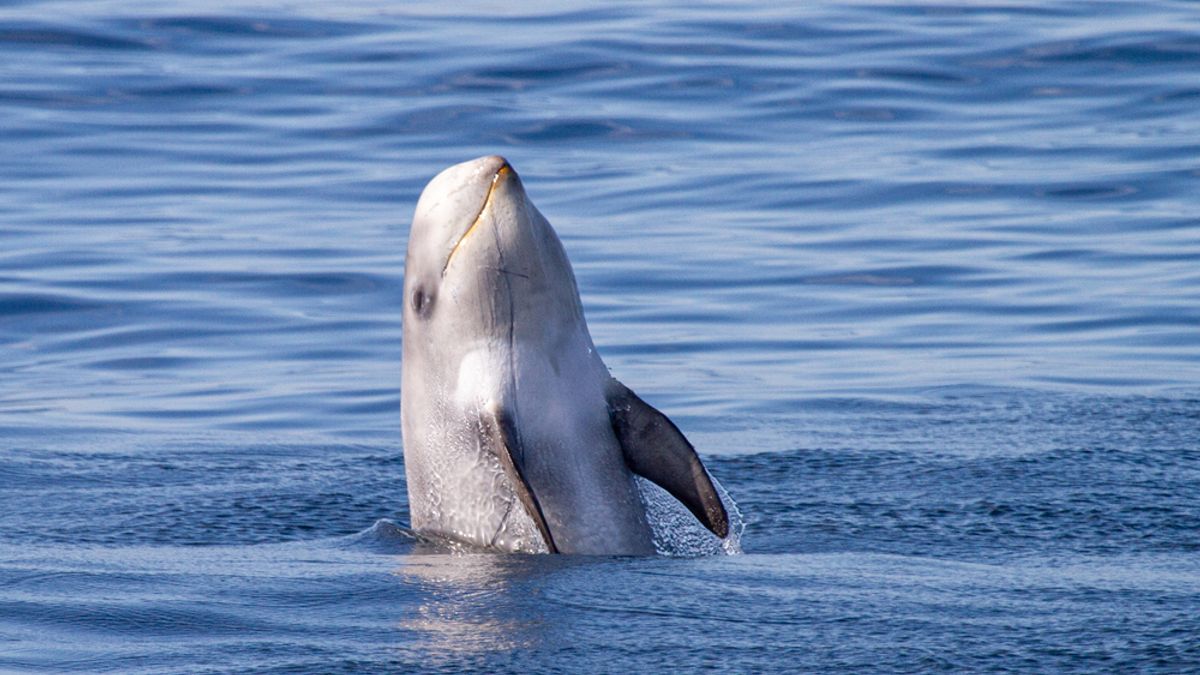
Risso's dolphins often live in deep water near continental shelves and slopes, but those around the British Isles regularly enter coastal water less than about 65 feet deep.
A study in the Journal of the Marine Biological Association of the United Kingdom examined preserved samples from 72 dolphins stranded between 1992 and 2016, and their DNA placed the animals in one genetic group spanning the sampling locations.
Researchers found six versions of mitochondrial DNA unique to dolphins around the British Isles, and those British versions grouped closest to versions found around the Azores.
The octopus is native to British waters but became much easier to find in 2025.
Photographer Bill Coulson, shooting off Berry Head, Devon, captured a common octopus (Octopus vulgaris) clinging to the dorsal fin of a Risso's dolphin.
Distinct publishers with included, body-backed reporting in this cluster.
Follow any of these and your For You feed starts watching them — no settings page required.
science
Tooth wear from 460 English sites pushes the ox-plough peak into the 12th century1 distinct publisher
science
High blood xylitol tracks with heart attacks and strokes across two cohorts of 17,000 adults1 distinct publisher
science
A San Andreas slip claim arrives without a number, and before peer review1 distinct publisher
science
Most kingfish carrying the mushy-flesh parasite cook up firm, so the cook test misses them1 distinct publisher
Evidence-backed comparisons of source perspectives and observed adoption signals. Read the methodology
Which Builder, Operator, and Investor concerns the observed source mix emphasized—not a truth score.
Evidence, demonstrated adoption, hype gap, incentives, and confidence are assessed independently, each on its own current evidence. How these are measured.
Real observations, single relay
Four distinct evidence types stand behind the bloom, and they are the right ones: video over the fishing grounds, eggs and juveniles for local breeding, a diver survey for prevalence, and a peer-reviewed genetics paper for the dolphin side. All of it reaches readers through the Marine Biological Association's press releases as retold by Discover, the survey's two percentages do not reconcile with the stated 120 respondents, and the fall in shellfish landings arrives as timing with no figures and no attributed cause.
Nothing here to measure uptake of
This story tracks an animal, not a product or a practice being taken up. The nearest thing to a usage signal, the share of surveyed divers who met an octopus, measures how common the animal was, and the public sightings appeal is a request for data rather than evidence that anyone answered it.
Slightly ahead of the evidence
Our own framing has the octopuses eating the catch inside the traps. Crews did report exactly that, and the video puts the animals over the same reefs, but the drop in crab, lobster and scallop landings shares only a calendar with the bloom in this reporting. The 75-year superlative is likewise the Marine Biological Association's characterisation, unaccompanied by the historical series it implies.
One institution's account
The Marine Biological Association wrote the report, supplied both quotes, issued the releases Discover cites, and is collecting public octopus and dolphin sightings alongside Risso's Dolphin Project South West, which gives it a straightforward interest in the bloom being interesting. Discover's peg is a charismatic photograph. No fisher, producer organisation or landings authority appears to press the economic claim from the other side.
Solid on the biology, thin on the fishery
The ecological core would survive scrutiny: breeding evidence, video, a named researcher hedging appropriately about causes. Confidence falls on the commercial claim, which has one outlet, one upstream institution, no numbers and an arithmetic wobble in the survey figures that nobody in the chain flags.