Invest1 distinct publisher3 min readPublished
Paul Chan's win-win framing splits the work cleanly, with the government writing the plan and clearing obstacles while the market puts up the money and finds the occupiers, and the second half is where the residual risk actually sits.
The Investor · Invest desk

Compiled by The InvestorSomething wrong?How this is made
Chan's own sequence runs land, then capital, then industry [5], and the order is the whole argument: the buyer commits before the occupier does, and the occupier in question is not a retail tenant but a "high-value-added, high-potential" industrial firm that has to be persuaded to take root in the first place [3].
Read the two columns he sets out and notice what is in neither. The state's side holds planning and the removal of barriers [4]. The market's side holds the money and the commercial operation of whatever gets built [4]. There is no rent floor, no anchor tenancy, no take-up guarantee anywhere in the arrangement as described, which means the risk that the high-value industries do not arrive on schedule sits on the buyers' books [8]. That is a perfectly respectable trade, and it may well be the win-win Chan calls it [7], but a transfer of risk is only a good deal at a price, and the reporting does not disclose that price: the consideration, the site area, the payment schedule and the use covenants are all absent from the account [10].
The one number available is the count of buyers. Six companies took the first pilot area [6], so an even split would leave each carrying about 17 per cent of it [9], though there is little reason to expect the division to land that neatly. The interesting thing is the shape rather than the split: nobody was asked to underwrite a pilot alone, and mainland state-owned firms are sitting alongside local developers in the same vehicle [6].
The numbers support more than one reading. One is that the premium already embeds a vacancy discount, in which case genuine risk moved for fair value and the government has converted an industrial-demand problem into someone else's underwriting exercise. Another, and this is the version I find harder to dismiss, is that when state-owned capital is a material part of the consortium [6], "market forces directed into industrial development" [3] is a description of ownership rather than of discipline, and the demand risk stays public in substance while leaving the public accounts in form. A third turns on the covenants: if the parcels carry hard industrial-use conditions, the buyers' most valuable option over the next decade is a relaxation of those conditions, and barrier removal is precisely the function the government has claimed for itself [4].
This is probably wrong in its emphasis, but the pilot looks less like a land sale than a syndication of tenanting risk, priced in a premium nobody has published. What would break the read is straightforward. If the disposal terms turn out to stage the premium against actual take-up, or if a government body becomes an anchor occupier, the risk never left the state and the arithmetic above is decoration. Publishing the terms would settle the question either way.
Meanwhile, the local developers in that consortium have committed capital to land whose tenants are still an aspiration [3][6], which is capital not sitting in residential product. That is the allocation decision inside the win-win.
Ranked by verification strength, evidence, and original report placement.
Financial Secretary Paul Chan Mo-po said fast-tracking the Northern Metropolis through a "large-scale land disposal" scheme underscores the government's push to integrate technology, industry and talent while accelerating Hong Kong's economic restructuring.
Chan made the remarks in a blog post published on Sunday.
Chan said the megaproject's success hinged on attracting "high-value-added, high-potential industries and high-quality companies to take root", requiring market forces to be directed into industrial development.
Chan said: "The government has set a clear vision, formulated long-term planning, and removed barriers, while the market has made investments, guided industries and conducted commercial operations."
Chan said the chain connecting land, capital and industry will accelerate the reshaping of Hong Kong's economic and industrial structure.
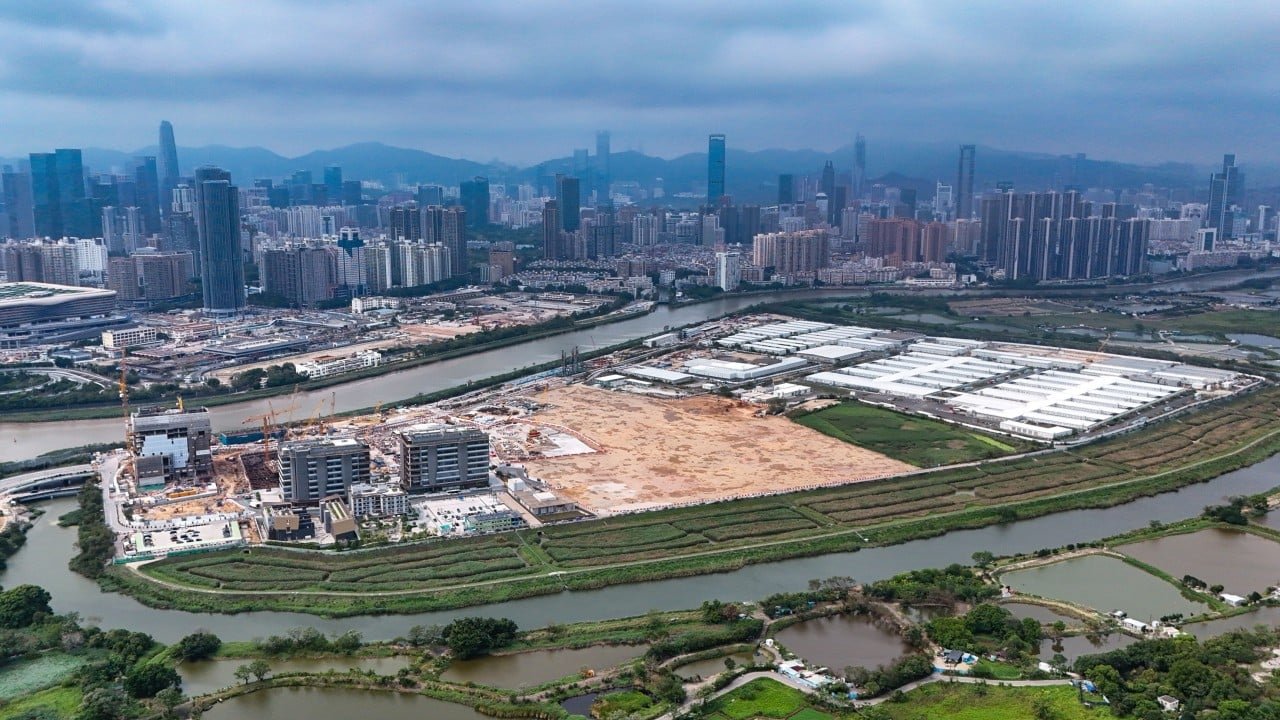
The first pilot area under the large-scale land disposal scheme was recently awarded to a consortium of six companies, including mainland Chinese state-owned firms and local developers.
Distinct publishers with included, body-backed reporting in this cluster.
scmp.com
1 article · August 29, 2026
Follow any of these and your For You feed starts watching them — no settings page required.
invest
Hong Kong pays redevelopers in floor area they can spend in the Northern Metropolis1 distinct publisher
invest
Local acts squeezed foreign music to 3 per cent of Indonesia's Spotify top 101 distinct publisher
invest
Cancellations up, pre-IPO targets missed: the AI case retreats to the plumbing1 distinct publisher
invest
A $106 trillion bill through 2040 is pulling private capital into Asia-Pacific power and fibre1 distinct publisher
Evidence-backed comparisons of source perspectives and observed adoption signals. Read the methodology
Which Builder, Operator, and Investor concerns the observed source mix emphasized—not a truth score.
Evidence, demonstrated adoption, hype gap, incentives, and confidence are assessed independently, each on its own current evidence. How these are measured.
One blog post, one outlet
Strip out Chan's own words and almost nothing remains: the win-win verdict, the tenant ambition and the division of labour are all quotations from a Sunday post by the scheme's own champion, carried by SCMP without a countervailing voice. The single hard event — the pilot award — arrives stripped of price, acreage, instalment terms and use covenants, which is precisely the material that would let a reader test whether the deal matches the rhetoric.
One parcel changes hands, no occupiers yet
Something real has happened — a first pilot area is in private hands, and mainland state-owned money is in the room alongside local developers, which is more than a ribbon-cutting. But the scheme's stated purpose is high-value industries taking root, and on that measure nothing has been demonstrated: no named tenant, no committed facility, not even a disclosed sum paid. Adoption sits at the paperwork stage.
The verdict outruns the contract
"Win-win" is a claim about outcomes for two parties, and the document that would show how the wins are shared has not been published. Reshaping an economy's industrial structure is likewise a large freight for one pilot parcel to carry. The overstatement is in the confidence rather than the facts: the award is genuine, the conclusion about who benefits is asserted ahead of any terms.
The scheme's promoter is the only speaker
Hong Kong's Financial Secretary is marking his own flagship, on his own blog, in the days after its first land award — a moment when officials have every reason to signal that market appetite exists. SCMP relays the assessment faithfully and adds no bidder, planner or sceptic to price it against. Readers should treat the framing as advocacy that happens to be newsworthy.
Solid on what was said, blank on what was signed
We can be near-certain about the words and the fact of an award; SCMP is a reliable relay and quotes at length. Everything downstream — who carries the tenanting risk, how large the bet is for each of the six — rests on inference from a document we have not seen, so our own arithmetic here is illustrative and our reading of the risk split is provisional until terms are published.