Invest1 distinct publisher3 min readPublished
A five-year pilot starting in September hands 20 per cent extra gross floor area on 50-year-old residential sites in seven old districts, or a land premium credit good for a decade. The credit is the term worth reading twice.
The Investor · Invest desk

Compiled by The InvestorSomething wrong?How this is made
Private hands took down about 1,410 of the 1,650 buildings demolished between 2013 and 2022, with the Urban Renewal Authority accounting for roughly 240, or one in seven [9][10][13]; at 141 private demolitions a year [10], set against the 705 buildings the Legislative Council research office's projection has crossing the 50-year mark annually between 2023 and 2043 [6][11], five years of the entire private sector's historical effort absorbs one year of ageing [12]. That is the arithmetic the 20 per cent has been asked to move [1].
Which is why the clause worth reading twice is the conversion right and not the bonus. Extra gross floor area in an old district is worth whatever that district's end-unit pricing says it is worth, discounted across the years between award and completion, while a credit against land premium otherwise payable is worth face value on the day the bill lands, and the bill can be for a Northern Metropolis parcel the developer intended to bid on anyway [4]. This is probably wrong, but I would expect the conversion election to be the better-used of the two doors, because it turns a planning favour into something that behaves like currency with a ten-year expiry [4].
The counter-thesis sits in the reform that came before this one. The compulsory sale threshold was lowered by legislative amendment two years ago [5], which is an admission that the binding constraint on these sites has been ownership assembly rather than permitted volume, and if a fifth more floor area does not cover the holdout premium plus the completion penalties to be written into the lease [3], take-up is thin and the government has handed over nothing.
Three ways this plays out. Enough marginal sites clear the hurdle and the seven districts start producing demolitions at some multiple of 141 a year [10]. Or the awards are banked, mostly by developers who were going to redevelop those sites regardless, and the pilot is a transfer rather than an incentive. Or the screen does the deciding: only residential plots of at least 700 square metres with buildings aged 50 and above qualify [2], and whether the frailest blocks actually sit on lots that large is something the first year of applications will tell us and the announcement cannot.
The pool of ageing buildings keeps growing no matter which of those three plays out, and no scheme design touches that fact. As of 2025, 68 per cent of private buildings were already 30 or older and another 14 per cent cross that line within a decade, so 82 per cent of the stock is on the clock [7][14], against a concrete design life of about 50 years [8]. The 2023 count of 10,200 buildings aged 50-plus was itself double the 2014 figure [6].
What would prove me wrong on the scrip point is dull and checkable: a first pilot year in which developers take the floor area, in the districts named, and build it.
Ranked by verification strength, evidence, and original report placement.
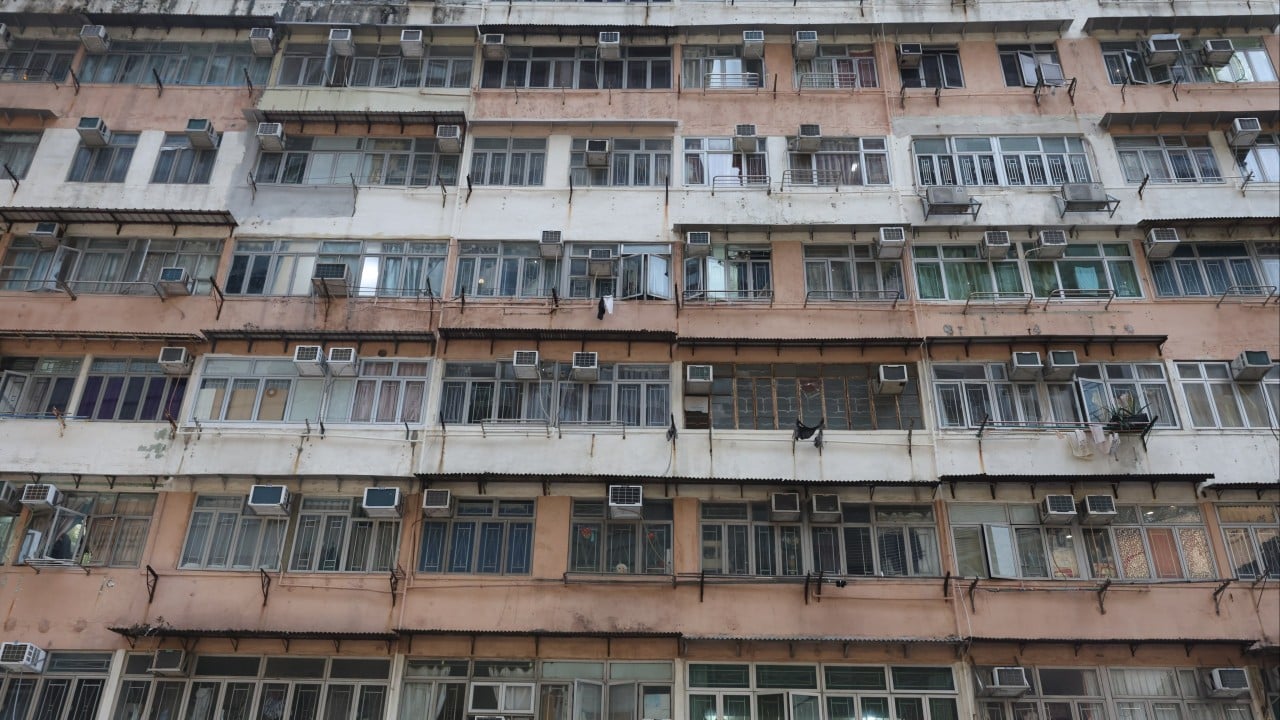
Under a new five-year bonus plot ratio pilot scheme, starting from September developers in Hong Kong can get an extra 20 per cent of gross floor area as a reward for taking on private redevelopment projects in seven designated old districts.
Only residential plots of at least 700 square metres (7,535 sq ft) with buildings aged 50 years and above will be eligible for the scheme.
Alternatively the bonus gross floor area can be converted into land premium value to offset the land premium payable for the redevelopment project or any land transactions by the developer, including land bidding, lease modification or land exchange projects, in the Northern Metropolis project and other areas in the city, within a decade.
The initiative was first announced in the chief executive's policy address last year and follows a legislative amendment two years ago that lowered the compulsory sale threshold for redevelopment.
Data compiled by the Legislative Council research office showed buildings aged at least 50 doubled to 10,200 between 2014 and 2023, and are projected to rise by 138 per cent to 24,300 by 2043.
As of 2025, 68 per cent of private buildings in Hong Kong were aged 30 or above, with a further 14 per cent due to cross that threshold within a decade.
Distinct publishers with included, body-backed reporting in this cluster.
scmp.com
1 article · August 29, 2026
Follow any of these and your For You feed starts watching them — no settings page required.
product
Two Chinese booster recoveries, one state and one commercial: reflight is still the untested part1 distinct publisher
invest
SMIC's binding constraint is floor space, and the AI crunch has reached power chips1 distinct publisher
product
A China Coast Guard Academy war game grades its AI on how often the gun comes out1 distinct publisher
product
Southeast Asia's data centre pipeline is 173 announcements chasing 1,435 MW1 distinct publisher
Evidence-backed comparisons of source perspectives and observed adoption signals. Read the methodology
Which Builder, Operator, and Investor concerns the observed source mix emphasized—not a truth score.
Evidence, demonstrated adoption, hype gap, incentives, and confidence are assessed independently, each on its own current evidence. How these are measured.
One editorial, no primary documents
Every term of the scheme — the 20 per cent, the 700-square-metre floor, the ten-year premium credit — reaches a reader through a single South China Morning Post editorial. Two data sets carry outside attribution, the Legislative Council research office on building ages and the Development Bureau on demolitions, and those are the sturdiest things in the story. What is missing is everything a sceptic would ask for: the names of the seven districts, the lease conditions, the penalty schedule, and any second outlet that has looked at the same paperwork.
Nothing has been taken up yet
The pilot opens in September and this reporting predates it, so take-up is a hope rather than an observation. The one measurable quantity is the base rate the scheme inherits: roughly 141 private demolitions a year in the decade to 2022, and about one in seven of all demolitions handled by the Urban Renewal Authority. Set against the roughly 705 buildings a year expected to pass 50 through 2043, the machinery being incentivised is currently running an order of magnitude behind the problem.
Warm framing, unhelpful arithmetic
The South China Morning Post calls the pilot 'much-needed and pragmatic' and lets 'market forces' do the rest of the arguing. The figures printed in the same piece pull the other way: eligibility is confined to 700-square-metre-plus residential sites in seven districts, and five years of private demolition at the recent pace clears about one year of newly 50-year-old buildings. That is not a debunking — the direction of the incentive is defensible — but the endorsement is pitched several sizes larger than the mechanism it is describing.
Developers get portable value; the bill lands later
The consequential clause is the one the editorial passes over in a sentence: bonus floor area can be cashed as a credit against land premium on unrelated transactions, Northern Metropolis bidding included, for ten years. That is value fungible across a developer's whole pipeline, while the state's side of the bargain shows up as premium it simply never collects — no line item, no appropriation. And the sole account recommending it is a Hong Kong newspaper's editorial page writing about a Hong Kong government initiative, which is a house view by construction.
Terms probably right, consequences unknown
We would be surprised if the headline numbers are wrong; they are specific, internally consistent, and the sort of thing a Hong Kong paper of record gets from the government correctly. Confidence falls away immediately downstream of them: whether owners can be assembled on qualifying sites, whether the unpublished penalties bite, how much premium the credit ultimately absorbs, and whether any of it moves the 141-a-year demolition rate. One account, days before launch, cannot answer those.