Science1 publisher2 min readPublished
NASA CubeSat on nine-month mission will alternate two engine types fed from one propellant tank
NASA's ASCENT CubeSat has cleared ground tests and launches no earlier than October 1 to run chemical and electrospray thrusters off one propellant tank. The tests covered seals, heat and balance, so the case for one propellant serving both engines rests on the flight.
The Scientist · Science desk
What happened
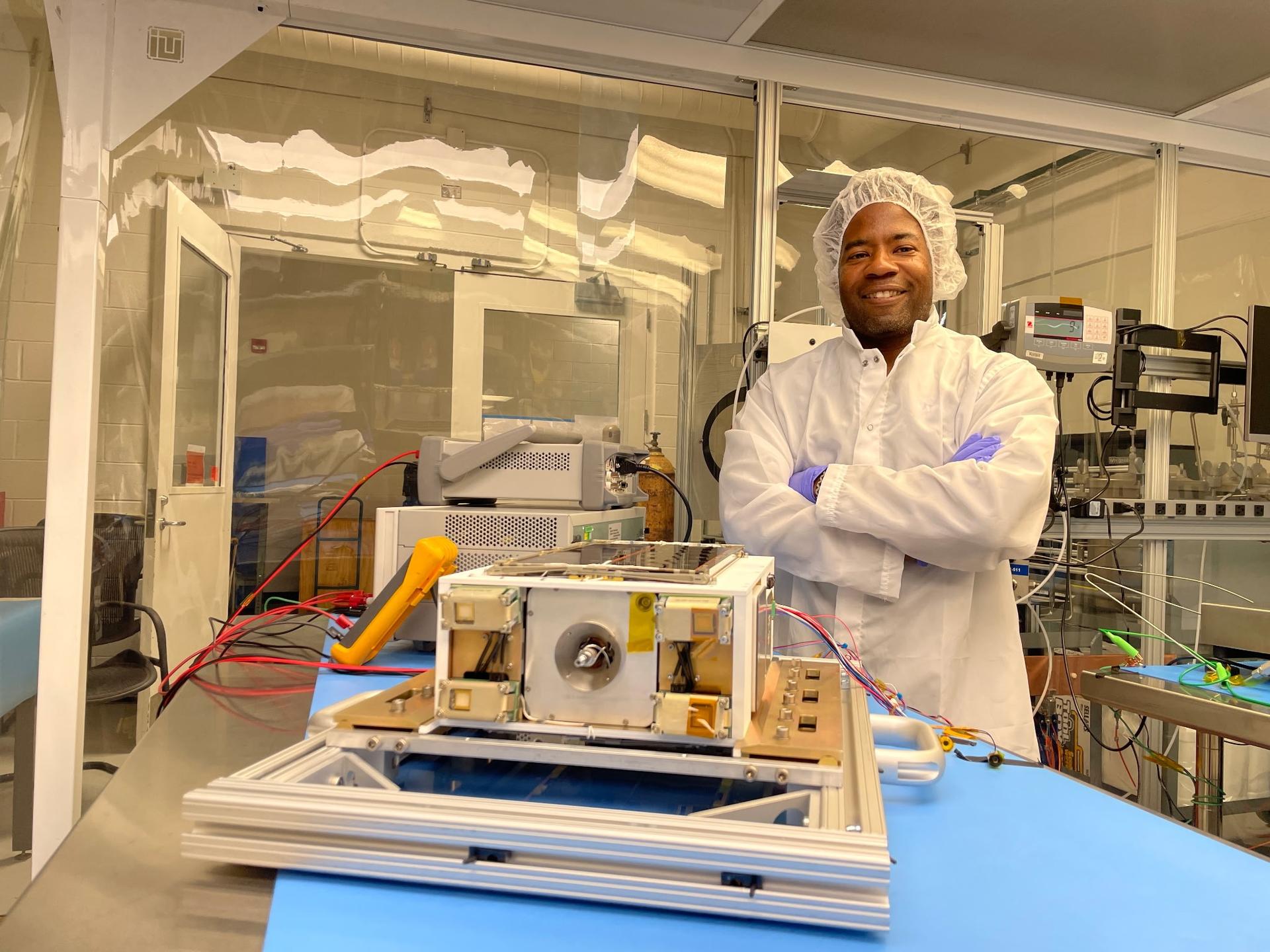
- Engineers at NASA's Marshall Space Flight Center finished months of environmental and physical testing on the ASCENT Propulsion Dual Mode CubeSat.
- The spacecraft feeds a high-thrust combustion engine and low-thrust electrospray thrusters from one central tank of a single non-toxic propellant, also called ASCENT.
- MIT developed the electrospray thrusters, Plasma Processes built the chemical propulsion module and Georgia Tech integrated the bus, with Marshall managing the mission.
- The CubeSat is manifested as a payload on a SpaceX Falcon 9 from Vandenberg Space Force Base, launching no earlier than October 1.
Compiled by The ScientistSomething wrong?How this is made
Why it matters
- capability If the alternating maneuvers work, NASA says future missions could put the saved mass and volume into science instruments and launch on smaller, cheaper rockets.
- exposure Tying both engines to one tank and one set of feed lines means a single leaking seal or valve puts both ways of maneuvering at risk at once.
- constraint A single shoebox-sized demonstrator can show the shared tank working in orbit, but its result leaves open how the design performs on larger spacecraft or longer missions.
The ground campaign at Marshall checked whether the hardware survives [1]. Engineers pressurized the spacecraft with helium inside a vacuum chamber and found its seals working as intended [8]. Thermal vacuum testing exposed the electronics, thrusters and mechanisms to airless conditions and wide temperature swings [9]. A spin test measured mass properties and center of gravity, the figures that decide whether the CubeSat can hold a stable attitude and keep its antennas and solar panels pointed where they need to be [10].
None of the tests NASA described involved firing the engines. The comparison NASA draws is with the usual arrangement [4]. A spacecraft typically carries a high-thrust chemical system for fast moves such as entering orbit, plus a separate low-thrust electric system for slow, efficient work such as holding position [4]. That layout needs multiple tanks and heavy plumbing, and NASA says both take up space and weight [4].
The thing this doesn't tell you is the size of the saving. NASA did not publish how much mass or volume the single tank frees up compared with two systems, or thrust and efficiency figures for either engine.
The flight is the experiment, and its design is sensible. After checkout in an orbit about 325 miles up, the operations team will run short chemical and electric maneuvers [13][14]. If those succeed, the spacecraft will spend several months raising and lowering its orbit, alternating between its high-thrust and low-thrust engines, inside a nine-month mission [13][14]. Repeated switching, with both engines drawing on the same supply for months, is a harder test of the shared design than one firing of each. NASA frames that campaign as the proof that the dual-mode concept works in space [14].
Getting there has meant stitching together hardware from several organizations. "There are a lot of odds and ends, and a lot of small challenges and some big ones," said Nehemiah Williams, the demonstration's project manager at NASA Marshall [7]. "But ensuring the functionality of the propulsion system across all these different teams is what makes the mission successful." [7]
Before the hardware ships to its launch site, the team still has to run final system checkouts and integrate the solar arrays [11].
What to watch
- Whether the Falcon 9 rideshare holds its no-earlier-than October 1 launch date from Vandenberg.
- Results of the first short chemical and electric maneuvers after checkout, which decide whether the months of alternating orbit changes go ahead.
- Any NASA release of measured thrust, efficiency or mass-saving figures from the flight.