Product1 publisher3 min readPublished
MIT's magnet trick makes correlated microwave signals without the cryostat
A magnetic film in a microwave resonator splits photons into two synchronized signals at room temperature. One outside expert calls the result classical, not quantum.
The Product Desk · Product desk
Drafted by a language model from the sources cited here and checked against its claim ledger before publication. How we use AISend a correction
What happened
- A novel hybrid and scalable device built by researchers at MIT could power the next generation of radars and sensors using quantum technologies, while working at room temperature, without bulky and expensive cooling equipment.
- Modern high-performance radar systems can detect extremely faint signals, using microwave photons as the fundamental particles involved.
- Using a device called a Josephson junction, scientists can split a microwave photon into two correlated photons, one used to encode a signal and one to decode it.
- Josephson junctions are part of superconducting circuits, which also find applications in secure communications networks.
- Superconducting circuits require temperatures below 273 degrees Celsius below zero (minus 459 F) to operate, which is possible only with cryostat machines that are energy-intensive, bulky and expensive.
Compiled by The Product DeskSomething wrong?How this is made
Why it matters
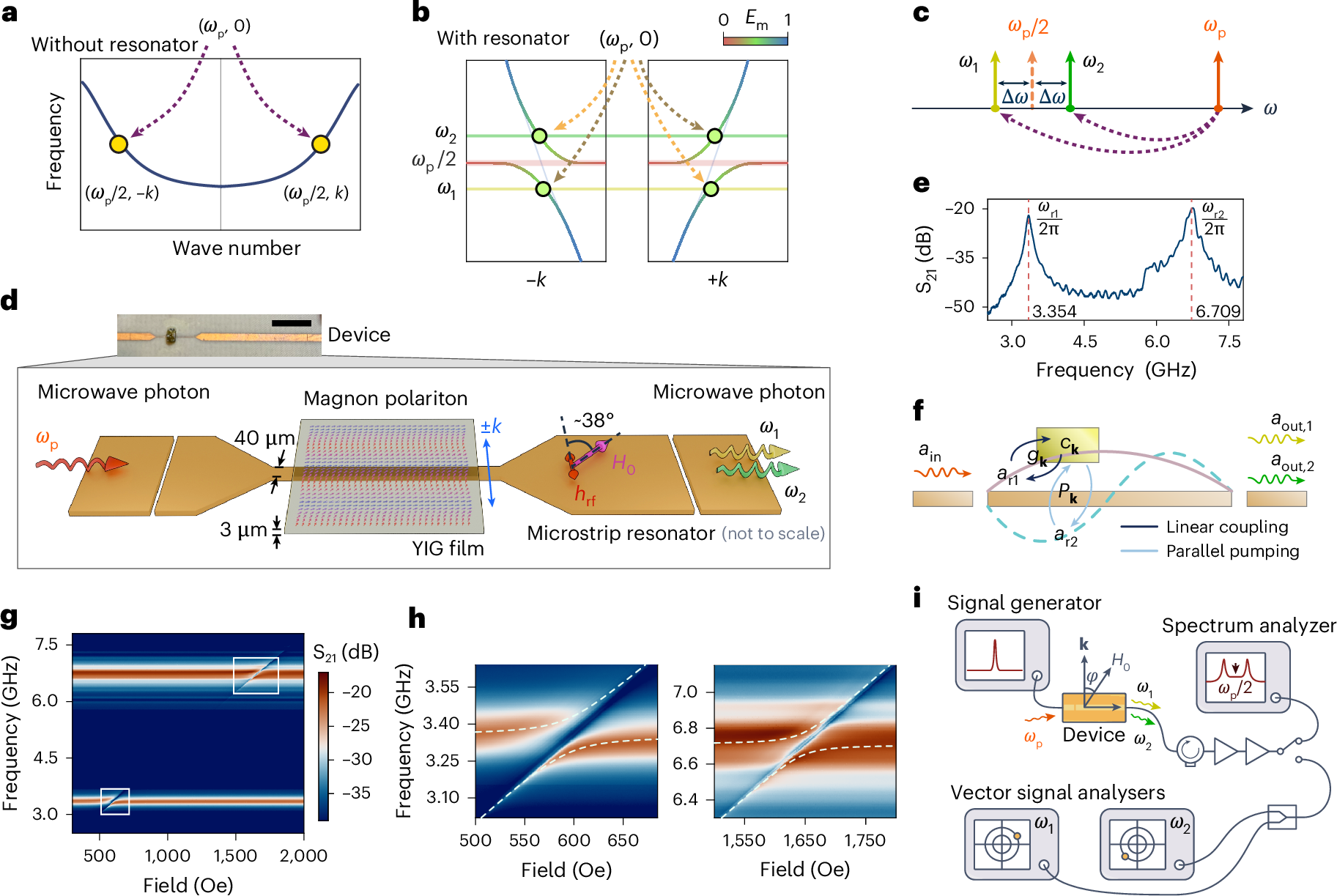
A team at MIT led by Luqiao Liu, an associate professor in the Electrical Engineering and Computer Science department, has built a hybrid device that splits incoming microwave photons into a pair of synchronized signals at distinct frequencies, and does it at room temperature [1][6][9]. The result, published in Nature Electronics, matters because the standard way to produce correlated microwave photons is a Josephson junction inside a superconducting circuit, and that circuit needs a cryostat [3][4][19].
The cooling requirement is the whole deployment problem. The coverage puts superconducting operation at temperatures below minus 273 degrees Celsius, or minus 459 Fahrenheit, achievable only with cryostat machines that are energy-intensive, bulky and expensive [5]. Read that figure as shorthand rather than a spec, since as printed it lands at absolute zero, but the operational point stands: a radar front end or a secure link that arrives with a dilution refrigerator attached is a laboratory instrument, not a product [5].
The MIT approach is unglamorous in a good way. A magnetic film goes into a microwave resonator [8]. Pump microwave photons into a magnetic system and they generate a pair of magnons, quantised packets of magnetic energy, at the same frequency, so the engineering problem is separating them [10]. Liu says the team used level repulsion arising from the coupling between magnons and microwave photons to push the two magnons apart in frequency [13]. Liu also notes that magnonic systems have a rich range of nonlinear dynamics that have not yet been harnessed for practical applications [12]. What comes out is a pair of hybrid magnon-photon waves that stay synchronised while sitting at different microwave frequencies [11]. One can carry the transmitted signal, the other the detection path [10].
The security story follows from the frequency split rather than from any quantum property: an interceptor cannot decode the signal without the matching frequency, which functions as the key [11]. The team also frames the device as a route to noise-resilient communication, where a receiver recovers a message even after random data garbles it in transit [14]. Such microwave signals are also used in quantum simulators, the machines being built to run computations on subatomic particles in order to predict new drugs and materials [15].
Here is where the marketing and the physics part company. The article's own framing is quantum technologies at room temperature [1], but Can-Ming Hu, a professor of physics and astronomy at the University of Manitoba who was not involved in the work, describes the impact as covering secure microwave communications, hardware random number generation, correlation-based signal processing and intelligent microwave sensing, all operating within the classical regime at room temperature [17][20]. Hu's forward-looking language is "quantum-inspired" microwave sensing and communication built on nonlinear cavity magnonics [18]. Correlated classical signals with no cryogenics is a real and useful thing to have. It is not entanglement-based quantum radar, and buyers should not be sold it as such [17][18].
Watch for the numbers the write-up does not carry: operating frequencies, correlation strength, conversion efficiency, output power and linewidth, none of which appear in this account [21]. Those are what determine whether a magnetic film in a resonator competes with existing classical correlated-signal generation or only with the cryogenic version. Also worth watching is whether Liu's group, which reached this result while pursuing other research interests, can hold the room-temperature claim while scaling the device into something a radar integrator can mount [7][16].