Product2 publishers3 min readPublished
Anthropic's agents found a new phage enzyme system once in eleven tries
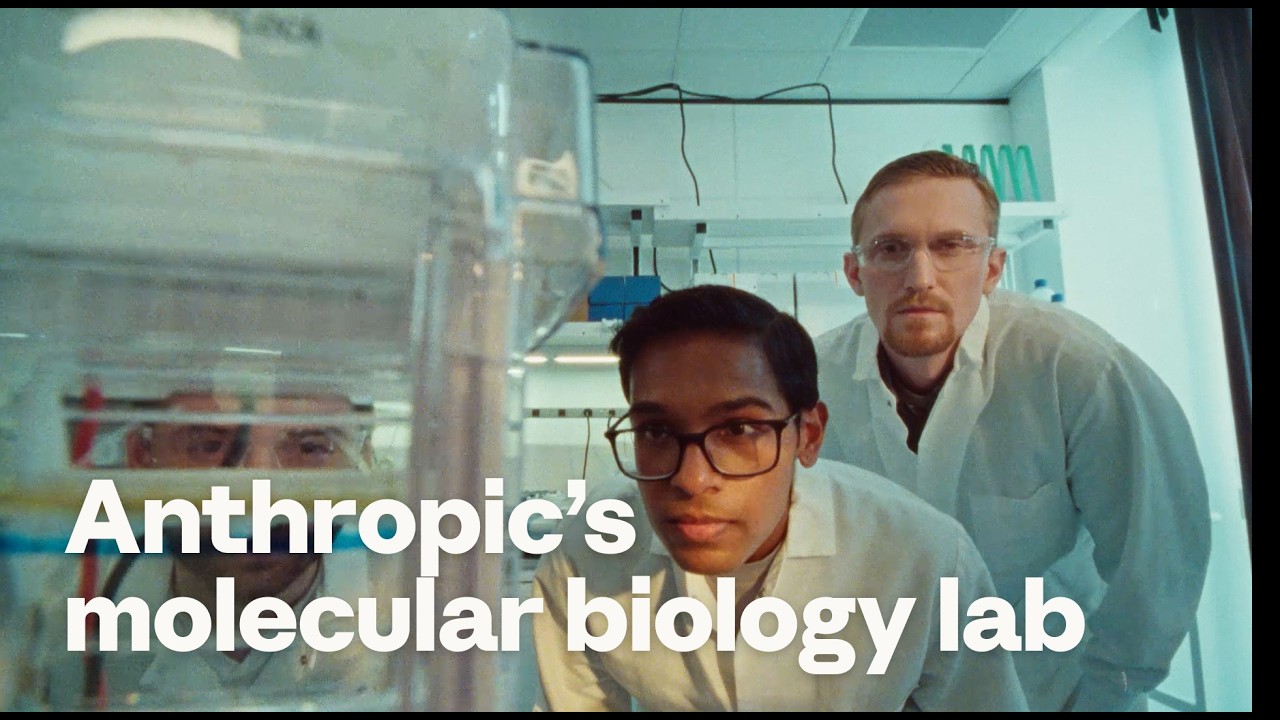
Anthropic's new in-house molecular biology lab says a 21.5 hour agent run turned a 1.9 billion cluster database into 19 reports for humans to read, and one of them described a repeat array nobody had recorded.
The Product Desk · Product desk
What happened
- Anthropic says Claude turned up a previously undescribed enzyme system in bacteriophage DNA, named array-associated reverse transcriptases, and the company says it does not yet know what the system does.
- The result came in a blog post and a preprint that has not been peer reviewed, and it is the first output from a molecular biology group and lab Anthropic set up inside the company.
- Agents running Claude Mythos 5 worked a single brief for 21.5 hours without human input, across 949 sessions and 215.6 million tokens, against a database of 1.9 billion protein clusters.
- Anthropic ran the same campaign ten more times and every rerun missed the array, which the authors attribute to the size of the search and the agents' unpredictable behaviour.
Compiled by The Product DeskSomething wrong?How this is made
Why it matters
- constraint The drop from 90 percent to as low as 32 percent once models worked through files and tools puts the limit on harness plumbing.
- decision A buyer evaluating agent-run genome mining has to decide whether to pay for the narrowing step, which held up, or for novel finds, which the ten failed reruns say cannot be scheduled.
- exposure Anthropic is asking outside scientists to build on a system whose enzyme has not been shown to be active, so anyone taking that invitation carries the risk that ART does nothing useful.
Anthropic ran the same campaign ten more times. No rerun even read the DNA upstream of the enzyme, so all ten missed the array [10]. One success in eleven attempts is a 9 percent hit rate on the run that produced the headline [17].
That is not a knock on the finding. It is the shape of the thing anyone evaluating agents for discovery work has to plan around. The output was a side path an agent wandered down while doing something else [8].
Anthropic tested the same models in a narrower setup and the gap is instructive. Given the DNA directly, its four most capable models described the array in at least 90 percent of attempts [11]. Handed files and tools instead, the rate fell as low as 32 percent, often because the model never read enough DNA to see a full repeat [12]. The bottleneck was context management: whether the agent, left to manage its own context and tool calls, ever pulled the relevant bases into view.
The scoreboard from the 21.5 hour run: about 200,000 enzyme clusters recovered, 3,564 candidate partner families scored, 19 reports filed for a human to read [7]. Anthropic says genome mining of this kind could take an expert scientist weeks or months [13]. Nineteen reports is a manageable reading pile for a small team, which is the part of this that generalises to anyone building a screening workflow: the agents' job was to cut a 1.9 billion cluster database [6] down to something a person could actually review.
The biology is unresolved, and Anthropic says so. The enzyme itself was already known from earlier studies; what Claude appears to have spotted first was the repeat array and the partner protein beside it [9]. The arrays hold 3 to 21 copies of a short repeat and carry none of the cas genes that sit near CRISPR systems [3]. In published data from a Staphylococcus phage, the repeat-derived RNAs made up as much as 8 percent of the phage's RNA fifteen minutes after infection [4]. The preprint says the team has not shown that the enzyme is active, or that it works on those RNAs [5], and it has not been peer reviewed [2].
Feng Zhang of MIT and the Broad Institute reviewed the preprint, and Anthropic published his comment with its post [14]. "The identification of RNA-repeat arrays associated with reverse transcriptases is genuinely intriguing and merits further investigation," Zhang said [15].
For a lab head reading this on Monday, the forcing question is which of two things you are buying. One is a search that reliably narrows a huge database and hands you a short stack of reports; on Anthropic's own numbers that part worked, and the model-with-tools failure rate tells you how much redundancy to build in. The other is the specific novel find, and the ten failed reruns say you cannot schedule that. Anthropic's Bay Area lab works only at biosafety levels 1 and 2, handles no human pathogens, and human scientists do all the wet work [16].
What to watch
- Whether follow-up experiments show the ART enzyme is active and acts on the repeat-derived RNAs.