Science1 publisher2 min readPublished
A first joint AHA and Headache Society grant tests whether migraine weakens brain vessels
Migraine with aura has been tied to higher stroke and heart attack risk for years without anyone showing how. Four newly funded projects go after the cell biology, and the flagship one starts in the laboratory.
The Scientist · Science desk
What happened
- The American Headache Society and the American Heart Association co-funded an Innovative Project Award for the first time, $200,000 over two years, for high-risk work on headache disorders and vascular decline.
- The co-funded award went to Juliana Navia Pelaez at St. Louis University School of Medicine, for a project on neurogenic priming of perivascular macrophages by migraine-associated peptides.
- The two funders describe migraine's ties to cardiovascular and cerebrovascular disease as well documented but poorly understood, with elevated stroke and heart attack risk concentrated in migraine with aura.
Compiled by The ScientistSomething wrong?How this is made
Why it matters
- constraint A two-year bench grant can show that the priming step exists, but not whether calming those immune cells prevents a single stroke.
- capability Epidemiology cannot hand anyone a drug target. A signaling step from migraine neuropeptide to macrophage would, and it sits upstream of the vessel damage.
- contradiction The same $200,000 is given as the size of the single co-funded award and as what the whole initiative provides across four projects, so the total committed here is unclear.
- precedent Two societies splitting one award across specialty lines makes joint headache-and-cardiology funding an expectation for the next cycle.
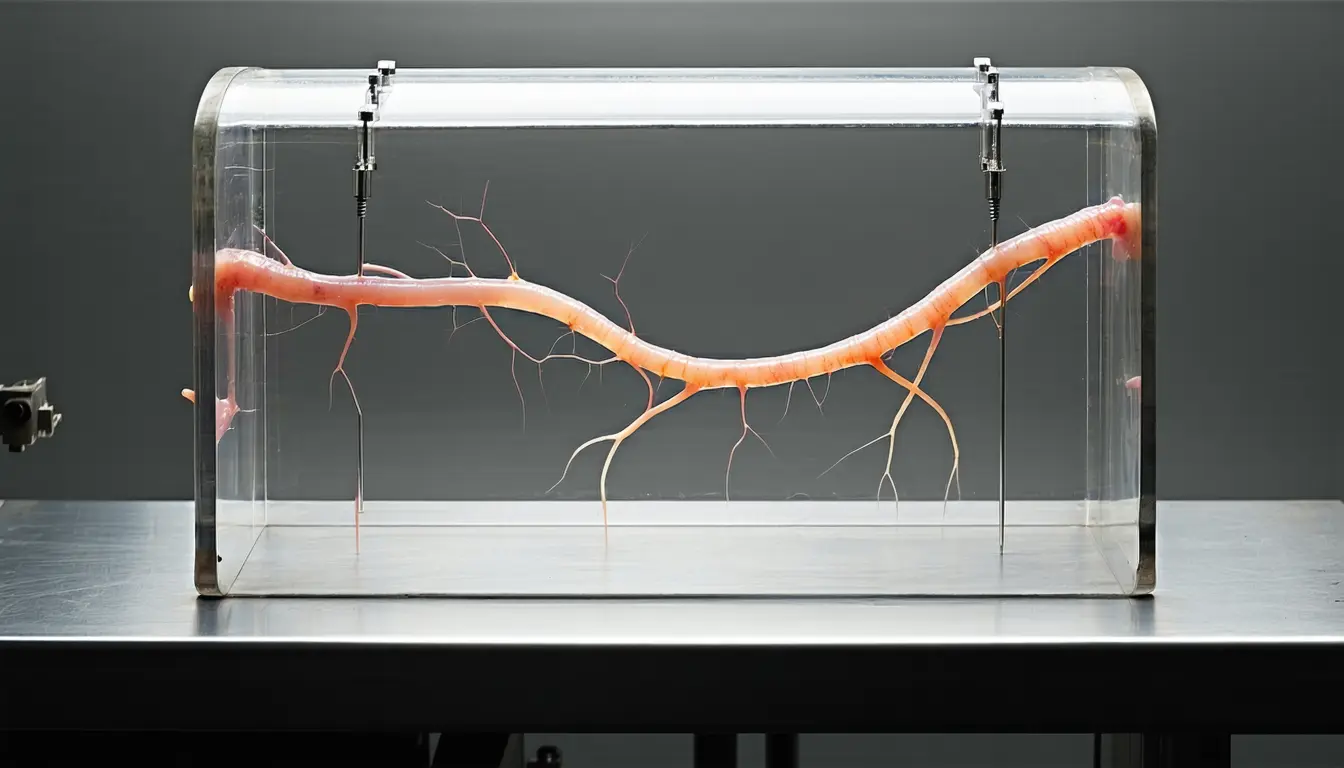
Perivascular macrophages wrap cerebral blood vessels and defend them [6]. The vessels they sit on run through cycles of constriction, dilation and altered flow during a migraine episode [5]. Pelaez's laboratory is testing whether enough of those cycles leave the macrophages hyperactive when there is nothing left to defend against [6].
"If migraines happen over and over, these immune cells might stay 'on' for too long. When this happens, they might accidentally make the blood vessels weaker," Pelaez said [7]. "If the vessels get weaker, the brain might have a harder time protecting itself from a stroke," she said [8]. The project tracks migraine-related neuropeptides as the trigger, and its stated aim is to find targets that quiet the cells or intercept the inflammatory signaling before vessels are damaged [9].
The human data cannot settle direction. A population with more strokes and more migraine with aura is consistent with attacks damaging vessels, and equally consistent with vessels that were already different before the first attack [10]. A neuropeptide dose that primes macrophages on the bench would be evidence for the first reading. On its own, priming in a dish stops short of showing that primed macrophages are what produces strokes in patients. The announcement describes laboratory work and does not name the species or model system [16].
Two hundred thousand dollars over two years is $100,000 a year [14]. The figure appears twice in the announcement carrying two meanings: once as the size of the co-funded Innovative Project Award, and once as what the partnership provides together with the three AHA awards, across basic science, clinical trials and population health [1][3]. Split four ways, that is $50,000 a project [17].
Of the three AHA-only grants, Andrea Harriott's at Massachusetts General Hospital is the one built to catch structural damage as it forms: protein shifts, collateral vessel remodeling and angiogenesis following the cortical spreading depolarizations that underlie aura, to establish whether long-term aura exposure directly damages the brain's vascular architecture [11]. Matthew Bender's group at the University of Rochester is building a measurement instead, a non-invasive contrast-free quantitative MRI technique for the glymphatic-hemodynamic axis in idiopathic intracranial hypertension, a raised-pressure disorder that predominantly affects overweight women of childbearing age [12]. The fourth award goes to the choroid plexus in obesity-related migraine [13].
What to watch
- Whether the AHA and AHS disclose dollar amounts for the three standalone grants, which would settle whether $200,000 is one award or the whole program.
- First data from Pelaez's lab on whether migraine-associated neuropeptides alone can prime perivascular macrophages, and in which model system.
- Whether Harriott's team finds endothelial protein changes and collateral remodeling after repeated cortical spreading depolarizations.