Invest4 publishersIndependently confirmed3 min readPublished
Surface Laptop Ultra moves 120-billion-parameter AI onto hardware the customer pays for
Microsoft and Nvidia's Surface Laptop Ultra can run AI models of up to 120 billion parameters on the device, with prices expected to start above $2,000. Microsoft is betting customers will buy compute it now runs in Azure, while memory costs push 128 GB machines higher.
The Investor · Invest desk
Drafted by a language model from the sources cited here and checked against its claim ledger before publication. How we use AISend a correction
What happened
- The machine pairs an 18- or 20-core Grace CPU with a Blackwell GPU of up to 6,144 CUDA cores, up to 128 GB of unified memory and about 1 petaflop of FP4 compute.
- High-end builds are projected at $3,000 to $7,000 or more, according to Crypto Briefing, mostly because of the cost of high-capacity memory.
- Pre-orders were expected to open around the October 7 launch, with shipments targeted for mid-to-late October 2026.
Compiled by The InvestorSomething wrong?How this is made
Why it matters
- cost Each agent task run on the laptop uses compute the buyer paid for up front, so the capacity bill Microsoft would carry in Azure lands in the customer's hardware budget.
- exposure Adoption now tracks the memory-chip market; if 128 GB stays as costly as the DGX Spark repricing implies, local AI stays with buyers who have the budget, as Sag put it.
- exposure Intel and AMD face Nvidia in the Windows PC market through Microsoft and five other PC makers at once, whatever Surface itself sells.
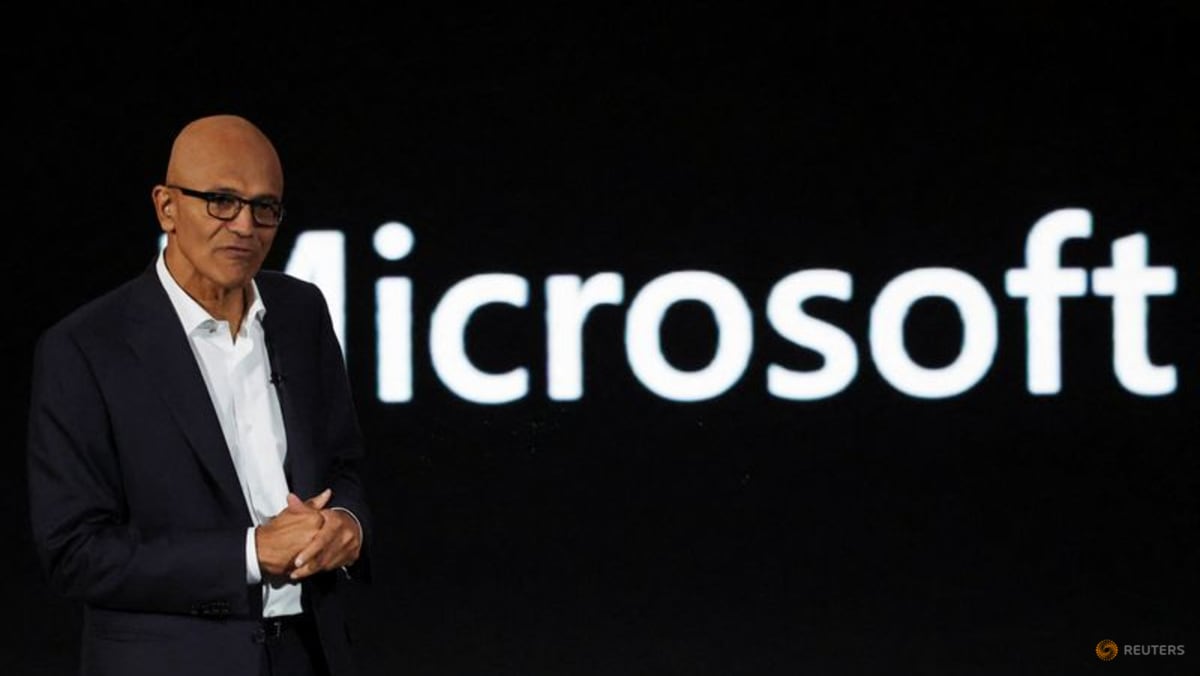
Reuters describes Microsoft's side as a bet that some work now done in its "costly Azure cloud computing data centers" can move to Windows machines in businesses and homes, where "its customers foot the hardware bills" [8]. Microsoft wants Windows to host AI agents that handle tasks such as writing code without touching the cloud, analysts told Reuters [13]. In cash terms, that moves capital spending from Microsoft to the buyer. A coding agent on Azure runs on a GPU Microsoft has to buy and operate. The same agent on a Surface Laptop Ultra runs on silicon the customer paid more than $2,000 for [4]. The sources do not include a cloud price per task, so the point where owning beats renting cannot be worked out from them.
The 120-billion-parameter figure [2] depends on precision. The chip is rated at about 1 petaflop of FP4 compute, and memory tops out at 128 GB [3]. At 16-bit precision, or 2 bytes per parameter, a 120-billion-parameter model needs 240 GB, nearly twice the ceiling [16]. At 4 bits it needs about 60 GB for the weights alone [17]. The headline number therefore describes compressed models on the larger memory configurations. Those are the builds Crypto Briefing reports are projected at $3,000 to $7,000 or more, driven largely by the cost of the memory [5].
That memory is where the price risk sits. Reuters reported that Nvidia raised its DGX Spark desktop by about 75% to $6,950 because of the surging cost of its 128 GB of memory [9]. That puts the old price near $3,970 [18], an increase of roughly $2,980 [19]. When Microsoft first pitched PC-based AI as a cost saver, the laptops were mostly priced below $2,000 [10]. Two years ago, "the software wasn't ready, but the hardware was. Now the software is ready and the hardware is too expensive to actually run it locally," said Anshel Sag, an analyst at Moor Insights & Strategy [11]. "So it's becoming this thing where only the people who have the budget can really afford to run AI locally," he said [12].
If memory prices ease, entry prices could drift back toward that sub-$2,000 band and some agent work would leave Azure. If they hold, Sag's version plays out: local inference at this scale stays a purchase for well-funded teams, and Azure keeps the volume. A third path runs through security. Reuters names showing that agents can be safely contained on personal computers as one of the key challenges [14], and an enterprise buyer unconvinced on that point can buy the cloud version from the same vendor. Nvidia is less exposed to any of these outcomes. Dell, Lenovo, ASUS, HP and MSI are expected to launch RTX Spark laptops in the same fall window [7], and Reuters calls the Windows PC one of the last major markets dominated by Intel and AMD [15].
I think 120-billion-parameter local inference stays a top-configuration product this year, priced near the DGX Spark, with Azure keeping most agent workloads. The counter-thesis is that Microsoft and five other PC makers shipping the same platform at once [7] push prices down faster than the memory market alone would allow. The test comes with pre-orders, which were expected to open around the launch date [6]. A configuration with enough memory to hold a 4-bit 120-billion-parameter model, priced near $2,000, would prove this view wrong.
What to watch
- Confirmed pre-order prices for the 128 GB Surface Laptop Ultra configuration, set against the DGX Spark's $6,950.
- Whether memory-chip prices ease enough for Nvidia to reverse any of the DGX Spark increase.
- Any disclosure from Microsoft or Nvidia on how on-device agents are contained, the challenge Reuters flagged.