Product1 distinct publisher3 min readPublished
A 9to5Google reviewer who did not want a robot mower had the Luba 3 assembled in about 30 minutes and mapped it from a phone, with the bundled RTK base station left unused. His only repeat failure was a ditch that trapped the machine when positioning drifted a few inches.
The Product Desk · Product desk

product
LiDAR frees the robot mower from the sky. At $3,200 it is still priced for the biggest lawns1 distinct publisher
product
A 2x LLM bill is not a bug report: token spend is an observability problem1 distinct publisher
build
Your Multi-Key Failover Is The Most Expensive Line On Your Coding Agent Bill1 distinct publisher
product
LineageOS 23 reaches the Galaxy S22 with about six months left on Samsung's clock1 distinct publisher
Compiled by The Product DeskSomething wrong?How this is made
NetRTK is the whole argument, and 9to5Google's review is careful about what it means: a highly accurate satellite positioning system paired with LiDAR, standing in for the boundary perimeter or RTK base station that many other mowers require [2]. What the review does not say is what the "Net" half is corrected against, or whether that correction carries an ongoing cost, and it gives no price for the machine either [12]. That matters more in year two than in week three. A buried wire fails in a way you can dig up and look at, while a correction stream fails quietly, as a machine sitting a few inches from where it believes it is.
The friction claim rests on small numbers, none of them about grass. Assembly and setup ran about 30 minutes with the tools in the box [3]. The dock needs a power outlet in the vicinity and a fairly level spot, and the reviewer's slightly uneven mulch base held up, with one failure to seat for charging across several weeks [4]. The boundary itself was drawn twice, both times in software: once at setup, once after the first two runs proved the mower held its line well enough to move it much closer to a busy road [7][14].
That second pass is the product. The pitch is autonomous mowing; the work an owner actually does is draw a line on a phone, watch two runs, and redraw it [6][7]. Everything the category used to charge in labor now lands as map-editing, which is a real reduction and also a relocation.
Where it broke is instructive. Drift of a few inches near the road was survivable. The same drift in a section of yard with a ditch left the mower stuck a couple of times, and a hard-to-access area stayed tricky [8]. The failure combined terrain with error, and slopes on their own caused no trouble [16]. So the pre-purchase count that predicts your Friday is not lawn area. It is the number of places where a few inches of error meets a ditch or an unreachable corner.
Two positioning systems ship in the box and the reviewer used one, which leaves Mammotion paying for a base station in every unit that its own reviewer tells buyers to leave alone unless they are in very specific circumstances [5][13]. That is a bill of materials line item defending an edge case.
The caveats are the usual single-review ones. Mammotion supplied the unit, and this is one yard in a North Carolina summer that had scorched part of the lawn, cut fairly even with the occasional straggler [11][15]. The durable signal is the shape of the usage: the mower earns its keep on a regular schedule rather than as-needed [9], which means the failure that counts is the unattended one, and a rescue means walking out to a 41 lb machine [10]. The number that matters is your rescue spots: zero means the install friction is genuinely gone, more than two means you have bought a mower and kept a trimmer.
Ranked by verification strength, evidence, and original report placement.
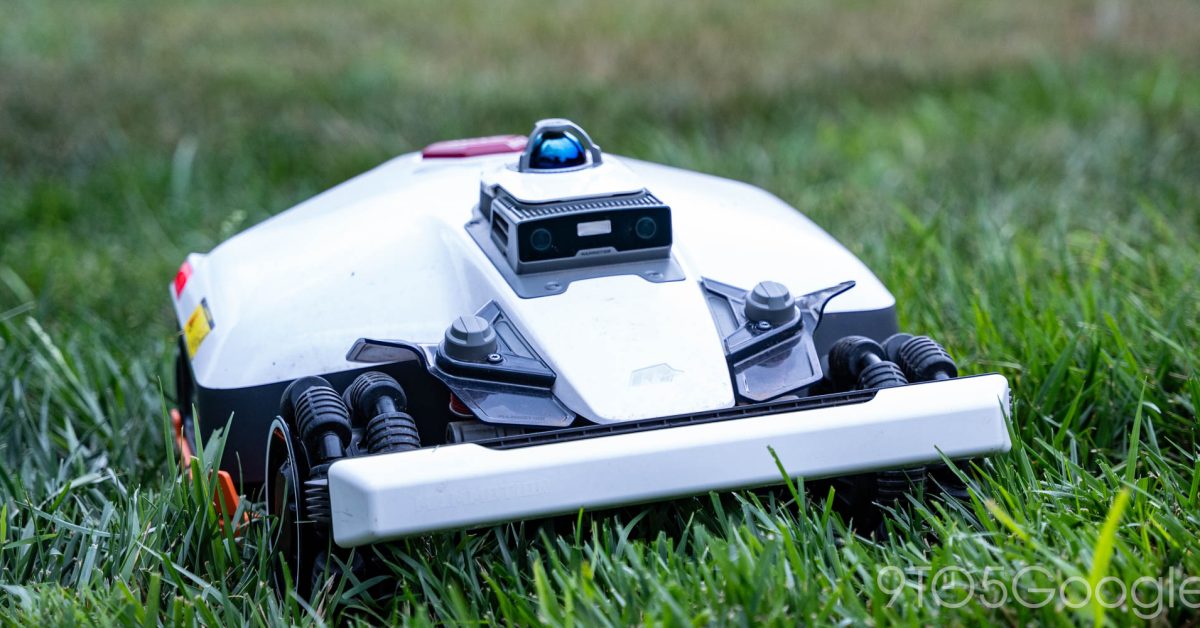
A 9to5Google reviewer wrote that he never wanted a robot lawnmower because it felt like more setup and maintenance than it was worth, but after a few weeks with the Mammotion Luba 3 AWD his attitude flipped and he was sold.
Unlike many robot mowers, which require a boundary perimeter or an RTK base station, the Luba 3 operates with what Mammotion calls NetRTK, described in the review as effectively a highly accurate satellite positioning system combined with LiDAR.
Assembly and setup of the Luba 3 took around 30 minutes, with the included tools making it easy to attach the front bumper and side covers.
The docking station included in the box needs a power outlet in the vicinity and a fairly level location; the reviewer's slightly uneven and unstable mulch base worked well enough, with only one occasion in several weeks of use where the mower did not fully seat for charging.
A physical RTK base station is included in the Luba 3 box, but the reviewer says you do not need it unless you are in some very specific circumstances.
Mapping is managed through the app, where a virtual joystick is used to set up a map and the pathways the mower can use to reach zones, including crossing driveways or portions of a neighbor's lawn; the app also sets schedules, views progress, and shows a first-person view from the mower's main camera.
Distinct publishers with included, body-backed reporting in this cluster.
1 article · August 29, 2026
Follow any of these and your For You feed starts watching them — no settings page required.
Evidence-backed comparisons of source perspectives and observed adoption signals. Read the methodology
Which Builder, Operator, and Investor concerns the observed source mix emphasized—not a truth score.
Evidence, demonstrated adoption, hype gap, incentives, and confidence are assessed independently, each on its own current evidence. How these are measured.
First-hand, single-handed
The observations are specific enough to be wrong: lines redrawn closer to a busy road, one failed docking in weeks of charging, a ditch that trapped the machine when positioning slipped a few inches. What is missing is anyone repeating them. The headline capability, NetRTK, is characterised by the same reviewer who accepted the free unit, and the slope and runtime numbers are Mammotion's, passed along rather than tested.
One seeded lawn
Real use, sample of one: a review unit Mammotion placed, run for a few weeks on a 0.75-acre lot in North Carolina. No sales figures, no owner reports at any scale, and because no price is ever stated there is no way to judge who is in a position to buy in.
Gentle pitch, narrow base
The selling is soft and the admissions are real: stragglers at maximum height, edging still done by hand, a ditch that beat the machine twice. The stretch is in the frame rather than the facts — one converted skeptic on one drought-hit lawn stands in for a verdict on robot mowers, and with no price on the table the value judgement can't be argued with.
Free hardware, stated up front
Mammotion picked the tester and supplied the machine, and 9to5Google says so in its second paragraph — the right move, and not one that cancels the pull. Seeded consumer-hardware reviews also sit downstream of continued access and affiliate economics, and nothing in this account was checked by anyone the vendor did not choose.
Believe the notes, not the verdict
Take the yard-level observations at close to face value and hold the conclusion loosely. One publisher, one lawn, one summer — and the two questions a prospective owner asks first, what it costs and what NetRTK depends on, go unanswered from beginning to end.