Leadership1 distinct publisher3 min readPublished
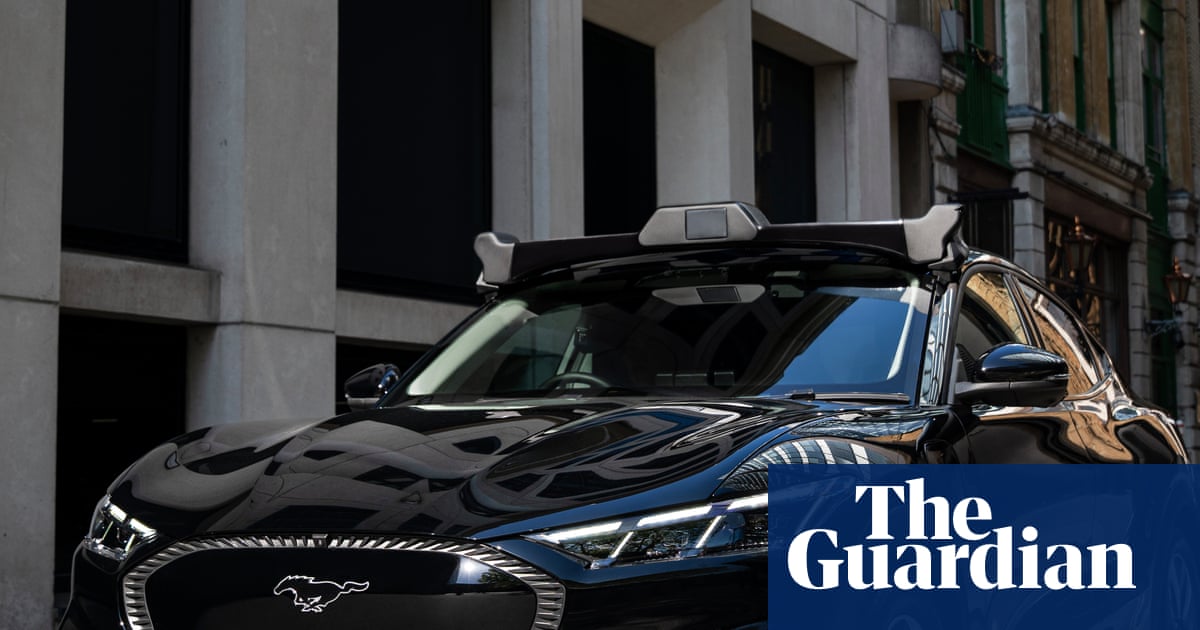
Fifteen supervised cars joined the Uber app in London on Thursday under a licence that keeps a human in the driving seat until a separate agency, which few expect to move this year, says otherwise.
The Board Room · Leadership desk

Compiled by The Board RoomSomething wrong?How this is made
Two bodies hold different pieces of this, and only one of them has acted. Transport for London can license a car as a private hire vehicle and attach conditions to it [5]. Whether a car may run with nobody in the driving seat is decided elsewhere, by the Driver and Vehicle Standards Agency, under a separate government process [6]. Those are different questions with different owners, which is how an operator comes to hold a valid London licence while still being some distance from the product that licence gestures at.
The scale numbers repay doing by hand. Fifteen licensed cars against roughly 100,000 Uber customers who have registered for autonomous rides is about 6,700 signed-up passengers per vehicle [17], and against a private hire fleet of more than 100,000 the autonomous share is roughly 0.015% [20]. The Guardian reports that the chance of landing one on request is slim [2]. At that ratio, what the fleet produces is not rides in any commercial sense but evidence: supervised mileage in what Wayve's chief executive Alex Kendall calls "one of the most complex driving environments in the world" [22], plus a paper trail for the next application.
On price, Uber's own executive is the most useful witness. Sarfraz Maredia, who runs autonomous mobility at the company, said the consumer benefit should over time be that rides are safer and cheaper, then added that "today, nobody's able to operate AVs cheaper than a traditional human-driven ride, so that's going to take a while to prove" [9]. The figure that would turn London into an autonomous market, cost per mile with no wage in the front seat, is not produced by any vehicle now carrying passengers.
Kendall is not claiming the software is sitting ready while the regulator alone holds things up. He described the technology as "still maturing" and declined to name a date for removing the safety driver [10], and he set out three tracks running at once: moving to manufacturer-produced Nissan Leaf robotaxis, validating safety metrics on that platform, and securing approval, with a driverless launch when all three converge [11][12]. Two of those three are Wayve's own homework, and the platform change means the safety case gets rebuilt on hardware that has not yet carried the public. Wayve's system rests on an AI learning model rather than the mapping used by Waymo [16], a bet on generalisation that London traffic will now test with an audience.
Both operator and government reached for the same word. Maredia called the launch a major milestone in scaling accessible AV technology [8]; the transport secretary, Heidi Alexander, called it a major milestone for the future of transport in London [15]. Milestone is the honest description, and a milestone marks a route rather than an arrival. What it marks here is that London's private hire framework will carry supervised autonomy today, which is the same route open to Waymo and Baidu while they test in the city [13], and the one Uber already used in Zagreb this summer with a person onboard [14]. For anyone planning around London driverless cost curves, the coming year supplies operating data and a licensing precedent, while the price of a ride with an empty driver's seat stays a forecast.
Ranked by verification strength, evidence, and original report placement.
Rides in Wayve's autonomous vehicles were added to the Uber app on Thursday, allowing Londoners to hire self-driving taxis for the first time.
Regulatory approval for fully autonomous operation without a safety driver must be granted under a separate government process by the Driver and Vehicle Standards Agency, and is now seen as unlikely this year.
Sarfraz Maredia, head of autonomous mobility at Uber, said the London launch was "a major milestone in scaling safe, accessible AV technology in a city with some of the world's most complex roads".
Wayve chief executive Alex Kendall said the technology was "still maturing" and declined to predict when robotaxi services without a safety driver would arrive, saying he did not want to put a timeline on it.
Kendall said Wayve is working on the vehicle platform, safety validation and regulatory approval in parallel and will launch fully driverless services as soon as they come together.
Transport secretary Heidi Alexander said the launch was "a major milestone for the future of transport in London".
Follow any of these and your For You feed starts watching them — no settings page required.
product
Uber's London licence caps the robotaxi fleet at 15 cars, each with a paid supervisor4 distinct publishers
product
Uber made driverless the default in Dubai, not the option1 distinct publisher
product
Unitree's Post-IPO Halving Exposes Physical AI's Missing Software1 distinct publisher
product
Waymo drops the quiet-confidence act a week before Tesla shows the Cybercab1 distinct publisher
Evidence-backed comparisons of source perspectives and observed adoption signals. Read the methodology
Which Builder, Operator, and Investor concerns the observed source mix emphasized—not a truth score.
Evidence, demonstrated adoption, hype gap, incentives, and confidence are assessed independently, each on its own current evidence. How these are measured.
One newsroom, close to the car
The Guardian was physically in the vehicle and has the principals on record — Wayve's chief executive, Uber's autonomous mobility head, the transport secretary, a GMB organiser — which is far better than a rewritten press release. What it does not have is a second pair of eyes: no other outlet here confirms the 15-car count or the 100,000 registrations, both of which originate with the companies, and the pivotal timing judgement that DVSA approval is 'now seen as unlikely this year' arrives with no named source at all. Safety performance is represented by one gateway manoeuvre on a hosted test drive.
Live, paid, and almost invisible
This clears the bar that matters — members of the public can hail these cars and pay for them, on the app they already use, in one of the harder driving cities in the world. But 15 vehicles is roughly 0.015% of London's licensed private hire fleet, and every one of them has a human in the driving seat, so the supervised model, not the autonomy, is what is deployed. About 100,000 sign-ups measure appetite rather than usage. Uber's Zagreb service, the European precedent, is built the same supervised way.
Milestone language, supervised reality
Three parties reach for the same word. Uber's Maredia calls it a major milestone in scaling AV technology; the transport secretary calls it a major milestone for the future of transport; the launch itself is 15 cars that legally cannot move without someone licensed sitting behind the wheel. What keeps the gap modest is that the deflation comes from the same sources: Maredia volunteers that nobody runs AVs cheaper than a human driver yet, Kendall calls the technology still maturing and refuses a date, and the Guardian leads with the odds of actually getting one being slim.
Everyone quoted has something riding on it
Trace the sourcing and it is participants all the way down. Uber and Wayve are selling the service and the platform migration; Heidi Alexander is selling British innovation and inward investment, a claim she makes in the same breath as the milestone; the GMB's David McMullen is defending members whose jobs the technology targets. The one non-participant observation — the ride-along in Westminster — happened on Wayve's terms with Wayve's chief executive narrating. That is not a reason to disbelieve the facts, but there is no disinterested voice in this story.
Firm on what happened, soft on what comes next
The verifiable core — cars on the app, a TfL licence with a safety-driver condition, quotes on the record — is solid enough to build on. Confidence drops on the forward-looking half: an unattributed expectation about DVSA timing, a platform change to Nissan Leafs whose safety re-validation has no schedule, and cost parity that Uber itself says remains unproven. Single-publisher sourcing caps how high this can sit regardless.
Distinct publishers with included, body-backed reporting in this cluster.
1 article · September 2, 2026