Science1 publisher3 min readPublished
Lightly maintained Ottawa-area roadsides hold 45% more bees and flower flies
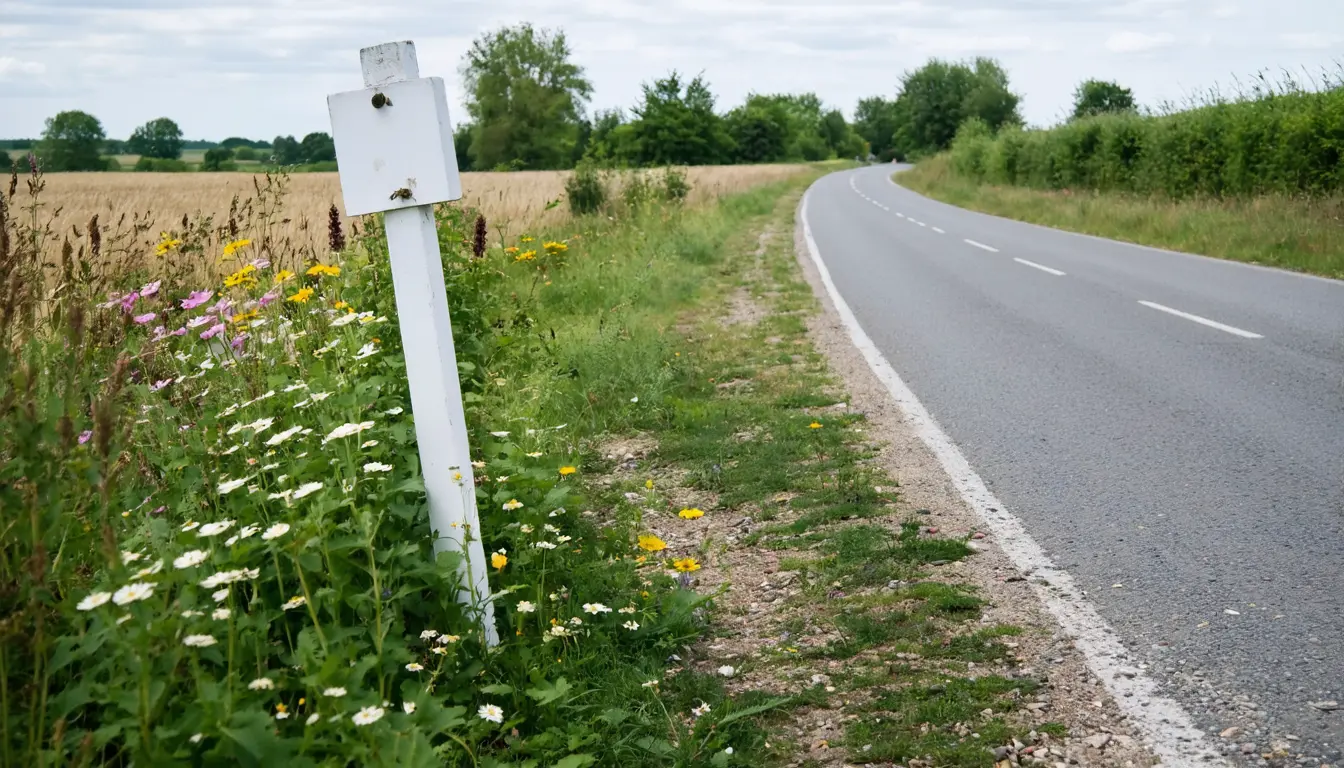
uOttawa researchers found roadsides mown twice a year and spot-treated held 45% more pollinators and 23% more species than conventionally maintained ones. That gives road managers a cheap option, though the design cannot yet say which of the two changes is responsible.
The Scientist · Science desk
What happened
- Lanark County runs the lighter regime, while neighbouring Ottawa and Leeds and Grenville mow up to four times a year and spray herbicide more broadly.
- Canadian Wildlife Federation staff helped conceive and fund the work and picked site pairs with similar surrounding landscapes but different mowing regimes.
- Over two summers, lead author Gil Miranda netted 3,773 specimens at 31 sites, covering 153 species: 100 bees and 53 flower flies.
- Agriculture and Agri-Food Canada's Sophie Cardinal led the DNA barcoding used to confirm the species identifications.
Compiled by The ScientistSomething wrong?How this is made
Why it matters
- decision A county can test the approach by rewriting its mowing calendar and spray orders, with no seed or planting budget, according to Forrest.
- constraint A crew able to change only its mowing or only its spraying gets no guidance on which to choose, because both changes arrived together in one county.
- exposure Road authorities that copy Lanark take on the sightline and wild-parsnip trade-off on their own judgement, since pollinator counts cannot settle it.
Neighbouring jurisdictions with different rules make a good natural experiment. A verge on one side of a county line and its match on the other differ mainly in how they are kept. The phys.org report says the side-by-side layout let the team isolate the effect of management alone [4]. The landscape matching removes one alternative explanation, that the gentler roadsides simply sat in richer country [6].
County identity is harder to remove. The gentle regime exists in one jurisdiction, set against two conventional ones [4], so anything else that differs about Lanark's roads travels with it. The two changes also arrive as a package, and the data cannot say whether the insects respond to the mower, the sprayer or both [2]. Forrest, the study's principal investigator [15], groups them herself. "Mowing less often and spraying herbicide only where it's actually needed, rather than across a whole roadside, gets you most of the way there," she said [10].
The figures in the paper, published in Insect Conservation and Diversity [14], hang together. Gentler roadsides averaged 27 species per site against 22 on conventional ones [8]. That ratio is about 1.23, consistent with the reported species gain [1], and amounts to five more species at an average site [2]. The abundance comparison rests on roughly 120 netted insects per site across both seasons [3]. "What surprised us wasn't that management mattered; it was how much difference two modest changes made," Forrest said [5].
The thing this doesn't tell you is whether lighter maintenance grows pollinator populations or concentrates existing insects on verges with more flowers. A net sample counts the insects present at a site when the collector walks it [7]. For declining species the two outcomes are not equivalent. A recent continental assessment found more than one-fifth of North America's native pollinator species at elevated risk of extinction, according to the report [11].
Road managers answer first to driver safety and weed control. "Roads still need to be safe to drive, and invasive species still need to be managed," Forrest said. "But our results suggest land managers don't have to choose between that and supporting pollinators." [9] The report does not include what either regime costs, or how well spot treatment holds back wild parsnip. The cost case is Forrest's own. "You don't need to plant anything new or spend more money to see a benefit," she said [12].
I think the evidence is strong enough for a county on a heavier schedule to try Lanark's and count what turns up [2]. It is not yet strong enough to tell a crew that can change only one practice which one to pick [4].
What to watch
- A follow-up that varies mowing frequency and herbicide method independently on the same road network, separating the two effects.
- A schedule change by Ottawa or Leeds and Grenville, which would allow a before-and-after count within a single jurisdiction.