Science1 publisher3 min readPublished
Ottawa asks women in their 60s to spend two hours a day shoulder-deep in 40C water
Most of what physiology knows about adapting to heat was measured in athletes, soldiers and outdoor workers. Caroline Li-Maloney is testing whether women in their 60s, 70s and 80s can be trained the same way.
The Scientist · Science desk
What happened
- A participant in her 60s sat shoulder-deep in water near 40 degrees Celsius for two hours at the University of Ottawa, then repeated the session every day for a week.
- Caroline Li-Maloney is testing whether women in their 60s, 70s and 80s, the group particularly at risk of dying during heat waves, can train themselves to cope better with hotter temperatures.
- The heat acclimation literature was built mainly on athletes, soldiers and outdoor workers, in whom repeated exposure brings earlier and heavier sweating and faster dilation of the skin's small vessels.
Compiled by The ScientistSomething wrong?How this is made
Why it matters
- constraint Fourteen supervised hours in a temperature-controlled tub per participant sets a hard ceiling on how many people any clinic could put through the protocol before a heat wave arrives.
- decision The account carries no results from either Ottawa study, so agencies writing heat plans have to weigh acclimation against cooling centres and welfare checks without a mortality figure to price it against.
- exposure Older women currently receive heat advice extrapolated from soldiers, athletes and young healthy volunteers. Until cohorts like this one report, the highest-risk group is guided by data collected in bodies unlike theirs.
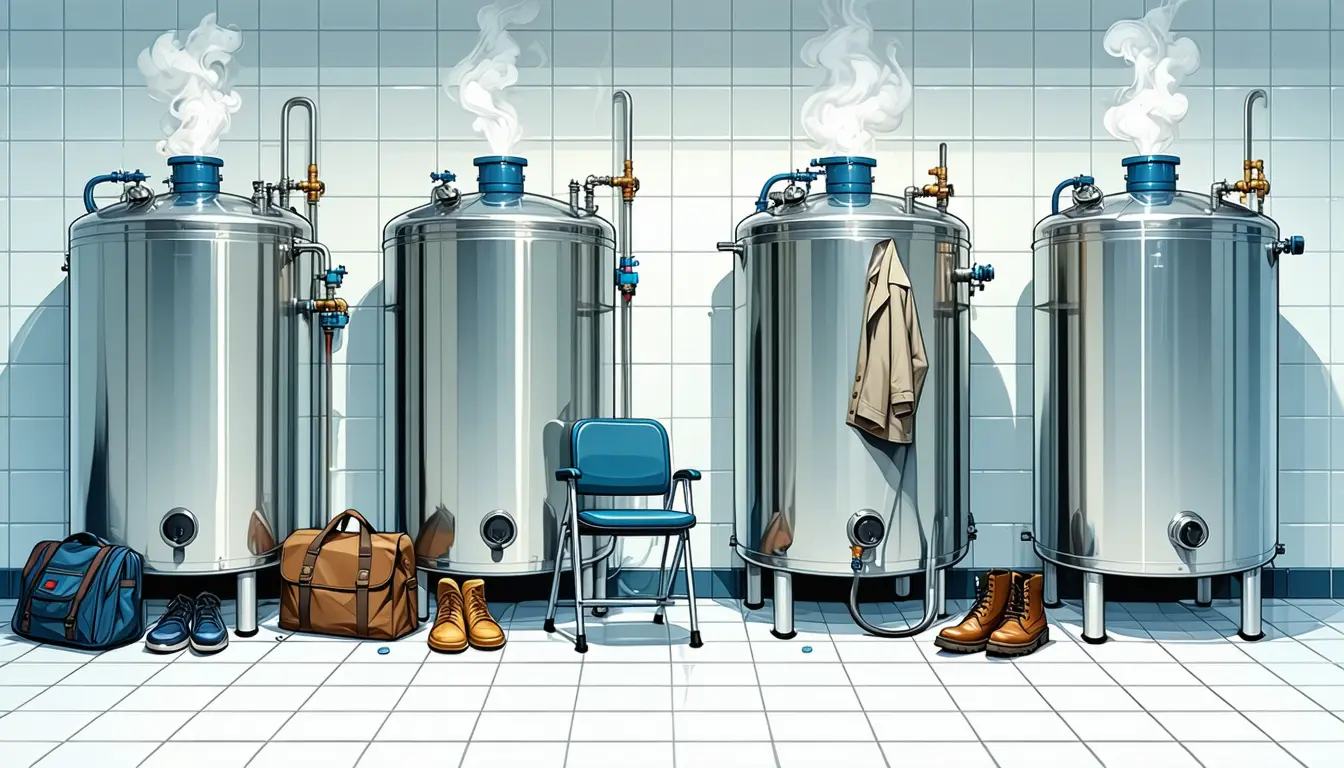
Fourteen hours of supervised immersion is what the week costs a participant: two hours a day, seven days running, in water near 40 degrees Celsius, in a big silver tub at the end of a dimly lit room [20][1][3].
Heat acclimation research measures physiological signals. When sweating starts and how heavy it gets [14]. How quickly the small vessels in the skin dilate, moving blood from the hot interior to the surface [15]. What the heart does first, beating faster to hold blood pressure steady, and what happens once blood volume expands and the rate comes back down [16]. Cells in the blood also make more heat shock proteins, which limit heat damage inside the cell [18]. The Science News account does not report results from Li-Maloney's cohort or from a study of a small group of healthy men in their 60s run by integrative physiologist Jeremy McCormick of the University of Ottawa and colleagues [19]. So the link between a trained sweat response and surviving a heat wave is still a hypothesis, and more than 10,000 Europeans are estimated to have died in June's heat wave [10].
The thermostat account rests on animal work. Gagnon explains that during successive heat exposures, nerve cells in the hypothalamus become more sensitive to body temperature and quicker to signal sweat glands to enlarge and vessels to widen, and that evidence comes from studies in mice [17].
The human evidence base has a selection problem baked in. It was built mainly on athletes, soldiers and outdoor workers [13], and the protective changes have been demonstrated in young, healthy individuals [9]. The sample leaves out the people who die. "With more frequent periods of extreme heat ... can we actually acclimate older populations, especially those with chronic diseases?" asked heat physiologist Daniel Gagnon of the Montreal Heart Institute and the Universite de Montreal, who is hoping the answer is yes [11][12].
Then there is the part of the design that no physiological measurement captures. "I'm going to be straight up: People hated doing this," said Li-Maloney, a PhD candidate at the University of Ottawa who studies how the body adapts to extreme heat [4][5]. One participant in her 60s said "I can't do this" as she lowered herself in, and got shoulder-deep only after the water was cooled by a degree [2][3].
Sustained core temperature above 37 degrees brings heat exhaustion, and higher temperatures can progress to delirium, seizures, organ failure and death [8], so the target population is women in their 80s during the days when hospitals are already full. I would expect the useful question from this line of work to be the minimum dose that still produces the adaptation. A regimen that needs a temperature-controlled tub, a technician and two hours of tolerance a day will not reach many of them.
What to watch
- The completion rate for Li-Maloney's cohort: how many women finished all seven immersions and how many withdrew.
- Acclimation data in older adults with chronic disease, the population Gagnon named as the open question.
- A protocol using passive heat at home instead of a lab tub, and whether it produces the same sweat and blood volume changes.