Security3 distinct publishers3 min readPublished
Freezers failed at more than a half-dozen bases over a few nights, and the test now is whether anyone can tell a coordinated shut-off from a fleet of old equipment failing together. So far the published evidence supports neither reading over the other.
The Watch · Security desk

Compiled by The WatchSomething wrong?How this is made
Start with the one failure that has a described mechanism. On Aug. 27 the official U.S. Army Fort Huachuca account said an overnight equipment failure sent every commissary freezer into defrost mode and spoiled all the frozen stock [10]. When a commenter guessed at a power flicker, the base answered from its verified account that the power did not go out, and clarified that the freezers had run a cycle that heated the food, rather than simply shutting off [11]. Read plainly, that is the control layer acting, not the supply failing. A commenter on the same post wrote that they were told it was a network issue [12]. That is a Facebook comment and should carry the weight of one. Everywhere else, the public description is a status rather than a cause; F.E. Warren called its incident a malfunction [6].
The counting has been done mostly by hand. Signal and Silence, the Substack that started this, logged 14 outage reports across 11 states dated Aug. 26 and 27 [13], then struck Fort Meade after a local reported normal operations and struck Camp Lejeune once its outage notice turned out to date from 2025 [14]. Its author says flatly there is no evidence the Defense Commissary Agency was hacked [15]. Bruce Schneier's post takes the other end of the same uncertainty: all speculation, but hard to come up with another explanation for the coincidence [22].
Add the lists together and ten installations have been named by someone: the seven from Military Times [3], plus Columbus and Travis from their own announcements [19], plus NAS Lemoore [20], for ten distinct sites [23]. Against the at-least-18 figure circulating on a military Facebook page, that leaves eleven stores no publisher has stood behind [24]. The window runs from the first reports on Aug. 26 to the Substack's last update on Sep. 1, seven days [25]. The only restorations on record, Lemoore on Aug. 28 and Dyess on Aug. 29, come from commissary employees rather than from DeCA [16].
Simultaneity across 11 states argues for a common cause, and two are available: a shared control or monitoring platform, or a shared fleet of aging equipment bought on one schedule and failing on it [27]. Both fit the timing, though only one leaves an authentication record. If the freezers at these stores really do sit behind an online system, as that Facebook page asserts [7], then the platform's login and command history settles the question in an afternoon. Nobody has said whether such a platform exists, who operates it, or who has been asked. Each service referred questions to the Defense Department, and Pentagon officials did not answer them [21]; a defense official said it would be inappropriate to speculate on the cause [8]. The cluster may well be procurement rather than intrusion, but a week in, no artifact has been published that would let anyone outside the department tell the difference.
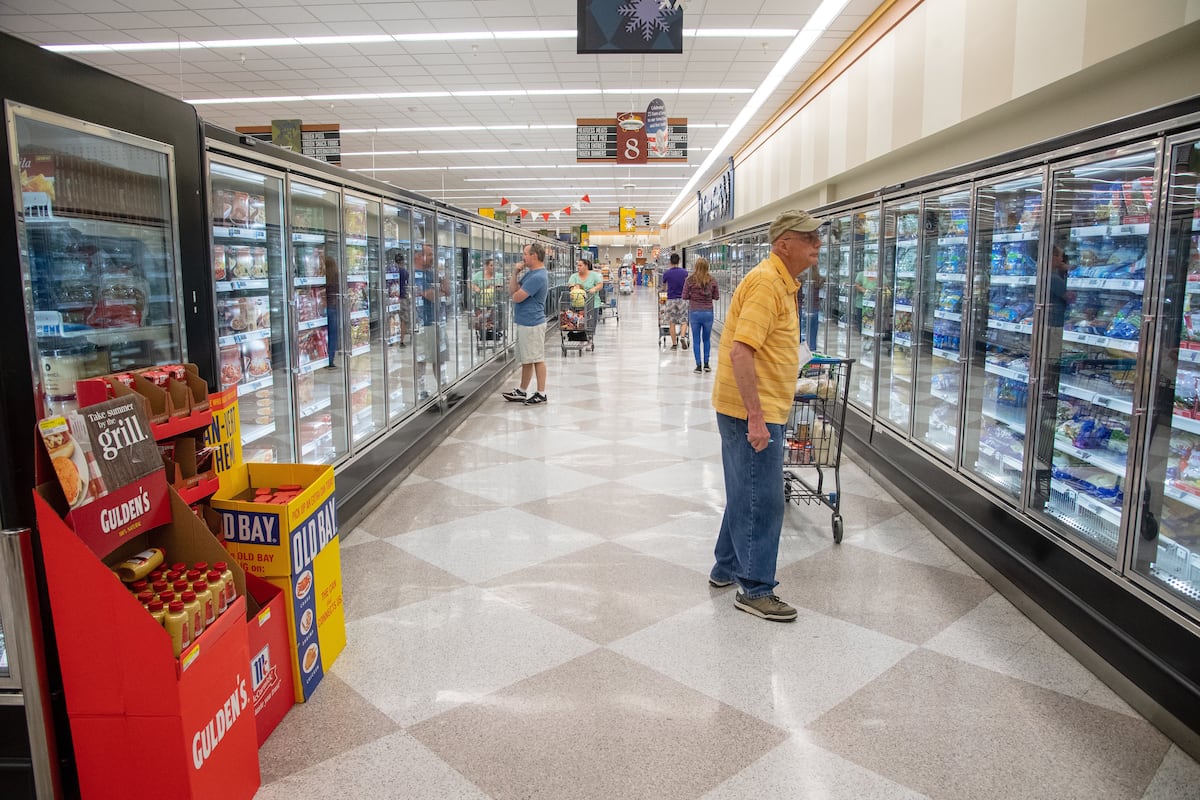
Ranked by verification strength, evidence, and original report placement.
A defense official said in a statement to Military Times: "The Department is aware of a possible refrigeration disruption at some Defense Commissary Agency commissaries," adding that DeCA has transferred products to alternate temperature-controlled locations to mitigate product loss and that commissaries remain open.
The outages affected at least Fort Irwin, California; Holloman Air Force Base, New Mexico; Naval Station Newport, Rhode Island; Little Rock Air Force Base, Arkansas; F.E. Warren Air Force Base, Wyoming; Robins Air Force Base, Georgia; and Fort Huachuca, Arizona, according to official announcements and social media reports.
Officials at the Defense Department would not say how many commissaries were affected in all, or whether the outages are being investigated as linked.
Stores confirmed affected include Fort Irwin, California; F.E. Warren AFB, Wyoming; Fort Huachuca, Arizona; Naval Station Newport, Rhode Island; Columbus AFB, Mississippi; and Travis AFB, California, according to announcements made online by each installation.
Naval Air Station Lemoore, California, also experienced an outage, according to M. Elizabeth, writer of the Substack newsletter Signal and Silence.
A defense official told Military Times it would be inappropriate to speculate as to the cause of the outages, and it is not yet clear how they are being investigated.
Distinct publishers with included, body-backed reporting in this cluster.
1 article · September 1, 2026
1 article · August 31, 2026
1 article · September 1, 2026
Follow any of these and your For You feed starts watching them — no settings page required.
leadership
OpenAI writes the Pentagon's looser human-control standard into its own policy1 distinct publisher
leadership
A posture review moves US burden-shifting in Europe from rhetoric to process1 distinct publisher
build
Anthropic's federal ban falls on a record that failed the supply-chain statute1 distinct publisher
invest
A US brigade took counter-drone gear to Combined Resolve and was wiped out anyway1 distinct publisher
Evidence-backed comparisons of source perspectives and observed adoption signals. Read the methodology
Which Builder, Operator, and Investor concerns the observed source mix emphasized—not a truth score.
Evidence, demonstrated adoption, hype gap, incentives, and confidence are assessed independently, each on its own current evidence. How these are measured.
Firm on what failed, blank on why
Everything checkable traces to an installation's own public notice or a Pentagon statement quoted in full by Military Times — and those hold up well, including the unusual Fort Huachuca detail that the power stayed on while every freezer warmed. Everything about cause traces to three soft things: an anonymous Facebook comment, a page's unattributed count, and Signal and Silence's reading of DeCA's own specification that defrost is commanded remotely. That last thread is the most interesting document in the story and also the only one nobody official has been asked about.
Ten stores named, fleet count withheld
The real-world footprint is documented store by store: six installations confirmed through their own announcements, ten named in total across all three accounts, two reported back online. The number that would settle whether this is a pattern or a coincidence — how many of DeCA's stores lost cold that week — is precisely the number the services and the Pentagon declined to give, and the only figure filling that vacuum is a Facebook page's "at least 18."
Headline hypothesis ahead of the file
Two of the three headlines here put a hacker in the frame, and no published fact does. What keeps the overshoot modest is that the hedges travel with the theory: Signal and Silence says in its own words that it has no evidence DeCA was hacked, and Schneier calls his own reading speculation in the same sentence he makes it. Our own dek claims neither reading, which is the defensible position while the count and the cause are both withheld.
A reticent department, motivated narrators
The Pentagon's entire contribution is one anonymous paragraph ending in "nothing additional to provide," with each service pointing the count question elsewhere — an institution with obvious reasons to say nothing about whether networked equipment on its bases can be commanded from outside. On the other side, the fullest roster belongs to the writer whose thesis needs it to grow, and the security blog that amplified her works a beat where a fridge attack is the interesting answer. The counterweight is small but genuine: the newsletter published its retractions struck through rather than deleted.
Sure of the outages, not the story
We would defend every store, date and quotation on this page. We would not yet defend a count, a cause, or the claim that these failures are related — three outlets, one of them relaying the other two, is thin corroboration for a pattern, and the only party who can close it has said it will not. Expect the number to move before the explanation does.