Product1 publisher3 min readPublished
One reviewer's benchmark puts the iPhone 18 Pro 24% ahead of the phone it replaces
Apple kept last year's design, so the gains sit in a 2nm chip and a bigger vapor chamber. The one job for app teams: a smaller Dynamic Island that now holds three Live Activities.
The Product Desk · Product desk
What happened
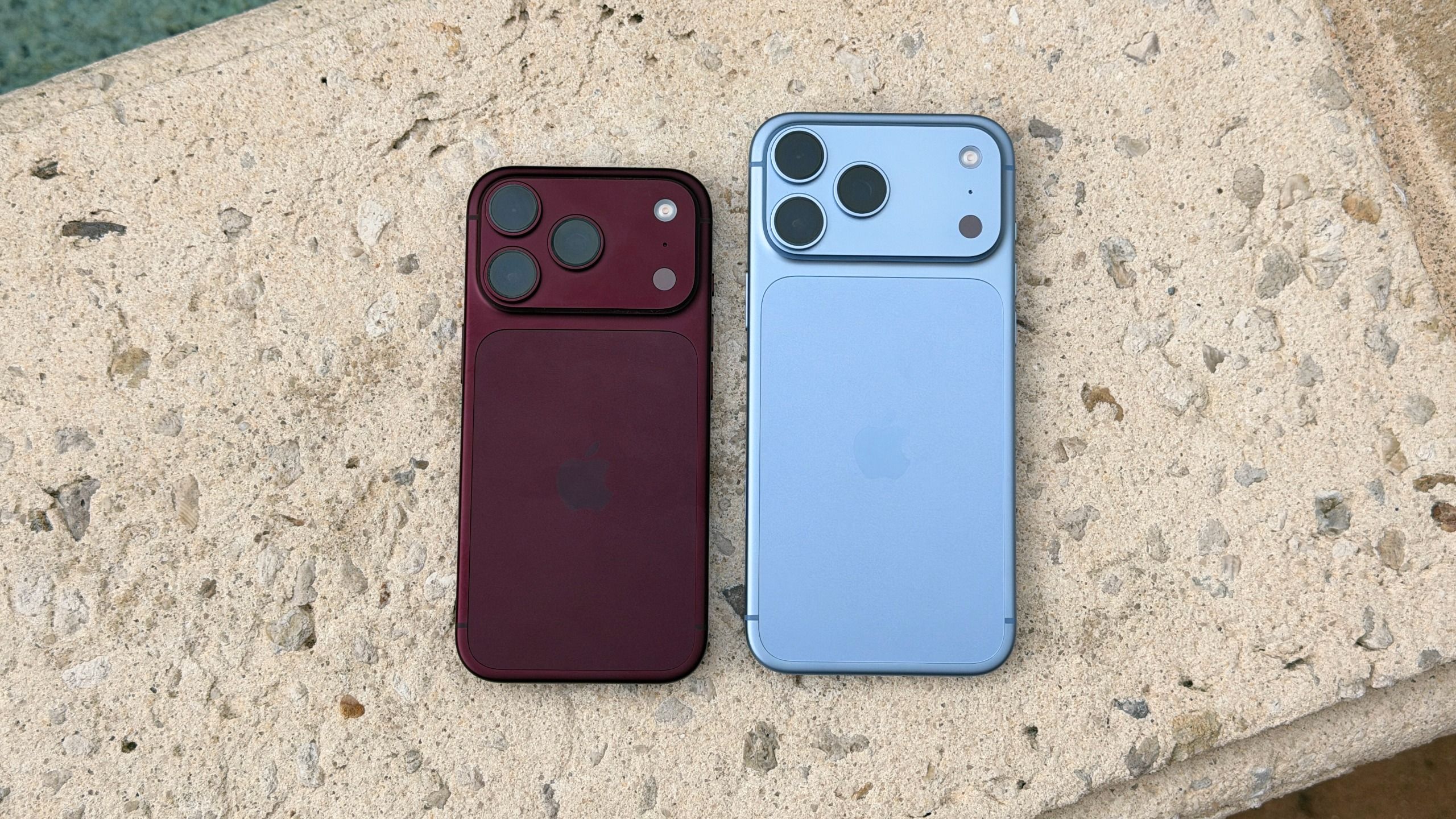
- After last year's design overhaul on the iPhone 17 Pro, the iPhone 18 Pro models look the same overall, with incremental upgrades to the cameras, battery life and performance.
- The Dynamic Island is slightly smaller and now supports up to three Live Activities at once, up from two, and Flighty has already shipped an update for the new sizes.
- Manual shutter speed, white balance and aperture controls plus a histogram arrive in the Camera app as "Pro controls" exclusive to the iPhone 18 Pro and iPhone 18 Pro Max.
Compiled by The Product DeskSomething wrong?How this is made
Why it matters
- decision The shape and handling did not change, so the buying case comes down to sustained throughput on thermally limited work. A fleet team has to measure that on its own task.
- constraint Any app shipping a Live Activity inherits a layout pass it did not schedule: the island geometry and slot count changed under it, and customers start receiving handsets this week.
- exposure A photo standard written against manual aperture and shutter control now runs only on the two Pro handsets. Mixed fleets get two procedures, and a support queue that has to know which phone the caller is holding.
- contradiction Apple's up-to-15% battery improvement and Tom's Guide's measured 3% describe the same phone, and a rollout promise made on the marketing figure is the one users will dispute.
Someone handed one of these on Friday can set it next to last year's phone and not tell them apart until the Camera app opens [2][16].
The upgrade case rests on a number that came from one reviewer. Gizmodo's Raymond Wong ran Geekbench 7's CPU test on an iPhone 18 Pro and an iPhone 17 Pro, both on the official iOS 27 release, and recorded 4,027 single-core and 11,540 multi-core against 3,258 and 9,167 [4]. Those are the only CPU results in the review roundup, and at 24% and 26% they run ahead of Apple's own claim of up to 20% faster CPU performance [4][3][5]. Apple's figure is the one to plan against; Wong's is a single pair of handsets.
The harder question is what the phone does twenty minutes into a recording. The vapor chamber in the 18 Pro is three times larger than the 17 Pro's, which Apple credits for peak sustained performance for longer [5]. Wong said he did not think the iPhone 18 Pros ever got hot doing anything normal that would heat them up, adding that "not even shooting 4K resolution video at 60 fps under the heatwave that baked Cupertino during the Apple launch event could overheat it" [6].
Battery is the weaker part of the pitch. Tom's Guide measured the 18 Pro Max at 18 hours 27 minutes against the 17 Pro Max's 17 hours 54 minutes, a gain of 33 minutes or about 3% [9][1][2]. Apple's own offline video playback metric puts the improvement at up to 15% [7]. The smaller 18 Pro did better in the same test, 16 hours 17 minutes against 15 hours 21 minutes, which is 56 minutes or roughly 6% [9][3]. The OnePlus 15 topped the same table by 6 hours 46 minutes over the 18 Pro Max [9][4]. Charging to 50% now takes 15 minutes, down from 20 [8].
The change that lands on an engineering backlog is the Dynamic Island. It is slightly smaller and holds up to three Live Activities at once, up from two [10]. 9to5Mac's Chance Miller said that "thanks to the smaller Dynamic Island, the second Live Activity that appears on the right side can now show more information" [11]. Flighty shipped an iOS 27 update on September 14 advertising a refined Dynamic Island and support for all the new sizes [12].
The camera controls split the fleet by tier. Aperture options are f/1.48, f/1.8, f/2.8 and f/4.0 [13], and PetaPixel's Jaron Schneider ranked them for sharpness in the order f/2.8, f/1.8, f/4, f/1.48 [15]. Schneider said: "I think Apple's choice not to lock us to the wider aperture was very smart, because sharpness takes a hit when shooting wide open" [14]. A photo procedure that tells staff to shoot wide open therefore pins the softest of the four. CNET's Patrick Holland said "I enjoy these controls, as I have when they've appeared on Android phones", and his criticism was how they are accessed [17]. The reviews describe these controls inside Apple's Camera app, and none of them says whether third-party apps can drive the aperture [16].
Start with whether current handsets throttle on the work your users actually do, such as long 4K captures or continuous scanning. If they do, the chip and the vapor chamber are the reason to buy, and the measurement to run is your own task at its real duration. Then ask whether you ship a Live Activity or a photo workflow with fixed exposure settings; if you do, that work is due before the phones reach customers on Friday, September 18 [1]. Teams that answer no twice are buying 33 minutes of video playback and a charge to 50% that is five minutes quicker [1][8][6].
What to watch
- Whether Apple exposes the variable aperture and manual shutter controls to third-party camera apps; reviewers describe them inside Apple's Camera app.
- Sustained-load results from a test longer than a single benchmark pass, which would show whether the triple-size vapor chamber holds clocks through a full shift of 4K capture.
- Whether further reviewers' Geekbench results cluster near Wong's 24-26% or nearer Apple's up-to-20% CPU claim.