Product1 publisher3 min readPublished
Instapaper's second rewrite in 18 years is a spend signal, not a Pocket obituary
The 2008-era read-it-later app shipped a rebuilt web client, an iOS refresh and voice playback on Android. What the source does not show is where the users came from.
The Product Desk · Product desk
Drafted by a language model from the sources cited here and checked against its claim ledger before publication. How we use AISend a correction
What happened
- Instapaper is one of the oldest read-it-later apps, having launched in 2008.
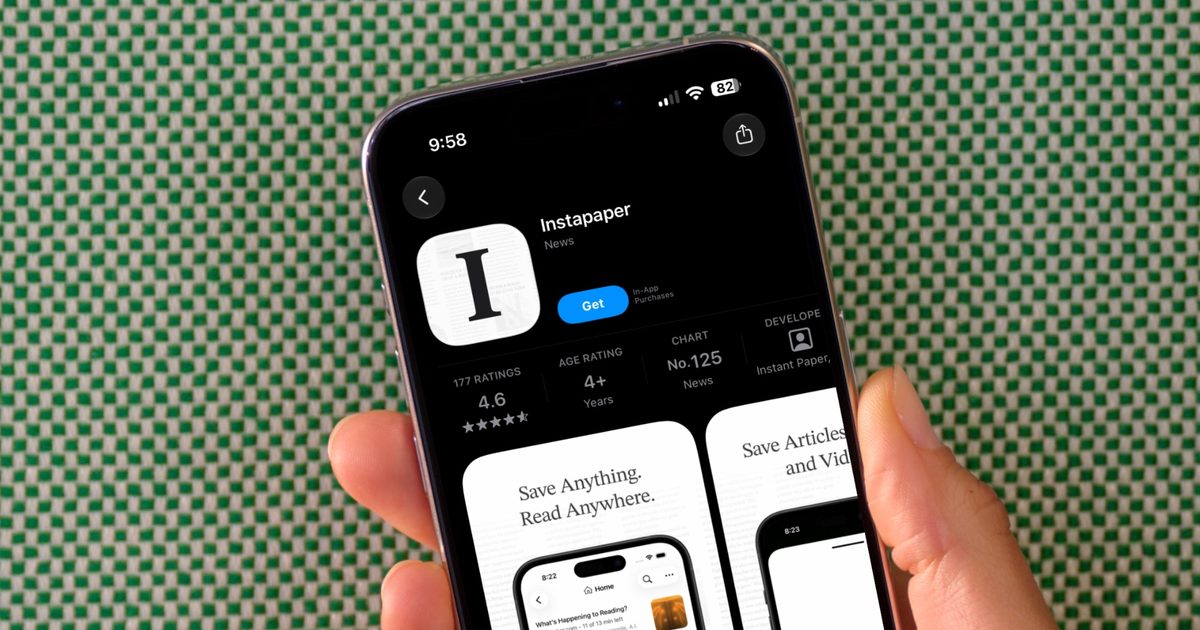
- Instapaper is available for web, Android and iOS, and reflows web articles into a distraction-free format with no ads, menus or other onscreen furniture, showing only text and images.
- Users can change font style, size and spacing, and adjust the background colour of the page the text and images sit on.
- Instapaper shows estimated reading time for each article, offers an option to see summaries of the text, supports folders and tags, and syncs across devices.
- Articles can be added via standard mobile share tools, by pasting URLs into Instapaper on desktop, or via extensions available for the most popular browsers.
Compiled by The Product DeskSomething wrong?How this is made
Why it matters
Instapaper, which launched in 2008 [1], has shipped a rebuilt web app with a three-column layout [9], on-screen keyboard shortcuts [10] and bulk multi-select [11], alongside a Liquid Glass refresh on iOS [12] and AI voice playback arriving on Android [13]. According to Wired, which calls it the biggest update in quite some time, this is only the second full rewrite of Instapaper's code since the service launched [15][8] - meaning someone is funding the least visible and most expensive kind of product work on a codebase that is roughly 18 years old [20].
The thesis this desk was tempted to hang on it does not survive contact with the material. The argument that Pocket's shutdown redistributed a read-it-later user base rather than killing the category is plausible, but Wired's piece never mentions Pocket, Mozilla, or any competitor closing [18], and it reports no user numbers, no growth figures and no revenue [19]. What is on the record is capital expenditure and a feature list. Treat the rest as inference.
The expenditure is the interesting part. Two full rewrites across 18 years works out to about one every nine years [21], so this is not routine maintenance; it is the sort of thing an owner does when planning to run the product for another stretch rather than harvest it. Rewrites also buy nothing a user can screenshot, which is why they are the first thing cut at a business in run-off mode.
The feature choices point at queues, not reading. Select-all within a list and Shift+Click ranges [11] are triage tools: they exist because saved lists outgrow the time available to read them. Wired's reviewer says as much, describing years of happy use, a recent drop-off driven by work and family commitments, and a list that has grown to a scary length [16]. Read-it-later products have always had this failure mode, and the honest fix is faster deletion, not better fonts. Instapaper shipped both: the iOS update adds section counts, section sorting and more appearance options including new fonts [12].
The pricing tells you where the money is meant to come from. Unlimited saves stay free [6], while premium runs $6 a month or $60 a year [7], so paying monthly costs $72 across a year, a $12 premium over the annual plan [22]. Premium removes ads from the apps [7], which means the free tier is ad-supported [23]. It also gates search, Kindle export and read-aloud [7], with playback reached via the three-dot menu on an open article [14]. Charging for search in an archive product is a defensible line, and it is the line that decides whether a large saved backlog converts.
Worth watching: whether the rewrite is followed by import and migration tooling, which is the only feature that would actually evidence an inbound wave of displaced users; whether the AI voices and the existing summaries feature [4] stay bundled into the $6 tier or become a separate charge as inference costs land; and whether the browser extensions and share-sheet paths [5] survive the new web client intact, since those are where saving either happens or quietly stops. Wired still rates Instapaper among the best options in the category [17]. That is a review, not a market share number.