Product1 publisher3 min readPublished
Insta360 spent more on memory chips in six months than Starman is paying for GoPro
The Shenzhen camera maker booked about $298.4m of memory procurement in the first half and stayed profitable by a hair. GoPro cited memory rises of 80 to 115 percent, cut 23 percent of staff and agreed to be bought.
The Product Desk · Product desk
What happened
- Insta360 spent nearly 2 billion yuan, about $298.4m, on what it called strategic procurement of memory chips in the first half of this year.
- GoPro said it might not survive, citing memory price rises of 80 to 115 percent, a 26 percent revenue decline and expected covenant breaches, and it cut 23 percent of staff.
- IDC put DJI at 65 percent of the global handheld smart camera market in the first quarter, with Insta360 second on 22 percent.
Compiled by The Product DeskSomething wrong?How this is made
Why it matters
- constraint Entry to the category now depends on funding a year of inflated memory before a single unit ships, so the decision sits with whoever controls the credit line.
- decision Every hardware team pricing a 2026 launch has to choose between prepaying memory at today's quotes and leaving the spec sheet exposed to quarters Richter says he cannot forecast.
- exposure Insta360 has a clean regulatory record, and the covered list that froze DJI has been widening by capability into adjacent hardware.
- precedent A rescue that points the American incumbent at data centre, defence and aerospace customers makes exit-by-repositioning the template for the next consumer hardware maker that runs out of memory budget.
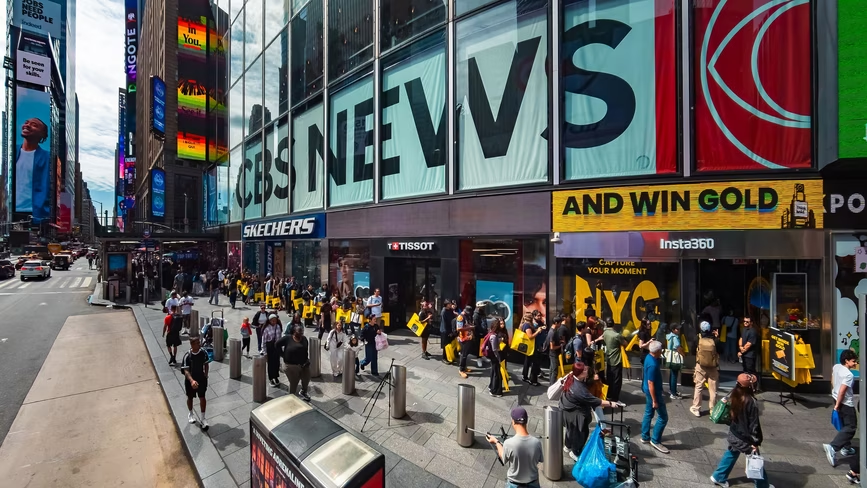
The reason for the Times Square shop, Max Richter told the South China Morning Post, is explanation. A 360-degree camera is hard to demonstrate in a listing, and the invisible selfie stick effect that built the brand travels as a video [20]. The store is at 1515 Broadway, Insta360's first in the United States and its second self-operated shop outside China after Tokyo in August [1].
Set the two figures side by side. Insta360's six-month memory bill of $298.4m is about 4.7 percent larger than the $285m of cash GoPro shareholders will receive [1]. Add the roughly $92m of GoPro debt Starman Optical is retiring, and the full consideration comes to about $377m [2]. The six-month component bill is around 79 percent of the price of the entire company. Richter said a similar figure is unavoidable in the coming quarters, and that it is unclear when the memory crisis will ease [3]. Hold that rate for four quarters and the line item runs near $600m [3].
One company could prepay for a year of expensive memory and the other could not. Insta360 funded it and stayed in the black: half-year net profit down 94 percent, revenue up 50 percent, research spending up almost 80 percent [7]. GoPro cited memory price rises of 80 to 115 percent, a 26 percent revenue decline and expected covenant breaches, cut 23 percent of its staff and said it might not survive [8]. TNW wrote that the crunch was sorting the category by who can fund a year of inflated input costs [21].
There is a second axis, and it decides whether a finished camera can be sold at all. DJI was added to the FCC's covered list in December 2025 after the security audit Congress ordered was not completed by the deadline. Its new products cannot get the radio approval needed for import and sale [12]. Models already authorised stay on shelves [13]. The FCC has also proposed pulling DJI drones it previously approved, reaching by capability into thermal imaging, LiDAR and docking systems [14].
Anyone shipping a camera next year has to fund memory at current prices and get the radio approved. DJI holds 65 percent of handheld smart cameras by IDC's count and fails the second [17][12]. GoPro passed the second, failed the first, and is being sold [4]. Insta360 passes both for now. Richter told the Post that the company currently faces no US restrictions, and he declined to treat his rival's lockout as a windfall, saying Insta360 did not want it to happen this way and that it is not the main motivation [15]. The covered list has kept widening by company, by category and now by capability, and has reached foreign robots and inverters [16].
GoPro's exit sends it after the customers whose demand drove memory prices up. The company will stay listed on Nasdaq and reposition towards AI data centre, government, defence and aerospace markets [9]. Founder Nicholas Woodman described the combined business as an American imaging and optical company working on national security [10]. That data centre demand pulled wafer capacity away from consumer memory [6].
For a hardware team, the number to bring to the next planning review is how many quarters of memory you can prepay without tripping a covenant. The second is which spec line you drop when you cannot. Insta360 prepaid half a year at about $298.4m and reported profit down 94 percent [2][7].
What to watch
- The GoPro shareholder and regulatory votes, with the merger expected to close by the end of the year.
- Insta360's second-half disclosure: whether memory procurement again lands near 2 billion yuan, or the spec sheet absorbs the cost instead.
- Any FCC covered-list action naming a Shenzhen camera maker other than DJI.