Science1 publisher2 min readPublished
Global review catalogues the ways vertebrates use insects beyond eating them
Researchers from eight countries reviewed hundreds of studies and found vertebrates use insects as medicine, shelter and bait as well as food. Their Nature Reviews Biodiversity paper says studies of insect decline rarely count anything beyond lost food.
The Scientist · Science desk
What happened
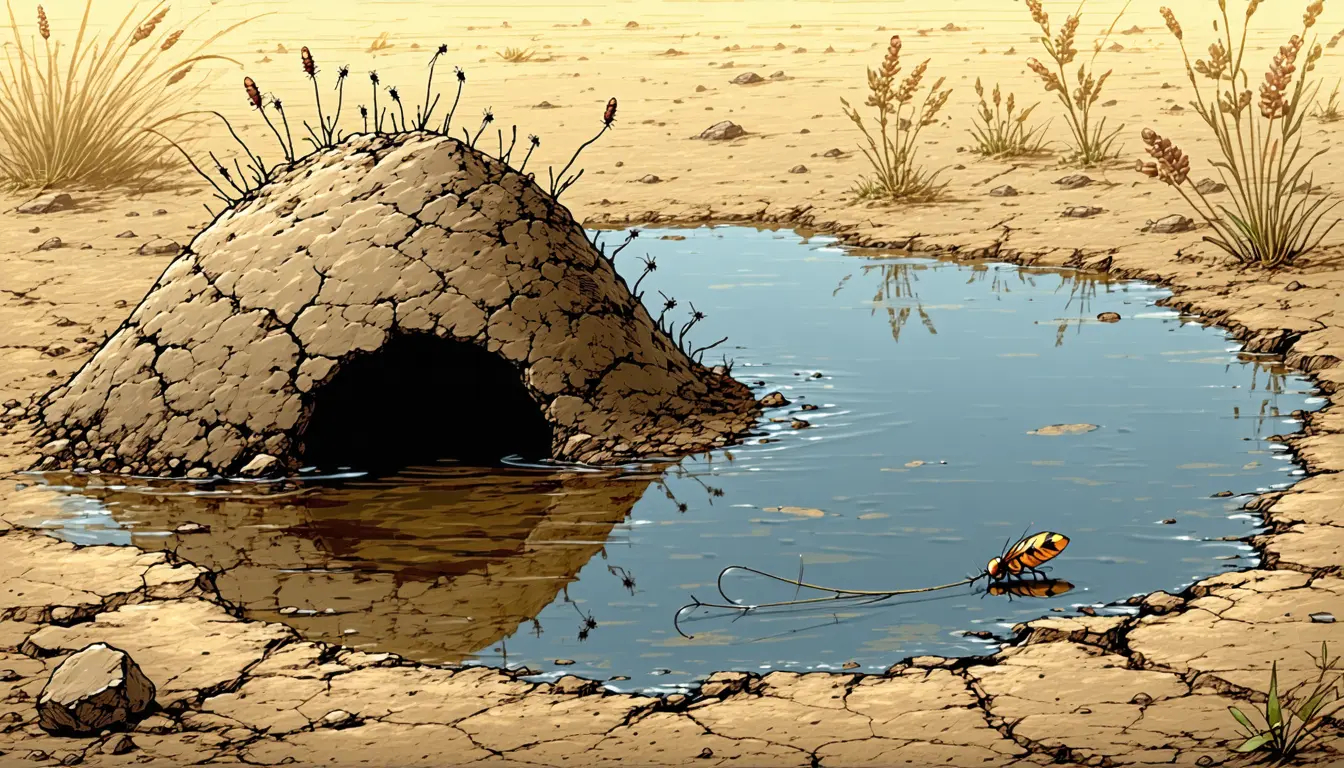
- Birds and reptiles lay eggs inside termite mounds for their controlled temperatures, and some desert frogs live in ant nests for the humidity.
- More than 200 bird species groom with crushed ants, and many vertebrates time their breeding to coincide with seasonal peaks in insects.
- Birds build nests with spider and insect silk and sometimes place them near wasps and other stinging insects for protection.
- Insects cleaned out dinosaur nests and still do the same job in some owl and kingfisher nests, according to Grames.
- The paper, published Sept. 30, was co-led by Eliza Grames of Binghamton University, Rob Cooke of the UK Center for Ecology and Hydrology and Chris Elphick of UConn.
Compiled by The ScientistSomething wrong?How this is made
Why it matters
- constraint Decline studies that model insect loss only as lost prey will understate the harm to vertebrates that also nest, shelter or groom with insects.
- exposure If Grames's 1% to 2% annual rate holds and compounds, a quarter to nearly half of insects would be gone in 30 years, and every non-food use would shrink along with the prey.
- decision Vertebrate conservation programmes would have to bring insect specialists and insect data into their planning, a step Elphick said the field does not take nearly enough.
According to the paper, few studies ask what falling insect populations do to vertebrates beyond shrinking their food supply [8]. "We often hear about their importance as pollinators, or decomposers, or food for insectivores like birds and bats, but we forget about all the other things they do for us and for other species," Grames said [10]. A study that tracks only prey would pick up fewer insects for a nestling and miss whatever happens to the nest itself [8].
The review's design suits that argument. The authors, from eight countries, pulled together hundreds of studies conducted over decades [2]. A synthesis like this shows how many kinds of link exist, and says little about the strength of any one of them.
The review cannot show how far a vertebrate population falls when its insect partner declines. Chimpanzees treat wounds with insects and herons fish with them as bait [3]. Establishing whether either animal does measurably worse when insects are scarce would take a field experiment. Sloths look like a tighter case: the release says they rely on moths to keep up the algae in their fur, which they then eat [3].
Grames also gave a pace for the loss. "We're losing insects at a rate of about 1% to 2% per year," she said [9]. Compounded over 30 years, 1% a year leaves about 74% of insects and 2% a year leaves about 55%. That is a loss of roughly a quarter to nearly half [1]. "When you scale that up across a few decades, we're talking about a major change to ecosystems," she said [11]. The release does not say whether the rate refers to abundance, biomass or species, or where the underlying surveys were done.
There are an estimated 14 million to 30 million insect species [12], and the upper estimate is a little more than twice the lower [2].
Elphick, an ornithologist, said he hopes the review will bring researchers who study vertebrates closer to those who study insects [13]. "If you want to have vertebrates, then you've got to be thinking about insect conservation, and we don't do that nearly enough," he said [14].
What to watch
- Field experiments that reduce insect numbers and measure breeding or survival in vertebrates that use insects for nesting, grooming or shelter.
- Whether bird and mammal conservation plans start including insect monitoring data, as Elphick urges.
- The source behind Grames's 1% to 2% annual figure, and whether it measures abundance, biomass or species.