Science1 publisher3 min readPublished
Plate sinking beneath Vancouver Island is tearing apart piece by piece
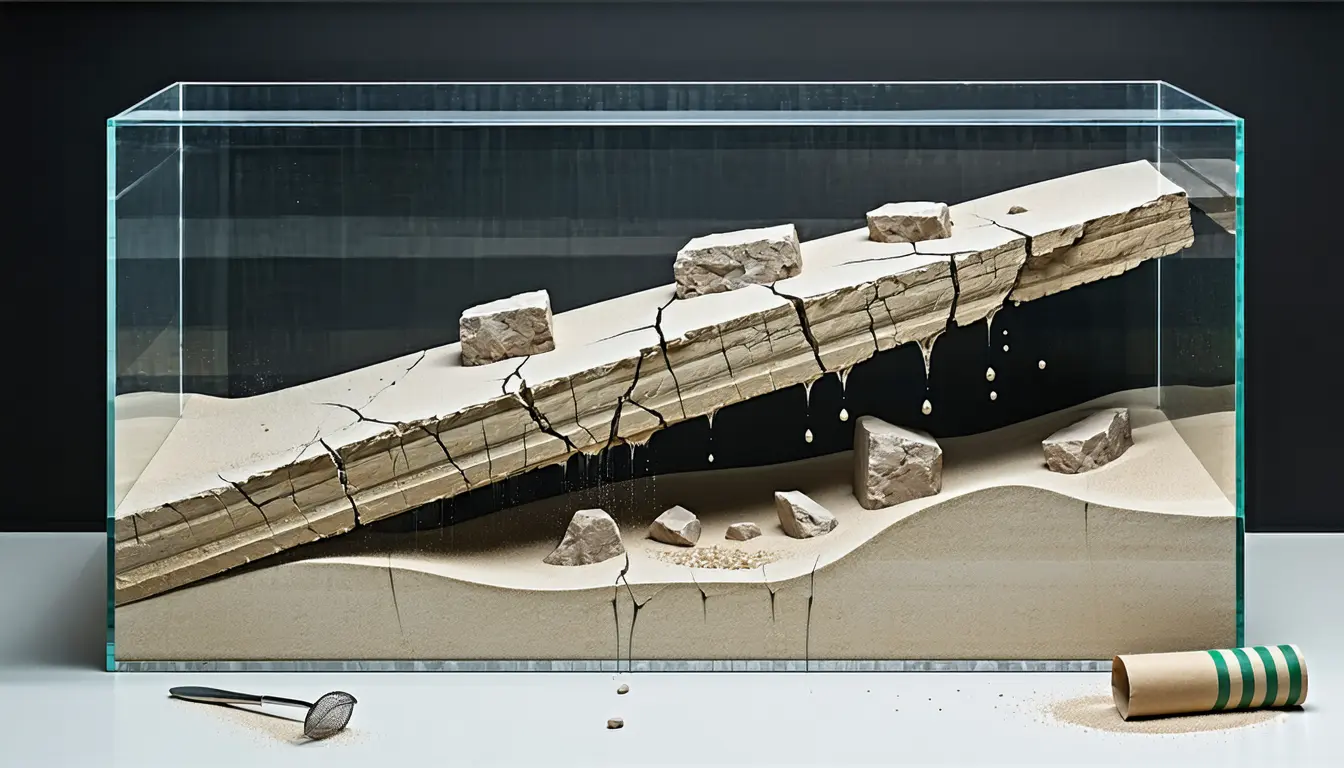
LSU geologists imaged the plate sinking off Vancouver Island tearing apart, with part of the slab dropped about 5 kilometres along one fault. The finding suggests subduction zones end in stages, though its bearing on future Cascadia earthquakes is stated only as a possibility.
The Scientist · Science desk
What happened
- A Louisiana State University-led study in Science Advances reports that the plate sinking beneath Vancouver Island, part of the Cascadia subduction zone, is actively breaking into pieces.
- The images came from the NSF-funded 2021 CASIE21 survey, in which a ship sent sound into the seafloor and a 15-kilometre streamer recorded the echoes.
- Among several tears running through the plate, one large fault has dropped part of the slab by roughly 5 kilometres.
- Along a tear about 75 kilometres long, some segments still produce earthquakes while others have gone unusually quiet.
Compiled by The ScientistSomething wrong?How this is made
Why it matters
- capability Pairing reflection images with earthquake records lets geologists separate torn-but-attached slab from detached slab, a test that can be repeated on other ageing plate boundaries.
- precedent If the staged breakup holds, the ancient plate fragments found in older rock gain a living example to compare against, an explanation the LSU release proposes.
- constraint The release says only that the hidden breaks may influence future Cascadia earthquakes. For hazard planning, that makes the link a research question for now.
"Getting a subduction zone started is like trying to push a train uphill -- it takes a huge effort," said Brandon Shuck, the Louisiana State University geologist who led the study [2][12]. "But once it's moving, it's like the train is racing downhill, impossible to stop. Ending it requires something dramatic -- basically, a train wreck." [12] Seeing the end happen is the hard part. According to the LSU release, these systems can stay active for millions of years but cannot continue indefinitely, and geologists have had few chances to see clearly how one reaches the end of its life [14][16].
Reflection imaging works somewhat like medical ultrasound [4]. It gives geometry: large faults and fractures cutting through the sinking plate, including places where it appears to be snapping apart [6]. Geometry alone cannot say whether a broken block is still attached to its neighbours. Earthquake records can, because earthquakes happen when connected blocks of rock build up stress and suddenly slip [17]. "Once a piece has completely broken off, it no longer produces earthquakes because the rocks aren't stuck together anymore," Shuck said [10].
Laid over each other, the two data sets distinguish a torn segment that is still coupled from one that has come free. On that logic the quiet stretches of the long tear are pieces that have already detached, an inference the release presents as a suggestion [11]. The big offset fault is not there yet. "It's not 100% torn off yet, but it's close," Shuck said [8]. "This is the first time we have a clear picture of a subduction zone caught in the act of dying," he said. "Rather than shutting down all at once, the plate is ripping apart piece by piece, creating smaller microplates and new boundaries." [13]
The evidence comes from one stretch of one subduction zone, where the Juan de Fuca and Explorer plates are forced beneath North America, seen in one 2021 survey [3][5]. The release's general statement that these systems "may die piece by piece" extends from that single case [15]. The detachment call also rests on a missing signal. Quiet rock is taken to be unstuck rock. The imaged faults fit that reading, but it remains an interpretation of earthquakes that did not happen [6][11].
The release summary says the discovery could help explain ancient plate fragments, volcanic activity, and how hidden breaks beneath Cascadia may influence future earthquakes [15]. The findings it describes concern where the slab is broken and where it still produces earthquakes [6][9]. In my view the hazard link is a hypothesis that this imaging makes testable. The release does not put a figure on how the tears would change the size or timing of a large Cascadia earthquake [15].
What to watch
- Follow-up modelling of how detached and still-coupled slab segments would change the size or reach of a future large Cascadia earthquake.
- Continued earthquake monitoring along the quiet stretches of the tear; renewed activity there would undercut the reading that those pieces have come free.
- Imaging of other ageing subduction zones, to see whether they also break into microplates in stages as the Vancouver Island slab appears to.