Science1 publisher3 min readPublished
346 field interviews put House nominations in the hands of district-level groups
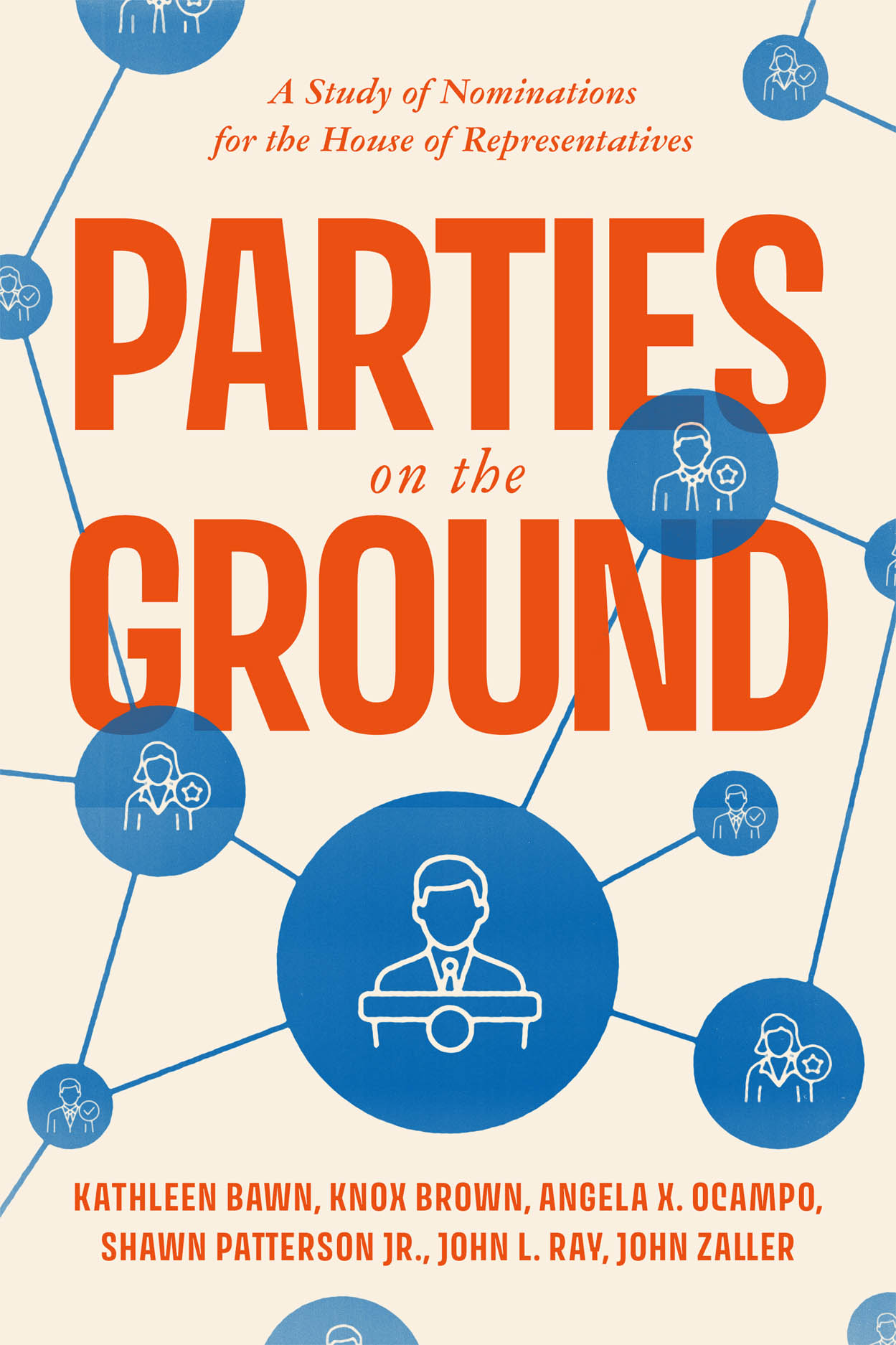
Kathleen Bawn and five co-authors watched the open-seat House nominations of one election cycle from inside the districts, and found organized groups vetting candidates for reliability on their own agenda before any ballot was printed.
The Scientist · Science desk
What happened
- "Parties on the Ground" examines every winnable open-seat House nomination in the 2013-14 cycle, 55 races, combining field interviews, a content analysis of local newspaper coverage, campaign finance data and exit surveys of voters.
- The authors report that the organized groups anchoring each party's coalition did the vetting, coordinated behind a chosen candidate, and supplied the money and volunteers a nomination requires.
- The decisive player changed district by district: the US Chamber of Commerce or a national feminist organization in one race, local faith-based activists, a building-trades union or a county physicians' group in another.
- In a set of elections that usually decide who goes to Congress, the book concludes that voters rarely supply the most important influence on a nomination.
Compiled by The ScientistSomething wrong?How this is made
Why it matters
- constraint The evidence covers open seats in a single election cycle, so how nominations work when a sitting member is on the ballot is a question for another study.
- decision For a group deciding where to spend on a House race, the stage that matters is the one before the campaign is public, and what moves it is observed behavior and personal reputation, with advertising counting for little.
- precedent If Patterson is right that the decisive work happens earlier, proposals to improve primaries by informing voters are aimed at a stage where the choice has largely been made.
- cost Repeating this evidence for a later cycle means another round of interviews in 50-odd districts, so the group cast described here is a 2013-14 snapshot until someone does the fieldwork again.
Interviews are a good way to learn who the participants believe mattered, and a weak way to establish what caused what. The book reports that most winning candidates anchored their campaigns in major support from a single policy-demanding group or an association of like-minded groups [15]. Two readings fit that pattern. Either the backing produced the nomination, or the groups that pay closest attention identified the likely winner and got behind them early. Field interviews with activists, party officials, candidates, donors, journalists and consultants [18], read alongside campaign finance records and a content analysis of local newspaper coverage [11], describe the sequence and leave the cause an open question.
The sample is narrow by design. The authors took every winnable open-seat nomination in the 2013-14 cycle, 55 in all [11]. Set against 435 congressional districts, that is about 13 percent [21]. Open seats are where a party's choice is unsettled, and they are races with no sitting member on the ballot, so the conclusions belong to that subset.
The voter side of the argument rests on less data than the group side. Exit surveys covered four of the 55 contests, roughly 7 percent of the sample [24]. The rest of the case is structural: candidates appear on the ballot without party labels, and the contests get little media coverage. The authors conclude that primary voters have a limited ability to use primaries to give policy direction to their parties [16].
"Reformers created the primary to hand nominations to the voters, and on paper that is exactly what happened," said Shawn Patterson Jr., a research analyst at the Annenberg Public Policy Center [19]. "But what we found is that most primary voters don't have the information necessary to tell the candidates apart. The decisive work happens earlier, among the organized interests that pay very close attention" [20].
The more useful finding is what the groups said they were shopping for. They wanted a nominee who would faithfully represent their interests [5], with liberal-conservative placement mattering much less than commitment to a particular agenda [12]. Kathleen Bawn, a professor of political science at UCLA, said groups told the researchers they were looking for someone they counted as one of their own, someone who would pick up the phone and do the work of championing their interests [9]. Groups judged candidates on observed behavior and personal reputation, looking past news coverage and the candidates' own self-presentation [13], and they coordinated with each other and with local party officials to increase their clout [14].
That evidence came out of 346 interviews, covering 50 of the 55 races [11][18], an average of 6.9 per race where interviews were obtained [22]; five races sit outside the interview count [23]. Primaries are held at different times, under different rules, in hundreds of separate places, and the influence of local leaders varies district to district [17]. One cycle of that fieldwork cannot show whether the same cast of groups turns up in the next one. "This book is what happened when we went and watched nominations on the ground," Bawn said [8].
What to watch
- A replication in a later cycle, or an extension to primaries with an incumbent running, would test whether the same groups keep turning up.
- Campaign finance timing: whether group money arrives before or after the anchoring endorsement would sharpen the causal claim the interviews cannot settle.
- Whether primary reform arguments move away from voter information and toward the pre-primary vetting stage Patterson describes.