Science1 publisher3 min readPublished
Americans' link between climate change and illness holds steady at 65%
The Annenberg Public Policy Center surveyed 1,904 adults in early August and found the health-attribution figure level with 2024 and 2025, while knowledge of where to find a cooling center sat where it did a year ago.
The Scientist · Science desk
What happened
- In an Annenberg Public Policy Center survey of 1,904 US adults taken August 4 to 17, 65% said climate change is increasing the risk of heat-related illnesses, respiratory diseases and insect-borne diseases, the same share as in August 2025.
- Seventy-six percent said extreme outdoor heat affected their daily activities at least sometimes over the past year, and 38% said poor air quality from wildfire smoke did.
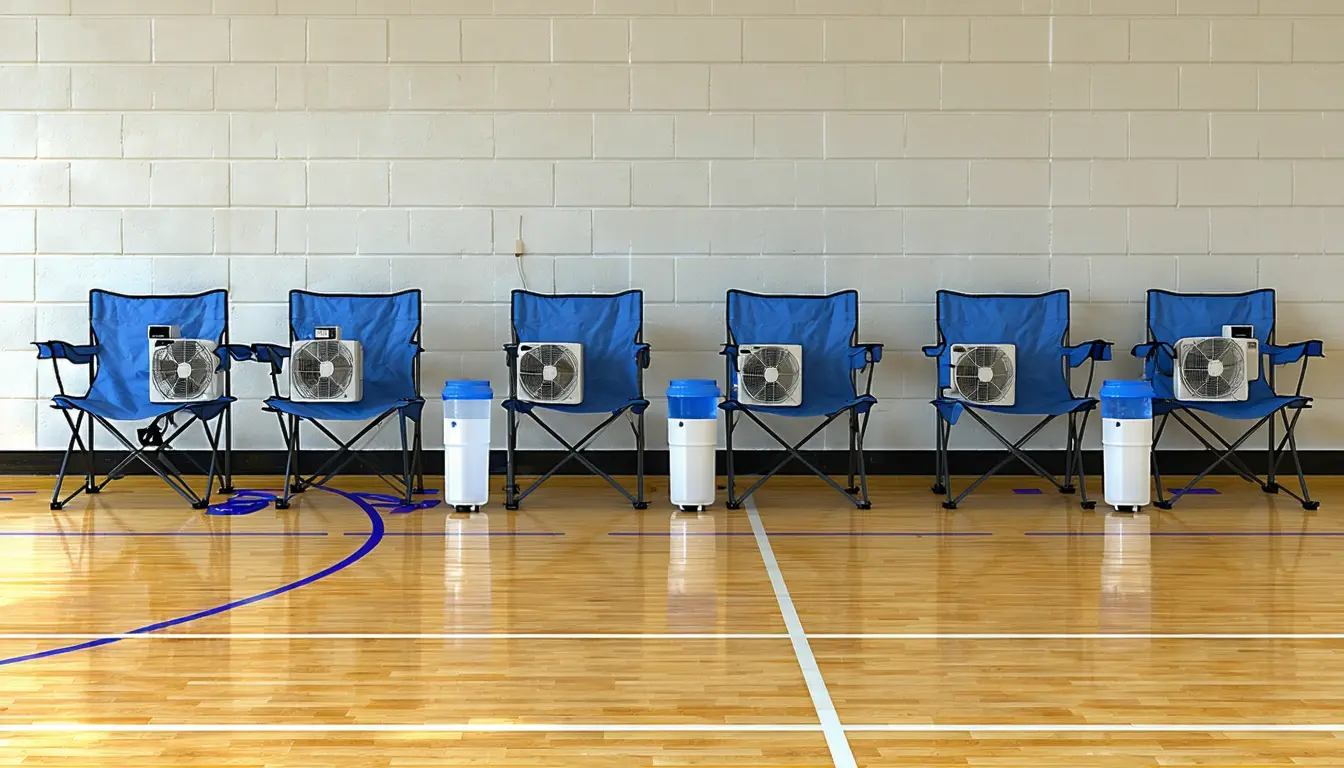
- Sixty-five percent said they do not know the location of a cooling center they could go to during extreme heat.
- Reported heat impacts on sleep and exercise routines rose to 56% from 50% a year earlier, and the share reporting an impact on their pets rose to 45% from 37%.
Compiled by The ScientistSomething wrong?How this is made
Why it matters
- constraint Outreach that leads with a new temperature record has little room left to work on attribution: two more hot summers have come and gone with the share unmoved since July 2024, so heat news is missing the remaining third.
- cost The recurring bill lands on households and it is holding: nearly half report unexpected utility expenses from storms, flooding, heat or wildfires for the second year running, while insurance-premium surprises fell to 13% from 18%.
- exposure During a heat warning a city has hours to reach people, and the group it must reach is far larger than the group already carrying an answer about where to go.
The survey's causal statement is a modest one: people who said extreme heat, poor air quality or flooding had affected their daily activities in the past year were more likely to say climate change is raising the risk of heat-related, respiratory and insect-borne illness [8]. The cross-tab is an association measured in a single wave. It cannot tell you whether a smoky week changed a mind, or whether an existing view made the smoky week easier to recall.
The attribution figure has a shape across four waves: 58% in November 2023, 67% in July 2024, 65% in August 2025, 65% now [4]. First to last is seven points [16]. The three most recent sit inside the range the policy center itself calls statistically unchanged [4]. Belief about heat waves tracks it closely, with 62% saying US heat waves are becoming more frequent and intense, against 58% in November 2023 [9].
Preparedness moved less. Over the same 33 months, the share who say they know where to find a cooling center went from 30% to 35%, five points [17], and it held flat over the past year [7]. Set that against the 76% who say extreme outdoor heat affected their daily activities at least sometimes [5], and the distance is 41 points [18].
The item asks whether the respondent knows the location of a cooling center [7]. A "no" from someone in a town that operates none counts the same as a "no" from someone three blocks from an open one, so the answer is a joint measure of publicity and of supply, and this survey does not separate the two.
"Extreme heat is no longer just an occasional inconvenience," said Ken Winneg, the policy center's managing director of survey research [14]. "It is affecting Americans' household budgets and daily routines, from electricity bills to simply going outside" [15]. The self-reports behind that: 82% say heat had a major or minor impact on their electricity bills, 75% on outdoor activities, and 56% each on exercise and sleep [12].
Where the survey can be set beside an instrument, the numbers diverge. 38% said poor air quality from wildfire smoke affected their daily activities at least sometimes [5]; the American Lung Association's 2026 State of the Air report put 44% of Americans in areas earning failing grades for unhealthy levels of ozone or particle pollution [6], six points higher [20]. The survey counts disruption that people noticed, and the Lung Association report counts monitored air.
The wave was in the field August 4 to 17 [3], before the season ended and before NOAA said in September that the summer had been the warmest in the contiguous 48 states in 132 years of record keeping [1][19]. The United Nations reported in the same period that global sea surface temperatures had "reached an all-time observed high" [2].
What to watch
- The next ASAPH wave, and whether cooling-center knowledge breaks out of the 30% to 35% band it has held since November 2023.
- Whether the policy center publishes regional breakdowns that would show if "no" answers cluster in places that operate no cooling centers.
- The 2027 State of the Air report, and whether reported smoke disruption moves with the share living in failing-grade areas.