Science1 publisher2 min readPublished
High natural anti-NMDAR1 levels track with milder post-TBI depression in 1,025 Marines
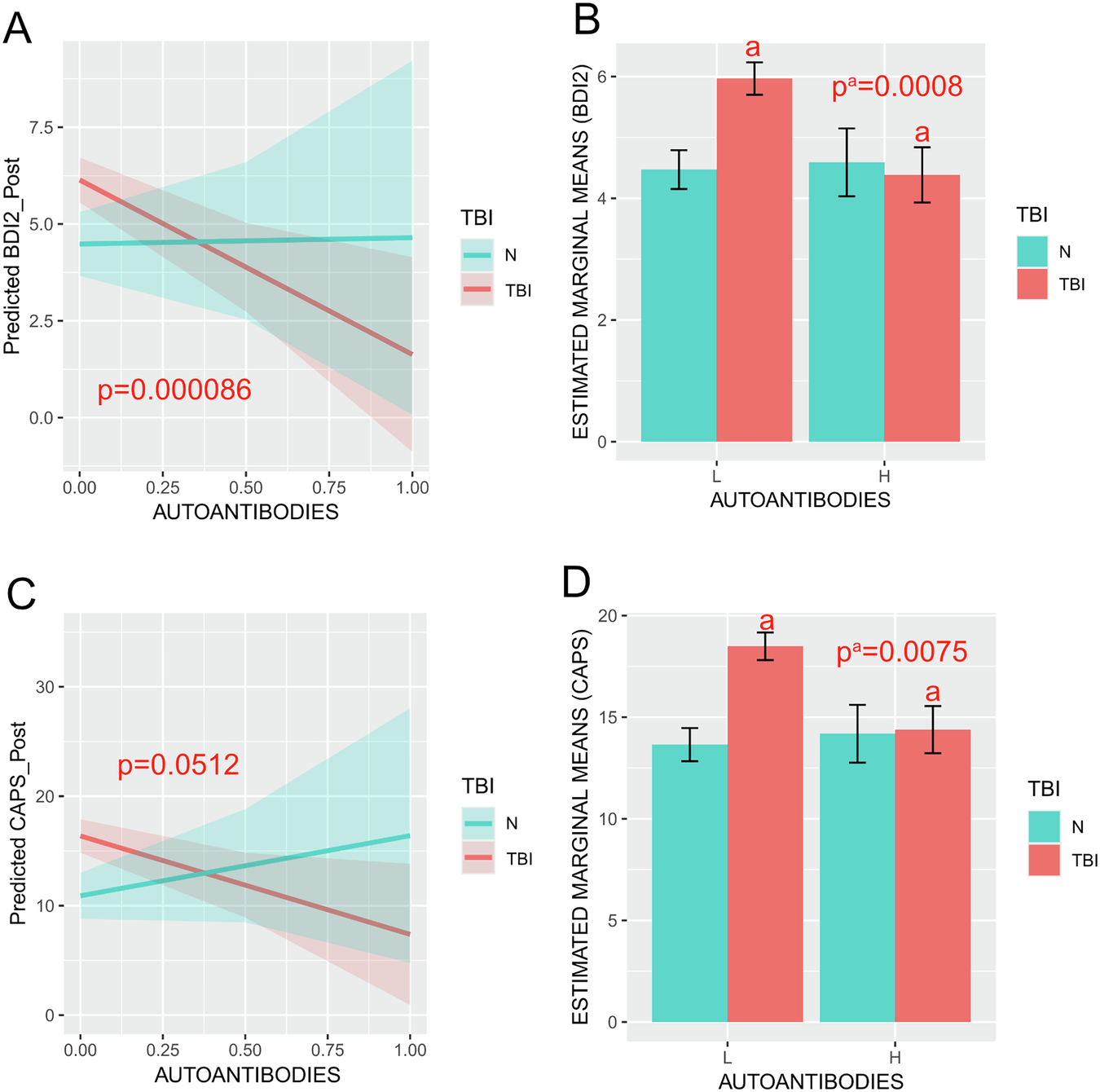
In a cohort sampled before and after an Afghanistan deployment, the top quartile for the antibody reported about 25% lower depression and 22% lower PTSD symptom scores after a lifetime head injury. Mouse work offers a size-based explanation.
The Scientist · Science desk
What happened
- A UC San Diego and VA San Diego team analyzed blood samples and psychiatric assessments from 1,025 active-duty Marines, taken before and after a seven-month combat deployment to Afghanistan between 2011 and 2013.
- Among participants with a lifetime history of traumatic brain injury, the top quarter for natural anti-NMDAR1 antibody levels had about 25% lower depression scores and 22% lower PTSD scores after deployment.
- The antibodies stayed detectable in serum for more than 12 months. The authors read that persistence as an enduring trait, not a short-lived acute-phase response to injury.
Compiled by The ScientistSomething wrong?How this is made
Why it matters
- contradiction The paper's own summary calls the result a 25% lower risk of developing depressive symptoms, while the body of the release calls it a 25% lower symptom score. Only the first speaks to how many people get ill, and that difference decides how much weight the finding can carry.
- constraint The exposure is a quartile of one cohort's distribution, not a measured concentration, so no clinician can yet place an individual patient above or below a protective level.
- capability If size is what separates protective binding from pathogenic binding, the design target becomes an agent that reaches extrasynaptic receptors and stays out of the synapse.
NMDA receptors sit inside the synapse, where they help store new information, and also outside it [14]. After a head injury, pathological glutamate release hyperactivates the extrasynaptic ones, and that hyperactivation drives secondary neuronal injury [10].
The mouse experiments in the same paper turn on antibody size. Small IgG antibodies fit into the synaptic cleft and impair memory, the pattern seen in anti-NMDAR encephalitis [8][15]. Large IgM antibodies do not fit, so they bind the outer, extrasynaptic receptors instead, and in the animals that binding gave long-lasting protection [9]. The authors liken the effect to long-acting ketamine [11].
The human half of the paper is an association inside a subgroup. The cohort is 1,025 active-duty Marines sampled before and after a seven-month deployment [1]. The 25% and 22% figures come only from participants with a lifetime history of TBI, and the announcement does not report how many of the 1,025 that was [3]. A quarter of the full cohort is about 256 people [17]. The top quartile of the TBI subgroup is smaller than that, and possibly much smaller.
Both percentages describe symptom scores [3]. The summary accompanying the paper describes the same result as a 25% lower risk of developing post-deployment depressive symptoms and a 22% lower risk of PTSD symptoms [4]. A score and a risk are two different quantities. A group's mean score can fall by a quarter with nobody crossing a diagnostic threshold. The categorical result is the more clinically legible one: high-antibody participants were significantly less likely to report moderate-to-severe depression and used fewer psychiatric medications after returning [5]. A 25% reduction in symptom score does not offset the two- to four-fold increase in psychiatric risk after TBI [13].
What makes the marker look like a trait is its stability. The antibodies stayed detectable in blood for more than a year [7]. There was no association with anxiety, which is a point in the finding's favour, since a marker that moved with every symptom scale would look more like general distress [6]. Whatever sets a person's antibody level can travel with other things that affect mood, and an observational cohort cannot separate them, so the causal evidence sits in the mouse experiments [9].
For screening, the obstacle is the cut point. Quartiles are defined by this cohort's own distribution, so sitting in the top quarter of these deployed Marines is not a concentration a laboratory can report against [3]. About 20 million people a year sustain a concussion or other TBI [12], and a usable test would need an assay with a fixed threshold plus replication in people who are not combat-deployed Marines [2].
What to watch
- Whether the Molecular Psychiatry paper reports the size of the lifetime-TBI subgroup and absolute antibody concentrations instead of quartiles.
- Replication in a civilian TBI cohort, and in people whose injury is recorded prospectively.
- Whether IgM given after injury protects animals, which would move the finding from a marker toward a treatment.