Product1 distinct publisher3 min readPublished
Apple and MLB opened a four-game headset series with Red Sox-Yankees, and The Verge's reviewer spent much of it glancing up at the conventional TV broadcast floating inside the immersive scene, which tells you which feed does the work.
The Product Desk · Product desk

invest
Apple clears two bad bets off the books a week before Ternus takes over1 distinct publisher
product
Apple moves its hardware chief into the CEO chair next week1 distinct publisher
product
Memory output is booked through 2027, so budget the next laptop refresh upward1 distinct publisher
product
Greg Brockman, not Sam Altman, is the one running OpenAI day to day1 distinct publisher
Compiled by The Product DeskSomething wrong?How this is made
The floating jumbotron panel is the most honest component in the build. Apple's immersive scene carries a conventional TV broadcast plus player stats on a screen inside the environment [6], and The Verge's reviewer reports attention drifting up to it, because once the ball leaves the vicinity of the batter the immersive feed is hard to follow [7]. Apple shipped the old broadcast inside the new one as a rescue layer, and the rescue layer is the one doing most of the work.
Camera placement is the mechanism here, not resolution. There are two positions, each beside the dugout of the batting team, and the viewer stays put [4]. That fixed seat pays off on pitch movement, which arrives unobstructed, but it costs on everything hit [16]. The perspective does not follow the outfield [8], and when handedness lines up wrong the batter's own body screens part of the view [5]. A Nick Sogard fly ball that nearly left the park registered in the headset as nothing much [14]. Immersive replays from the outfield or closer to first base patch some of that distance after the fact [9].
Most people watching a baseball game leave it on and leave the room. The sport has the interval written into the rules, with the seventh inning stretch there to give fans a break [12]. A headset build assumes the opposite: that you are in the seat, eyes covered, for the duration. The reviewer describes whiplash going in and out of the headset's reality to grab a drink, walk around or eat dinner [3], on a device already found heavy and cumbersome [2]. A lighter strap does not touch that cost, because the cost is paid on every exit and re-entry.
This production is not aimed at the habitual watcher. There was a lot of explaining how to watch the game and many shout-outs to Vision Pro viewers [10], which is how you produce for a newcomer. That is a defensible target, and it also means the first-session reaction is the wrong read on value: the reviewer screamed at how close the players looked in the pre-game show [15] and still concluded the thing is for someone else [13].
Three of the four games are still to come [1], so there is more tape. For anyone pushing a high-attention mode into a low-attention habit, the useful grid is attention demanded (full versus ambient) against session length (minutes versus hours). Immersive baseball sits in the full-attention, multi-hour box, where the missing feature is a graceful hand-off state rather than more pixels: a pause that holds your seat, pass-through that keeps the audio running, some way to be half in. The measurement that matters is how often the hero view loses viewers to the fallback panel it shipped with, and whether anyone picks the headset for an ordinary midweek game rather than a Red Sox-Yankees opener.
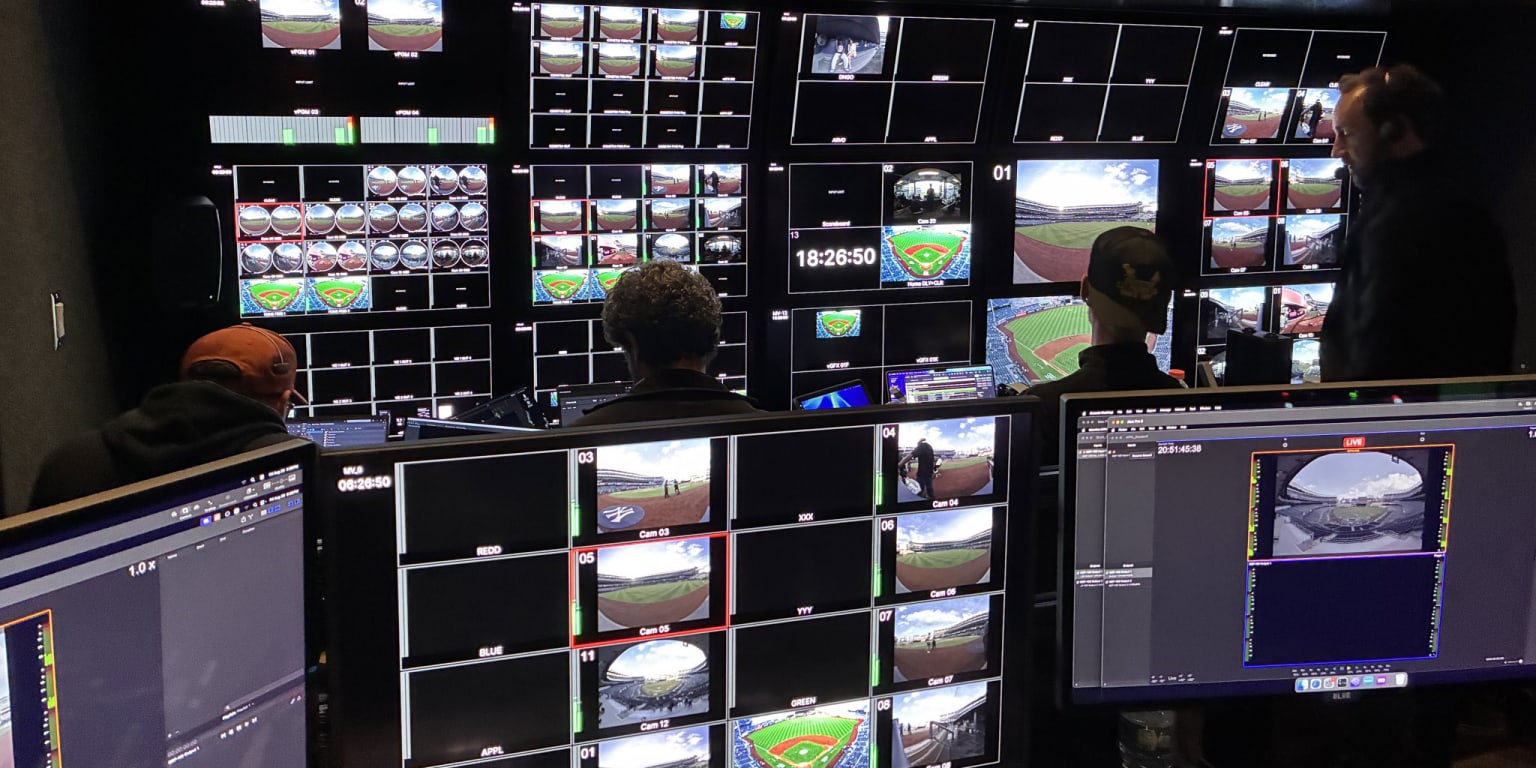
Ranked by verification strength, evidence, and original report placement.
Apple and Major League Baseball chose a Boston Red Sox vs New York Yankees matchup for the first of a series of four games streamed immersively on Apple Vision Pro.
The Verge's reviewer found the Apple Vision Pro heavy and cumbersome.
The reviewer struggled with whiplash coming in and out of the headset's reality anytime she wanted to grab a drink, walk around or eat dinner.
On Vision Pro the game is watched primarily from two angles, next to each team's dugout when that team is batting, and the viewer is stuck there and cannot move around as they please.
A right-handed batter whose team watches from the third base dugout, or a left-handed batter on the first base side, partially obstructs the immersive view with his body.
The immersive broadcast includes a floating jumbotron-style screen showing a more traditional TV broadcast along with player stats.
Distinct publishers with included, body-backed reporting in this cluster.
1 article · August 31, 2026
Follow any of these and your For You feed starts watching them — no settings page required.
Evidence-backed comparisons of source perspectives and observed adoption signals. Read the methodology
Which Builder, Operator, and Investor concerns the observed source mix emphasized—not a truth score.
Evidence, demonstrated adoption, hype gap, incentives, and confidence are assessed independently, each on its own current evidence. How these are measured.
One pair of eyes, but they were in the headset
Everything rests on one Verge writer's weekend, and she says up front she does not review tech. What saves it is specificity: a blacked-out dugout during innings, a righty's body blocking the plate from the third base side, Sogard's fly ball dying visually until Grisham catches it at the wall. Those are details you only get by sitting through nine innings, not from a press release. What is missing is anyone checking them — no second viewer, no Apple or MLB explanation of why the rig sits where it does.
Four games and a floating jumbotron
The thing shipped and ran live, which is more than most immersive sports demos manage: a real Red Sox-Yankees broadcast with pre-game coverage, stats, and immersive replays, one of four scheduled. Past that, silence. Nobody in this reporting says how many headsets were on heads, whether MLB is happy, or what happens after game four. Shipping is confirmed; uptake is unmeasured.
Gentler than its own findings
Read the verdict and the observations against each other and the observations win. 'For someone, just not for me' sits on top of a camera that cannot follow the ball, an obstructed plate view, no reactivity to live play, and an admission that you need the television feed to know what happened. The loudest promotional voice in the story belongs to the broadcast itself, thanking its headset viewers; The Verge's account is the quieter document and, if anything, underclaims what it found.
The broadcast is selling; the review is not
Apple and MLB have every reason to make this look like the future, and The Verge catches the tell — airtime spent explaining baseball to newcomers and repeated shout-outs to Vision Pro viewers, which is advertising wearing a broadcast's clothes. The reporting itself carries the opposite pressure: an outsider to the tech beat who ends on a group of friends watching the same series live at Yankee Stadium. Pressure exists on the product side of this story, not the telling of it.
Solid about one weekend, silent about the rest
We would defend nearly every sentence about what this reviewer saw and doubt any extrapolation from it. The mechanics — fixed vantage points, blacked-out dugout, replay angles, the supplementary TV pane — are the sort of thing a second viewer would confirm. Whether immersive baseball is a dead end or a first draft is exactly what one person, one game and no vendor comment cannot settle.