Invest1 publisher3 min readPublished Updated
Convenience Store Stocks Are Being Priced As An AI Hedge. They Are A Fuel-Margin Bet
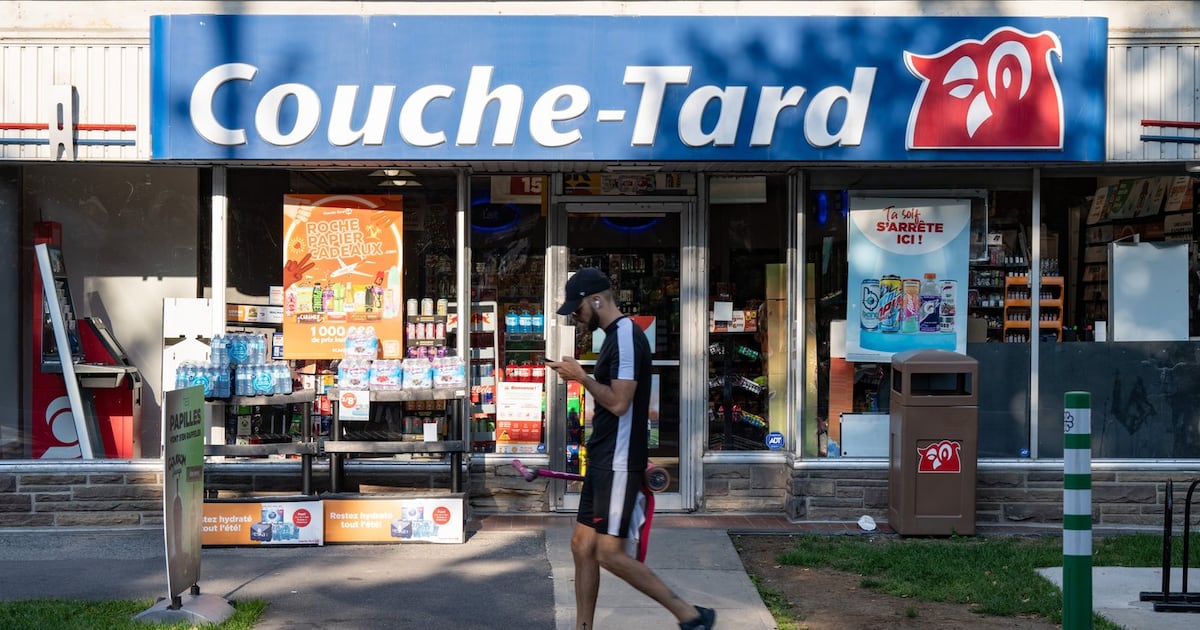
Casey's, Couche-Tard and Murphy USA are all up at least 24% this year on a defensive label. The earnings driver is a closed Strait of Hormuz, which is the opposite of defensive.
The Investor · Invest desk
Drafted by a language model from the sources cited here and checked against its claim ledger before publication. How we use AISend a correction
What happened
- Shares of Alimentation Couche-Tard Inc., Casey's General Stores Inc. and Murphy USA Inc. have surged to near record levels and are all up at least 24% this year.
- Casey's General Stores is up more than 54% this year and on track for its best annual performance in 35 years; it was added to the S&P 500 Index four months ago.
- Convenience store stocks are riding investor demand for defensive plays as angst over the sustainability of the AI boom and the ongoing conflict in Iran drive market turbulence.
- Energy markets have been roiled since the US attacked Iran in late February and the subsequent closure of the Strait of Hormuz.
- The energy market disruption has run roughly six months, from late February 2026 to the article's publication on 14 August 2026.
Compiled by The InvestorSomething wrong?How this is made
Why it matters
Shares of Alimentation Couche-Tard, Casey's General Stores and Murphy USA have all climbed at least 24% this year and sit near record levels, with Casey's up more than 54% and on track for its best annual performance in 35 years [1][2]. Fortune reports the cohort is being bought as a defensive hedge against doubts over the AI boom and the conflict in Iran [3], which is a strange thing to call a group whose margins now depend on a war.
The mechanism is not consumer staples stability. Energy markets have been disrupted since the US attacked Iran in late February and the Strait of Hormuz subsequently closed [4], meaning roughly six months of price dislocation feeding into pump economics [5]. William Blair analyst Phillip Blee put the trade plainly: volatile gas prices help, because the store keeps retail prices fairly elevated while buying opportunistically [6]. Couche-Tard reported large fuel margin gains after the war began [7]. That is a spread business benefiting from disorder, not a bond substitute.
The dispersion tells you what is actually being paid for. Couche-Tard is up 22% in Toronto [8]; Casey's is up more than 54% [2], a gap of about 32 points [9]. Casey's operates in towns of 20,000 people or fewer across 19 states, and has announced a three-year plan to expand its chicken wing business and add at least 400 stores in Texas and elsewhere in the South [10][11]. Roundhill's HALO ETF, built around high-asset, low-obsolescence names as a diversifier from AI, bought Casey's as its only convenience store position [12]. Roundhill CEO Dave Mazza frames the appeal as cash flows from essential daily demand for fuel, food and staples [13].
Private capital is reading the same bid. April's Yesway IPO, backed by Brookwood Financial Partners, was 10 times oversubscribed and the shares are up 22% since debut [14]. TDR Capital-backed Cumberland Farms filed for a US IPO last month, and Bloomberg News reported in June it was considering a valuation of about $9 billion [15]. Melius Research analyst Jacob Aiken-Phillips reads the Yesway result as evidence of public-market demand for convenience store exposure beyond the established names [16].
The non-fuel story is real but small-ticket. JPMorgan analyst Thomas Palmer notes nicotine pouches, beverages and foodservice as common growth callouts [17], and Murphy told investors it expects pouches plus a resurgence in cigarettes to drive second-half growth [18]. Murphy is up nearly 40% this year [19].
The operators themselves are less enthusiastic than the multiple implies. Murphy issued deliberately conservative 2026 guidance [20], with CEO Mindy West saying retail margins are very difficult to predict amid a crisis that continues to ebb and flow [21]. Seven & i has delayed the planned listing of its US operation to the fiscal year ending February 2027 [22]. Aiken-Phillips says the industry's central debate is whether 2027 is a down year across the board [23].
Watch Couche-Tard and Casey's, both due to report next month [24]. RBC analyst Irene Nattel expects attention to shift to same-store sales and gas-margin sustainability as geopolitical volatility subsides [25]. If Hormuz reopens, the defensive thesis has to be carried entirely by pizza, wings and pouches.