Invest1 distinct publisher3 min readPublished
Local cadres called Wuliangye old-fashioned and kept the liquor off a press tour, showing instead a 57-storey waterfront tower whose Westin flag is not due until 2027, which is the part of an industrial upgrade you can photograph.
The Investor · Invest desk

Compiled by The InvestorSomething wrong?How this is made
Divide 288 metres by 57 storeys and you get a little over five metres a floor [10], generous slab-to-slab for a provincial tower and consistent with the hotel-plus-offices mix the plot is being sold on; the Westin is not due until 2027 [6], so every one of those metres is spend now against revenue dated later [11]. That is the trade in a single building.
What I cannot give you is the cost, because the source does not carry it: no land price, no construction budget, no named borrower, no split between developer equity and bank debt, and no figure for what Wuliangye hands the city in tax [7]. Anyone pricing Yibin's pivot to two decimal places today is working from a prior rather than a filing. The honest version of the thesis is narrower and, or rather, more usable: read the itinerary. When local cadres describe the household name in their own jurisdiction as old-fashioned [3] and walk visiting reporters past everything except the liquor [4], they are naming the balance sheet they want to be judged on: the tower, not China's second-largest liquor producer [2].
That itinerary supports at least three readings, and they price differently. The tower could be ordinary overhead for a city that visitors reach by flying to Chengdu and then boarding a bus [8], where hi-tech plants need somewhere for engineers and clients to sleep, and hospitality is simply the cost of the industrial story being credible. Or the tower is the story and the manufacturing is the permit, in which case the best waterfront plot in the city [5] went to the asset that photographs well rather than the one that shows up in output data. Or both, in sequence: concrete first and factories later, which is the version I would lean toward and cannot demonstrate from this material.
My view, probably wrong on timing: the cost of the industrial upgrade in places like Yibin lands less in the plants than in the adjacency built to make the plants plausible, which is roughly what SCMP means by the costs typically associated with breakneck development [9]. An investor buying upgrade exposure in lower-tier China is, whether the pitch deck says so or not, also long 57 storeys of hospitality in a prefecture-level market [5]. There is a real counter-argument worth sitting with. If the tower turns out to be privately financed with no municipal guarantee, and if it opens near full in 2027 [6], then this is a developer taking a bet with its own money and the fiscal claim I am implying does not exist.
One more thing for anyone holding the liquor rather than the concrete. The city that hosts Wuliangye now briefs journalists that Wuliangye is old-fashioned [3], which is a statement about political standing and official attention, not an earnings revision, and the two have historically been easier to separate on paper than in practice.
Ranked by verification strength, evidence, and original report placement.
Yibin is a lower-tier, prefecture-level city in Sichuan province and the home of baijiu maker Wuliangye; it has long flown under the radar and is trying to reinvent itself as a hi-tech manufacturing hub.
Wuliangye is China's second-largest liquor producer and a household name.
Local cadres told visiting reporters: "Wuliangye is old-fashioned."
Local officials were keen to show the visiting media everything the city had to offer except the liquor.
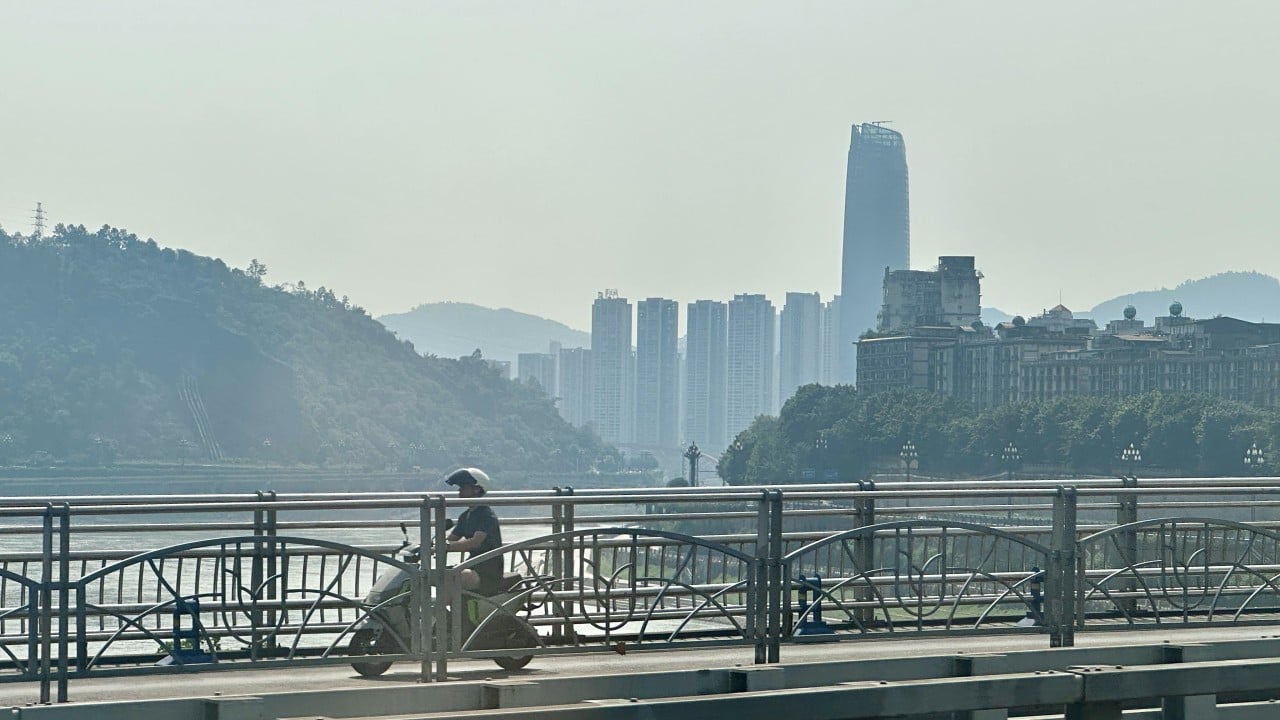
A 288-metre (about 944 feet), 57-storey skyscraper is rising from a prime waterfront plot with sweeping views of the Yangtze River, and is one of the tallest buildings in Sichuan.
The building is expected to house Sichuan's first five-star Westin hotel in 2027, after its developer signed a contract with Marriott International.
Distinct publishers with included, body-backed reporting in this cluster.
scmp.com
1 article · August 30, 2026
Follow any of these and your For You feed starts watching them — no settings page required.
invest
Google Pay takes the last click on hotel bookings its ten partners still have to service1 distinct publisher
Evidence-backed comparisons of source perspectives and observed adoption signals. Read the methodology
Which Builder, Operator, and Investor concerns the observed source mix emphasized—not a truth score.
Evidence, demonstrated adoption, hype gap, incentives, and confidence are assessed independently, each on its own current evidence. How these are measured.
One invited visit, no paperwork
What holds this up is a reporter's eyes on an itinerary the hosts set. The physically checkable parts — a 288-metre tower, 57 storeys, a waterfront plot on the Yangtze — are exactly the parts anyone could confirm by standing there. The parts that decide whether the pivot works, from the cost of the building to the terms Marriott signed, appear nowhere, and no second newsroom is in Yibin to fill them in.
A signature and a 2027 date
Real commitment exists, and it is narrow: a developer's contract with Marriott International and a promised Westin opening in 2027, plus concrete already going up. Nobody has moved in, no occupancy or booking figure is offered, and the hi-tech manufacturing side of the story has no named tenant, plant or customer at all. Officials calling their own champion old-fashioned is a stated intention, not uptake.
Skyline standing in for the pivot
Trading old spirits for new energy is a large claim to hang on a tower and a hotel flag. The story's showpiece is the thing a press tour can photograph, while the industrial upgrade it is meant to symbolise arrives unnamed and unquantified — and the city's most productive asset was deliberately kept off the route. The gap is moderate rather than severe because the South China Morning Post says plainly that stark challenges remain and that breakneck development carries costs.
Hosts chose the route
This one is unusually legible, because the reporting hands it to you. The visit was solicited by invitation and organised for media, and the hosts' single most revealing editorial act — walking journalists past the province's tallest building while steering them away from its most famous product — is recorded in the copy. Local officials have an obvious interest in a manufacturing narrative, and the credit due to the writer is that the arrangement is disclosed rather than hidden.
Firm on what was seen, blank on what it costs
Take the descriptive layer as broadly reliable — heights, storey counts, a hotel brand and a target year are the kind of detail that gets corrected fast if wrong, and the arithmetic on roughly five metres per floor is consistent with a mixed hotel-and-office build. Confidence falls away the moment the story implies anything about viability, because that would need the cost, the lender and the demand, none of which is here and none of which a second outlet has supplied.