Science1 publisher3 min readPublished
Syria's former antiquities chief documents how 30,000 objects left Deir ez-Zor ahead of ISIS
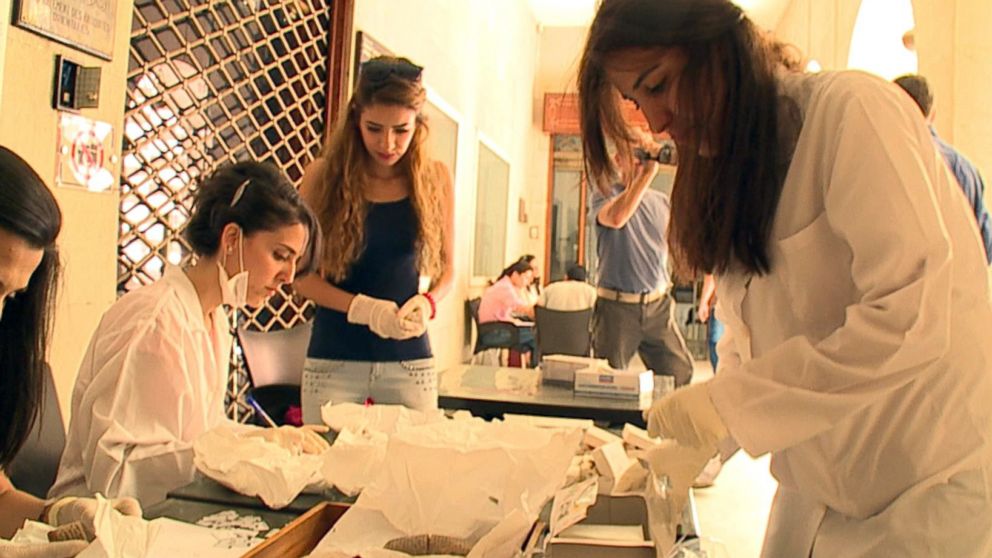
Maamoun Abdulkarim ran Syria's antiquities directorate when the Deir ez-Zor Museum was emptied in the summers of 2014 and 2015, and he has now published his own account of the operation in a curatorship journal.
The Scientist · Science desk
What happened
- About 30,000 artifacts were moved out of the Deir ez-Zor Museum during the summers of 2014 and 2015, while the city faced imminent capture by ISIS.
- The account is a study by Maamoun Abdulkarim, now professor of archaeology and history at the University of Sharjah, published in Museum Management and Curatorship.
- Abdulkarim directed Syria's Directorate-General of Antiquities and Museums from 2012 to 2017 and oversaw the evacuation himself.
- Syria had 35 archaeological museums before 2011, and Deir ez-Zor, while not the largest, held collections from Halaf, Dura-Europos and Mari.
Compiled by The ScientistSomething wrong?How this is made
Why it matters
- constraint Operational history of this kind is almost always written by its own protagonist, so checking the decision timeline depends on other participants publishing theirs.
- decision A museum director facing a siege warning now has a citable rule for moving early, from someone who took the professional risk of following it.
- precedent The paper is pitched at services in Iraq, Libya, Sudan and Yemen, and a single documented success tends to be adopted as a template well before anyone validates it.
Roughly 30,000 objects left the museum, and nobody knows what share of its holdings that was [1]. Abdulkarim's paper stops short of estimating how many objects were looted across Syria during the war, or how many of the country's 35 pre-war museums kept their collections intact [9][10]. The count describes what left one building on the Euphrates, in a province whose oil and gas fields made it one of the war's most contested [20].
Spread evenly across two three-month summers, 30,000 objects comes to about 167 a day [1]. Every one of them had to travel the narrow and highly vulnerable corridor that was the museum's only link to the military airport, in a city where access was severely restricted [6].
The substantive claim in the study is about what makes an operation like that possible. Logistics is one part of it. "It fundamentally involves decision-making, institutional resilience, trust, and the ability to adapt rapidly to changing circumstances," Abdulkarim said of working amid active hostilities [5]. Trust is one of four items on that list, and the study describes a single museum, written up by the man who decided its fate [2]. Separating the four would need a comparison institution, one where staff trust held and something else gave way. The operation was run by Syria's own antiquities directorate, which Abdulkarim headed from 2012 to 2017 [4].
On timing he is unambiguous. "There is rarely a perfect moment to act during an armed conflict; often, delaying a decision in search of greater certainty poses a greater danger than acting under uncertainty," he said [16]. The prompt came from across the border. "This period formed a critical juncture, as it coincided with the fall of Mosul in Iraq, the looting of its civilizational museum, and the destruction of antiquities from Nineveh and Assyria," he writes [17], and those events "compelled Syrian antiquities authorities to promptly reevaluate protection policies and expedite emergency measures in cities that were at risk of siege or collapse" [18]. He also writes that he accepted the exposure: "My foremost priority was the protection of cultural heritage, and I was prepared to bear whatever personal and professional risks and consequences those decisions might entail" [19].
The same gap runs through Syrian heritage generally. There is no official estimate of how many archaeologically significant sites the country holds; the antiquities department keeps a file of about 10,000 [12], mostly places already excavated or visible from the surface [13]. Large areas were never surveyed, and Abdulkarim writes that tens of thousands is a reasonable estimate [14]. Deir ez-Zor was not the largest of the 35 museums, and its holdings came from Halaf, Dura-Europos and Mari [7].
What to watch
- Whether DGAM or its successor releases a pre-war inventory for Deir ez-Zor, which would show what share of the collection the 30,000 objects represent.
- Whether other museum and directorate staff publish their own accounts of the 2014 and 2015 moves, allowing the decision timeline to be checked against Abdulkarim's.
- Whether antiquities services in Iraq, Libya, Sudan or Yemen turn the paper's timing rule into written emergency procedure.