Science1 publisher2 min readPublished
Clonal Amazon mollies raised alike form shoals whose collective behaviour changes as they mature
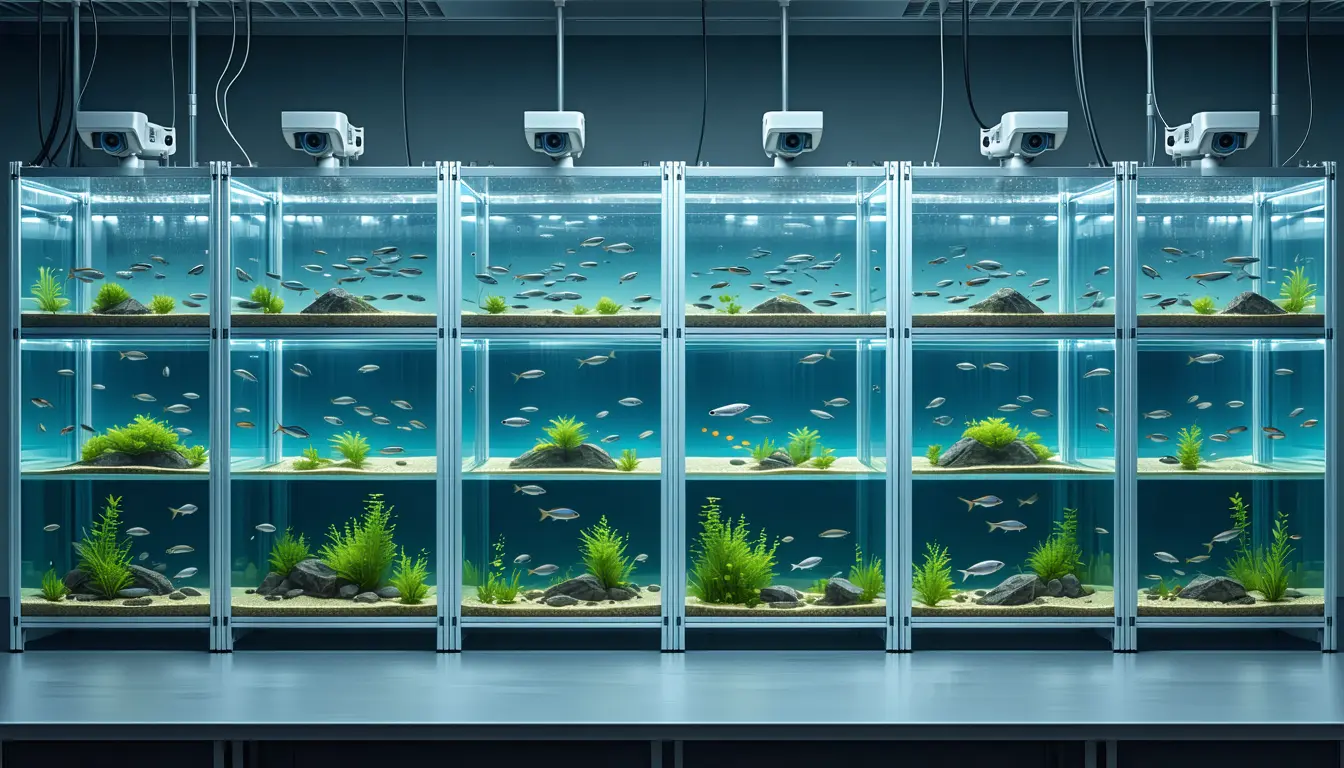
Researchers filmed 10 shoals of clonal Amazon mollies for 55 days and found group behaviour shifted in ways the members' traits do not explain. The authors credit social interaction as the fish mature, an idea the observational design fits but has not yet tested.
The Scientist · Science desk
What happened
- Each shoal held four siblings, genetically identical within the group, that had been reared together from birth under identical environmental conditions.
- For two weeks the fish kept the spacing expected of fish moving independently, then stayed increasingly close from about three weeks, with the sharpest change from around day 30.
- Individual Amazon mollies are known to keep consistent behavioural differences over time, so a shoal that simply averaged its members should have stayed fairly stable.
Compiled by The ScientistSomething wrong?How this is made
Why it matters
- contradiction The report's claim that schooling is not innate sits beside group differences present on day one, before the fish were social, so only the later changes point to social interaction.
- constraint A shoal scored at one age describes one stage of its development; these groups changed enough between their first and last five days that a single snapshot would misdescribe them.
- constraint Resting on 40 fish in 10 groups, the study can show that shoals diverge but offers a thin base for saying how large or how common that divergence is.
Set against that individual consistency, the shoals moved a long way. Each group's collective phenotype over its first five days was very different from its phenotype over the last five, and the report says the change could not be explained by the individuals alone [8][9]. As the fish aged, their movements also became more correlated, a sign that they were responding to one another [6].
Clonal fish make that comparison informative. With four genetically identical fish reared the same way in each group [3], a shoal's drift cannot be put down to one member carrying different genes from the others. The design is weaker evidence about the onset of shoaling itself. Fish that begin to school at around a month old [4] could be keeping to a developmental schedule, and clones would share it.
In its opening line, the report says the study suggests schooling "is not innate" [13]. The data are more mixed. Groups already differed on their first day, when the fish were still spaced as if moving independently [7][5]. Some of those differences, in mean swimming speed and distance from the tank centre, stayed fairly consistent through development [7]. The authors' own suggestion is that early differences largely reflect the individual members, with interactions mattering more as the fish become socially responsive [11].
Feedback is the explanation they offer. One fish alters its movement, a neighbour reacts, and that reaction changes what the rest of the group does [12]. "A swarm is more than the sum of its parts. This study of clonal fish shows that social experiences during development play a key role in the emergence of group behavior," said David Bierbach, an author from the Science of Intelligence cluster [10].
The thing this doesn't tell you is whether interaction caused the divergence. The report describes filming and measuring [2]. It does not describe rearing any fish alone or swapping members between shoals, the manipulations that would test feedback directly. Calling the result learning goes further than the evidence, and the authors present feedback as one possible explanation [11].
Forty fish, in 10 groups of four followed for 55 days, is the whole sample [1][2]. Ten groups is enough to watch shoals diverge. It is a small base for estimating how far they typically diverge, and I would not carry four-fish tanks over to wild shoals without a study that measures them there.
What to watch
- Experiments that rear mollies in isolation or swap members between shoals, which would test whether social feedback drives the divergence.
- Whether group differences settle or keep changing past day 55, as the fish reach adulthood.
- Replication with more than 10 shoals, or with groups larger than four fish.