Invest3 publishers3 min readPublished
Former Groq engineers ask Delaware to treat Nvidia's $17 billion license as a sale of the company
Two former Groq engineers sued the startup's board in Delaware, saying Nvidia's $20 billion license-and-hire deal was a sale that needed a stockholder vote. A ruling for them would extend that vote to other deals built the same way.
The Investor · Invest desk
Drafted by a language model from the sources cited here and checked against its claim ledger before publication. How we use AISend a correction
What happened
- The complaint says Nvidia put $17 billion into a license it labeled "non-exclusive" and $3 billion in restricted stock units into pay for the Groq employees who moved.
- Plaintiffs Joshua Rubin and Benjamin Serebrin both left Groq before the deal was announced but kept their stock, and filed in the Court of Chancery on Oct. 2.
- They allege a conflicted board majority, saying funds that designated Groq directors were positioned for windfall returns from a later squeeze-out.
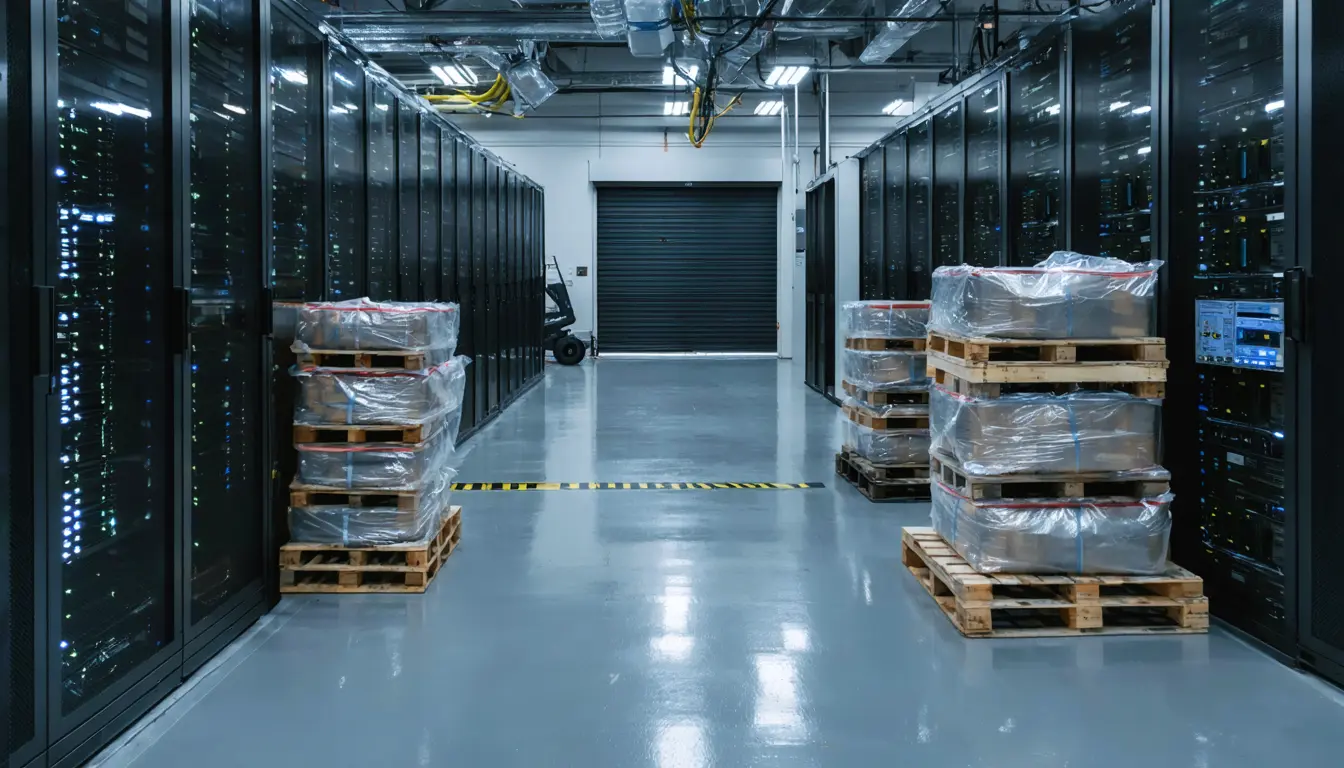
- Nvidia's Groq 3 LPX inference chip, built on the licensed technology, entered full production this year in racks of 256 on the Vera Rubin platform.
- Groq says it remains an independent company and has raised about $1 billion since June, with Nvidia among the investors.
Compiled by The InvestorSomething wrong?How this is made
Why it matters
- precedent If the Court of Chancery lets the vote claim proceed, a board that licenses its technology to a buyer who then hires its staff has reason to seek stockholder approval or run a sale process first.
- cost The $3 billion in Nvidia stock went to people who moved, averaging $15 million to $20 million each, while holders who did not move, including the two plaintiffs, allege the deal cost stockholders billions.
- contradiction Huang wrote that Nvidia was 'not acquiring Groq as a company' and the complaint says the board 'sold the company', so the court must decide which description fits a deal that moved the founder and up to 200 engineers.
- exposure Groq's directors face a conflict claim that does not depend on the vote theory, built on the allegation that funds that designated board members stood to collect windfall returns.
Of the $20 billion, 85% went to the license and 15% to Nvidia stock units, by the complaint's own split [3][19]. Spread over the 150 to 200 engineers the complaint says moved, the $3 billion averages $15 million to $20 million a person [10][20]. That average assumes the pool covered exactly that headcount, and a founder's grant would not look like a junior engineer's. For Nvidia, which CNBC calls a $5 trillion company, the whole deal is about 0.4% of that figure [17][21].
A license needs a board's signature. The complaint says this one also needed the stockholders' [2]. Rubin and Serebrin allege the board "sold the company to Nvidia without the stockholder vote Delaware law requires and without any process designed to test or maximize the value of what Nvidia bought" [7]. The coverage does not describe the terms of what the complaint calls "the later squeeze-out," or how much of the $17 billion reached stockholders [4].
Their strongest evidence is who left. Founder and chief executive Jonathan Ross and president Sunny Madra joined Nvidia with other senior leaders [9]. In an email to Nvidia employees around the time of the announcement, chief executive Jensen Huang wrote: "We plan to integrate Groq's low-latency processors into the NVIDIA AI factory architecture, extending the platform to serve an even broader range of AI inference and real-time workloads" [14].
Groq's defence starts in the same email. "While we are adding talented employees to our ranks and licensing Groq's IP, we are not acquiring Groq as a company," Huang wrote [15]. A Groq spokesperson told CNBC: "This lawsuit is meritless and we will vigorously defend ourselves against it" [13]. Nvidia sits on both sides of the company, as licensee and as an investor in Groq's funding since June [3][11]. CNBC said Nvidia had been approached for comment [18].
The court could accept that a non-exclusive license leaves a working company behind and dismiss the vote claim. It could let the vote claim go forward, putting the license-plus-hiring structure in question for any board that uses it. Or it could leave the label alone and try the conflict claim: that "A Board majority was conflicted as a result," and that "The Board's conflicted choice cost Groq's stockholders billions of dollars" [5][6].
I think the conflict claim is the bigger risk for Groq's directors. It asks a narrower question: whether the people who approved the price sat for funds positioned to profit from it [4]. The counter-case is that a judge unwilling to call a license a sale may also be slow to demand a sale-style process for it. The vote theory is the one that reaches other deals, and it requires the court to look past the word "non-exclusive" [3].
What to watch
- Whether the Court of Chancery lets the stockholder-vote claim proceed, the part of the case that would reach other license-plus-hiring deals.
- Whether Groq licenses its inference technology to a second company, the fact that would test Nvidia's 'non-exclusive' label.
- Nvidia's first public response to the complaint; CNBC said it had asked for comment.