Science1 distinct publisher3 min readPublished
Isar's Spectrum gives Europe a launch path that does not run through French Guiana or the United States. At about one tonne of payload and one success in two attempts, it is a supplier to qualify rather than a slot to book.
The Scientist · Science desk

Follow any of these and your For You feed starts watching them — no settings page required.
invest
ESA prices three rocket startups on milestones, not flights1 distinct publisher
product
Texas siting risk moves from the county to the capitol as both Senate candidates run at data centers1 distinct publisher
invest
At $800,000 an acre, Louisiana's Starship base is civil works before it is a spaceport1 distinct publisher
invest
PLD Space stacked 59% of its lifetime funding into a single Series C1 distinct publisher
Compiled by The ScientistSomething wrong?How this is made
Spectrum's flight record now reads two attempts and one orbit, the earlier attempt being the March 2025 test vehicle that fell back to Earth and exploded [19][6]. That record is a success record: one orbit in two attempts. It is the honest basis for any schedule built on this rocket, well short of a reliability figure.
What the AFP account establishes is narrower than the language around it. Orbital insertion is reported on Isar's own statement on X, and the account does not give the orbit achieved, the payload aboard, a price per launch, or a planned flight rate [16][2]. The video feed from the mission, called Onward and Upward, ended about ten minutes in when the rocket passed the maximum range for the connection, which AFP attributes to range rather than to a fault [5].
The factory claim is the one that decides whether this becomes procurable. A launch buyer is buying a repeatable cadence, not a single successful insertion. Isar says its plant near Munich will be able to build more than 30 rockets a year [9]. Divide the year by that and a vehicle comes off the line roughly every 12 days [10]; multiply by the roughly one tonne Spectrum carries and the stated ceiling is more than 30 tonnes a year to low Earth orbit [11][8]. Both figures describe a factory. Nothing in the record says Andoya, which sits north of the Arctic Circle, can license, clear and turn a pad around 30 times a year [3]. A finished stage sitting in a hangar is a different thing from a slot on a manifest.
The political demand is not in question. Chancellor Friedrich Merz, visiting Andoya in March with Norway's prime minister, said "We need capacity. We need independence," and that Europe had relied too long on other nations' delivery systems [13]. Defence Minister Boris Pistorius has announced a 35 billion euro drive by 2030 to build out space capacity [14]. The Ministry for Research, Technology and Space greeted the flight with "Germany has spaceflight capabilities" [12], which runs a little ahead of Isar's own framing: civilian and military satellite work comes once the vehicle is ready for serial production [7]. AFP places the launch against European worry about dependence on America, including for launch, after President Trump shook trust in NATO [18].
So this flight resets the qualification timeline; the launch timeline stays where it was. An operator holding a 2027 payload and a US booking now has reason to open a second-source file and ask Isar for the orbit it actually achieved and for realistic pad availability at Andoya. It does not yet have reason to move the payload. The thing a first orbital flight cannot tell you is whether the second vehicle resembles the thirtieth, and that is precisely the question a factory rate of 30 a year is asking to be trusted on. Two more flights inside a year, with customer hardware confirmed separating on target, would give Europe's bet on competition among domestic launchers [15] its first cadence data rather than its first orbit.
Ranked by verification strength, evidence, and original report placement.
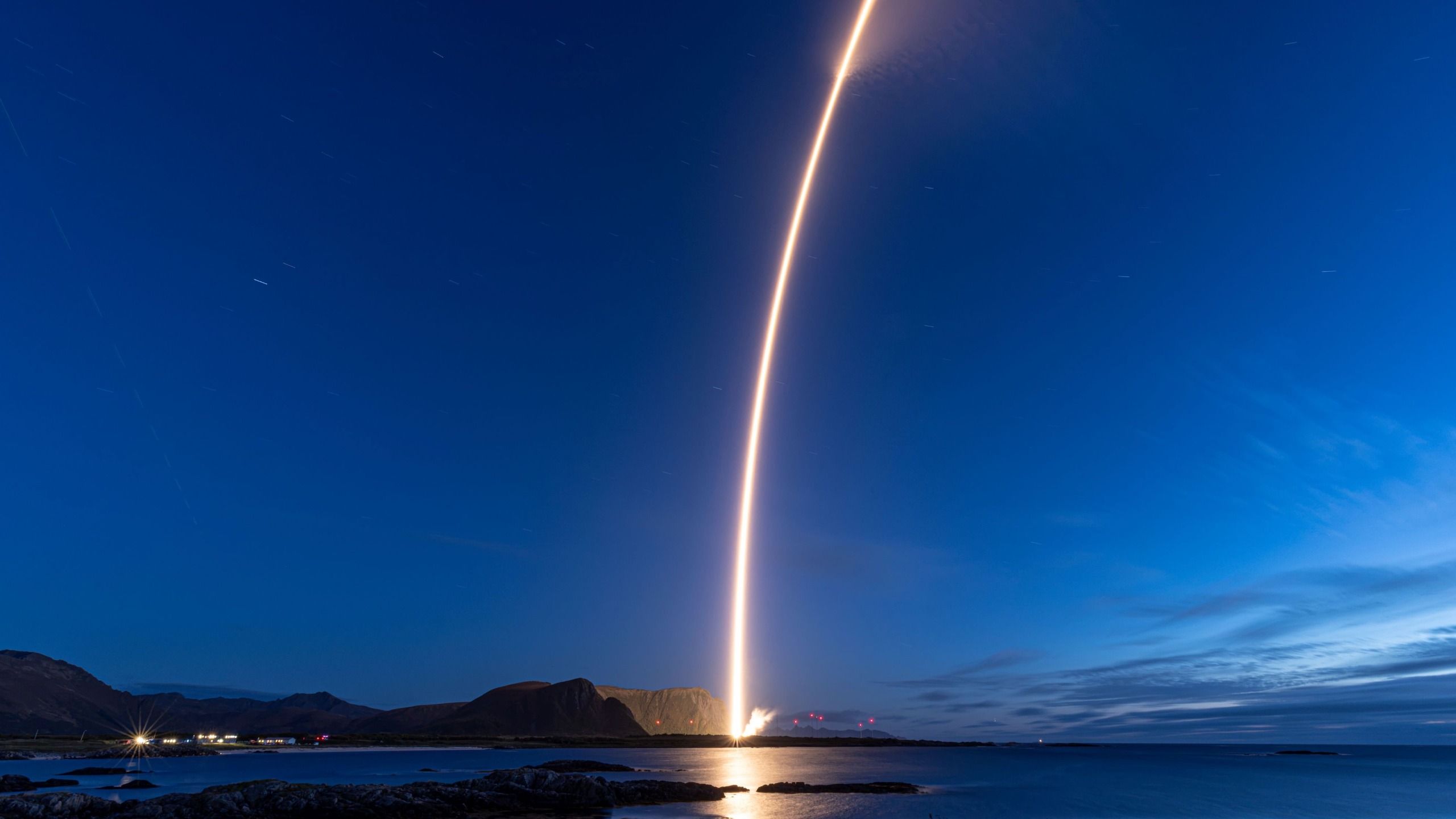
Germany's Isar Aerospace launched its two-stage Spectrum rocket into orbit from Andoya Spaceport in Norway on Saturday, with liftoff shortly after 2000 GMT, according to the company.
Isar said on X: "We're in orbit! And just made European history: This is the first time a privately developed rocket reached orbit from continental Europe."
About 10 minutes into the mission, dubbed "Onward and Upward", the video transmission cut out after the rocket exceeded the maximum range for connection.
The launch followed months of delays caused by either technical or safety issues, and a test flight in March 2025 in which a Spectrum plunged back to Earth and exploded.
Distinct publishers with included, body-backed reporting in this cluster.
1 article · September 6, 2026
Evidence-backed comparisons of source perspectives and observed adoption signals. Read the methodology
Which Builder, Operator, and Investor concerns the observed source mix emphasized—not a truth score.
Evidence, demonstrated adoption, hype gap, incentives, and confidence are assessed independently, each on its own current evidence. How these are measured.
One wire, one company statement
The orbital insertion comes from a single place, Isar's own post on X, relayed by AFP and republished by phys.org. No altitude, no inclination, no word on separation, and the only live picture had already dropped out ten minutes in when the rocket outran its range. The vehicle dimensions and the Munich build rate are company figures too. The government quotations are checkable and add nothing about the flight itself.
One orbit, no manifest
Two flights, one of which exploded, and this one carrying nothing the reporting can name. There is no customer, no price, no next launch date and no confirmation that anything was released into orbit. Serial production at Munich, the step that would turn Spectrum into a service someone can buy, is described as still ahead of the company.
Framing ahead of the hardware
'Germany has spaceflight capabilities' from the research ministry and 'European history' from Isar sit on top of a roughly one-tonne rocket with one success in two attempts and nothing confirmed aboard. Reaching orbit on a second flight is a genuine engineering result; the language attached to it is doing national-capability work the flight record cannot yet carry. The political audience for that language, Merz on independence and Pistorius on 35 billion euros, was in place months before the rocket left the pad.
Everyone quoted needs the win
The three voices in the copy all gain from the launch counting: Isar announcing its own success, a research ministry claiming national capability, and a defence ministry with 35 billion euros of space spending to justify by 2030. AFP supplies the sovereignty frame around them, tying the flight to Trump and European doubts about NATO. None of that makes the flight less real, but it explains why nobody in the piece asks what orbit was reached.
Quotes solid, orbit provisional
AFP is careful with attribution and the quotations are traceable to public statements, so what was said is reliable. What was achieved rests on the launch operator alone, with a single publisher, no telemetry and no third-party tracking, which is why the orbit stays provisional here even though the rest of the reporting holds up.