Invest1 distinct publisher3 min readPublished
Tesla told the agency a car with no brake pedal, no steering wheel and no mirrors complies with standards written for cars that have them, and NHTSA now wants the technical basis for that determination.
The Investor · Invest desk

Compiled by The InvestorSomething wrong?How this is made
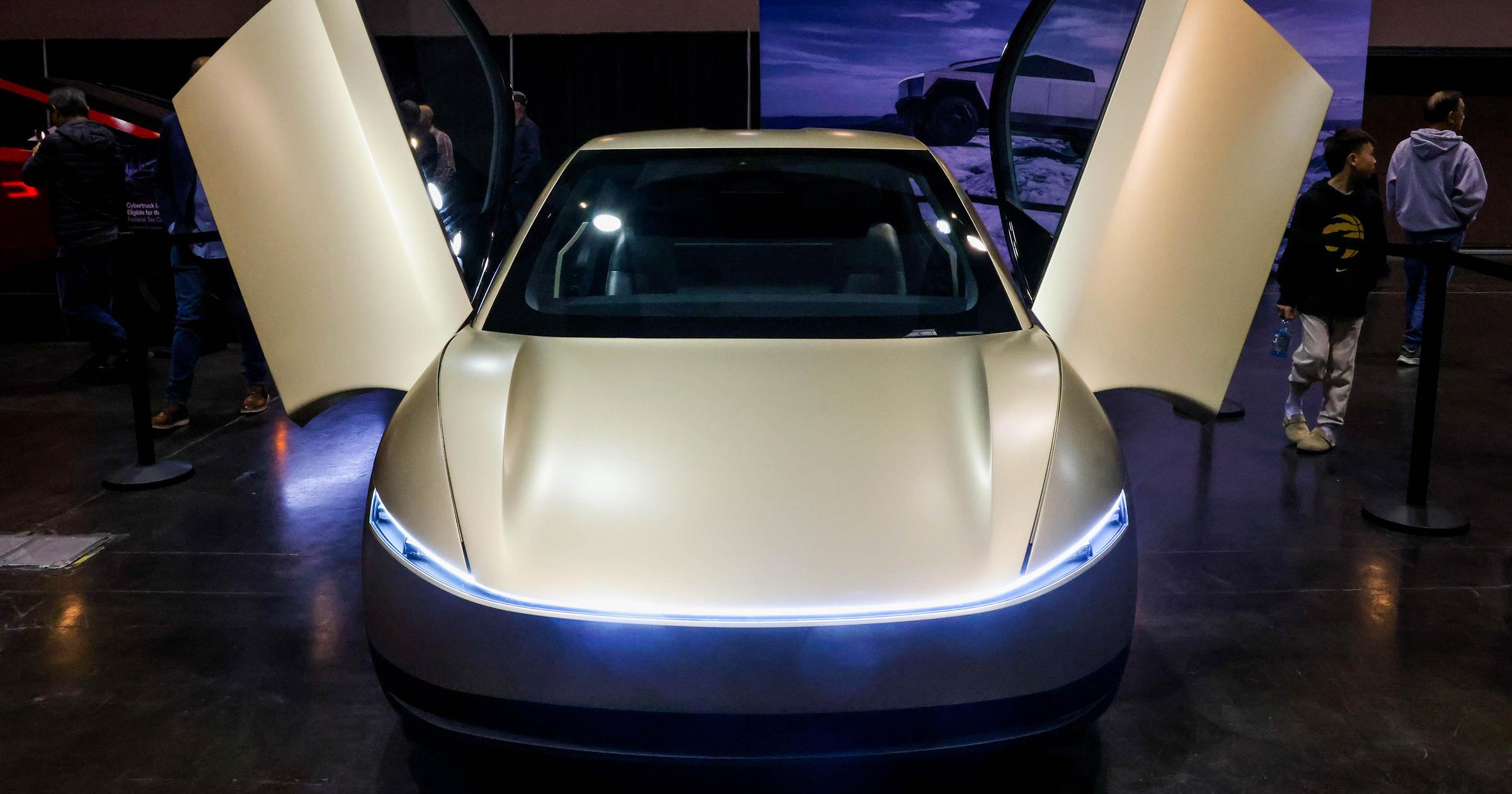
Self-certification is the load-bearing term here: the standard route for US automakers is for the manufacturer itself to attest that a vehicle meets every Federal Motor Vehicle Safety Standard, and Tesla notified NHTSA that the Cybercab does [7][10]. The standards were not written for autonomous vehicles and require features such as brake pedals and rearview mirrors [9]; the car on the stand was a gold-toned two-seater with butterfly doors and no steering wheel or pedals [22]. The audit query asks what process and technical data supported the conclusion that certain standards are inapplicable [10], not whether the driving stack works, and no amount of fleet miles answers that question.
The price arithmetic is smaller than the headlines: up 5.4% on Thursday into the launch, down 6% the next session to finish slightly below Wednesday's close [2][3], which compounds to roughly a 0.9% net move over the two days [18], set against a 21.4% decline so far this year [4]. The publisher called the whole event a slight net negative for the stock [20], and on the price it was. The business itself didn't change, which The Motley Fool notes is the same electric-vehicle company planning a robotaxi service and a humanoid robot line that it was on Wednesday [17]. What moved was the credibility of a date.
Which is where the Zoox comparison earns its place, or rather, the more interesting version of it does: Amazon's subsidiary took an audit query in 2023 after self-certifying its robotaxi for testing, and did not get the exemption letting it charge customers for rides until this July, more than three years later [13][14]. Tesla is already running commercial operations inside a geofenced area of Austin [8], and investors have already been waiting almost two years since the unveiling [15], so a Zoox-length resolution would put close to five years between reveal and paid service at scale [19]. Tesla spent its optionality on the inapplicability reading rather than on the exemption petition that Zoox eventually needed [10][14].
The counter-thesis sits in the same 24 hours. Wells Fargo called the event underwhelming and flagged early execution issues in Austin, and RBC complained of limited new incremental disclosure with open questions on pricing, production cadence and regulatory approvals [11][12], so part of that 6% is disappointment at a thin launch rather than a federal file number, and nothing in the record splits the two. The regulatory read fails if NHTSA accepts Tesla's determinations without demanding a design change or an exemption, and the publisher's own caveat allows for it: this query need not run as long as Zoox's [16]. It also concedes the thing a shareholder actually needs, which is that there is no way to tell when full service begins in Austin, let alone nationwide [16].
Ranked by verification strength, evidence, and original report placement.
Tesla's Cybercab launch event in Austin was invitation-only, with no livestream and no press release about it on Tesla's website; Musk did not attend, though he posted prerecorded videos about the Cybercab on X.
Tesla shares were up 5.4% on Thursday in anticipation of the Cybercab launch.
Tesla shares plunged 6% the following day, finishing slightly below Wednesday's close.
NHTSA announced it was opening an enforcement action called an Audit Query (AQ) into Tesla's Cybercab self-certification.
For the Cybercab to begin commercial operations, Tesla needed to certify to NHTSA that the vehicles complied with all Federal Motor Vehicle Safety Standards; self-certification is the standard process for US automakers.
Distinct publishers with included, body-backed reporting in this cluster.
1 article · September 4, 2026
Follow any of these and your For You feed starts watching them — no settings page required.
product
Which regulatory door you knock on decides how many robotaxis you can put on the road1 distinct publisher
product
Nevada granted Tesla 10 robotaxis after a 5,000-vehicle request1 distinct publisher
product
Tesla's Cybercab carries passengers with no exemption on the public record1 distinct publisher
invest
Tesla asked Nevada for 5,000 robotaxi permits and got 10, at 45 mph, with no airport runs1 distinct publisher
Evidence-backed comparisons of source perspectives and observed adoption signals. Read the methodology
Which Builder, Operator, and Investor concerns the observed source mix emphasized—not a truth score.
Evidence, demonstrated adoption, hype gap, incentives, and confidence are assessed independently, each on its own current evidence. How these are measured.
Agency quoted directly, everything around it single-sourced
The fact carrying the story, the scope of the Audit Query, comes straight out of NHTSA's investigation summary, so it does not depend on the writer's reading. The share moves can be checked against any tape. The rest sits on one account: the Wells Fargo and RBC notes are relayed without links or dates, the invitation-only event is described with no named attendee, and no Tesla response appears at all.
Paid rides in one geofence, no numbers attached
Commercial Cybercab service exists, in a single fenced part of a single city, and that is the full extent of what can be said from this reporting. There is no fleet count, no ride volume, no fare, no service hours. The only quantified adoption datum in the story belongs to Zoox, whose three-year wait for permission to charge riders describes a different company and a different vehicle.
Zoox analogy carries more than one case can bear
Pairing Tesla's audit with Zoox's three-year wait implies a timeline that one prior case cannot support, and the text concedes as much a paragraph later. Pulling the other way, the piece talks the launch down rather than up, quotes two unimpressed analyst notes, and lands on the view that the underlying business did not change in 24 hours.
A staged non-launch, read by a stock-picking publisher
Tesla controlled the first draft of this event by holding it behind invitations with no livestream and no release, while the promotional material went out as prerecorded video on Musk's own platform. The account of it comes from a publisher whose piece resolves into advice about buying or selling the shares, and the two analyst notes it leans on were written by banks that cover the stock.
Solid on the audit, blank on what follows
That the Audit Query exists, and what it will examine, is about as firm as a same-day fact gets. Its consequences are not: no agency timetable, no Tesla answer, nothing on whether the rides already being sold can continue, and one publisher standing behind every detail outside the quoted summary.