Product1 distinct publisher3 min readPublished
Federal standards generally require a steering wheel, pedals and mirrors, and TNW reports Tesla appears to be self-certifying instead, which is why NHTSA is evaluating a service that is already carrying the public.
The Product Desk · Product desk
Compiled by The Product DeskSomething wrong?How this is made
Follow any of these and your For You feed starts watching them — no settings page required.
build
Whether Tesla charges for a Cybercab ride decides which federal limit applies2 distinct publishers
product
170 rides, 54 cars, no monitor: a hobbyist tracker marks Tesla's Austin handover3 distinct publishers
product
DC wants 15 cents a mile from robotaxis. That is a price, not a permit.1 distinct publisher
product
Tesla's Cybercab hits Austin roads with staff aboard: the metric is days-to-paying-rider2 distinct publishers
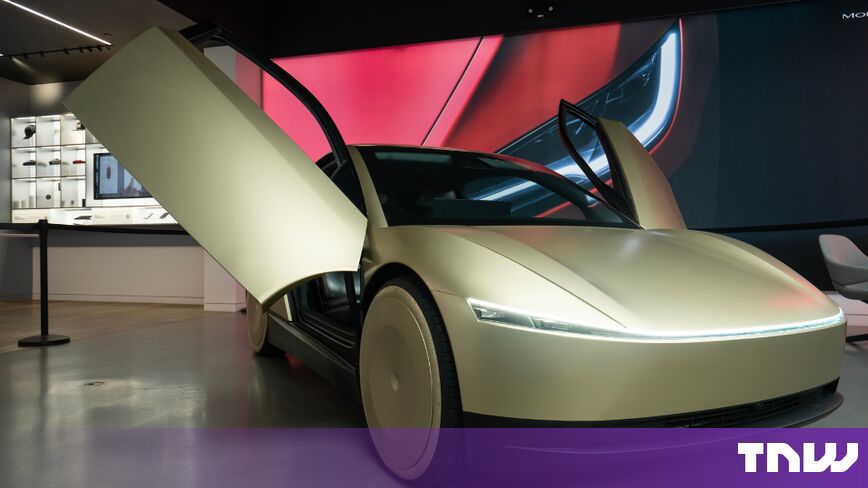
A rider opens the app and wants a car close by. That is the entire promise of a robotaxi, and TNW's read is that 45 cars spread across a city will not deliver it consistently [12]. Tesla has 420 autonomous vehicles registered in Texas, of which 45 are Cybercabs, against 988 registered in the state by Waymo [11]. Cybercabs are therefore about 11 percent of Tesla's own Texas fleet [1], and Waymo's registered count is roughly 2.4 times Tesla's [2].
The legal footing matters here. Federal motor vehicle safety standards generally require the steering wheel, pedals and mirrors the two-seater does not have [5], and the usual route for a vehicle without manual controls is a formal NHTSA exemption capped at a small annual volume, of which Tesla has made none public [6]. TNW reports the company appears to be relying instead on self-certification, the US arrangement in which manufacturers certify their own compliance and the regulator checks afterwards [7]. In Europe a vehicle needs type approval before it carries anyone [8]. In Austin, passengers began riding before those questions were settled. Washington has been moving Tesla's way in any case: the Department of Transportation has proposed dropping the brake pedal requirement for autonomous vehicles, which would clear one of the standards the Cybercab currently does not meet [9].
NHTSA has neither accepted nor rejected the arrangement: it has not opened a formal investigation or identified a specific standard it believes Tesla breached, and Tesla has not publicly responded to the agency's statement [18]. The compression is documented, though. Waymo ran supervised miles, then employee rides, then a waitlist before it removed the human monitor [14], while Tesla has stepped oversight down market by market, launching in Miami with no safety monitor and running Model Ys with monitors in some vehicles in Texas and Florida [15]. Analysts treat autonomy as a key justification for a $1.4 trillion valuation while the core EV business meets tougher competition [17], which is the pressure that makes a hurried rollout legible.
If your plan depends on this vehicle, sort it on two axes rather than one. Permission: is the right to operate a document you can read, or an inference drawn from the absence of an objection. Delivery: is quality measured on time to pickup and the share of trips that end at the address the rider typed, or on ride counts and launch events. On the published evidence the Cybercab sits in the assumed-permission, asserted-delivery corner, which is a reasonable place for a demonstration and an awkward one for a fleet anyone is budgeting against. Tesla is pitching a driverless two-seater at scale, but what exists today is 45 cars in one city, operating on a compliance claim the regulator is still evaluating [11][1].
Ranked by verification strength, evidence, and original report placement.
An NHTSA spokesperson said "NHTSA is in contact with Tesla and is evaluating the situation," according to Reuters.
Tesla's Cybercab service began on Thursday in limited areas of Austin, a day before the regulator's statement.
Ashok Elluswamy, Tesla's head of AI, said the service is open to the entire public, although Tesla has not said when it will start charging fares.
NHTSA is looking at the vehicle itself rather than the software.
Tesla has not announced an exemption covering those requirements; the usual route for a vehicle without manual controls is a formal NHTSA exemption capped at a small annual volume, and nothing of that kind has been made public.
Tesla appears to be relying on self-certification, the US system in which manufacturers certify their own compliance with federal standards and the regulator checks afterwards.
Distinct publishers with included, body-backed reporting in this cluster.
1 article · September 4, 2026
Evidence-backed comparisons of source perspectives and observed adoption signals. Read the methodology
Which Builder, Operator, and Investor concerns the observed source mix emphasized—not a truth score.
Evidence, demonstrated adoption, hype gap, incentives, and confidence are assessed independently, each on its own current evidence. How these are measured.
One outlet, borrowed reporting
Trace this and it narrows fast. The Next Web has the regulator's one sentence via Reuters and the failed rides via Reuters' own testers; the registration counts and Nevada figures arrive with no registry or filing attached. Tesla says nothing, the agency names no standard, and there is no exemption document to read — the firmest verifiable thing in the story is an absence.
Live, tiny, geofenced
Real passengers are riding, which is more than most autonomy announcements can show. But 45 Cybercabs inside limited parts of one city, against Waymo's 988 registrations in the same state and Nevada's grant of ten vehicles out of five thousand asked for, is a pilot wearing a launch's clothing — and no fares are being charged yet.
Launch language outruns the fleet
Tesla's AI head calls the service open to the entire public; Reuters' reporters waited, then walked fifteen minutes to where they had asked to go. The overstatement runs both ways, though. "Safety regulator evaluating" is doing heavy work for what amounts to being in contact — no investigation, no named standard, no enforcement — and the precedent argument at the end is the outlet's, with no rival manufacturer on record watching.
Autonomy underwrites the multiple
The story hands you the motive: analysts lean on autonomy to hold up $1.4 trillion while the car business gets harder, so visible robotaxi miles pay in a way an exemption filing never would. Put that beside a system where a manufacturer certifies itself and the checking happens later, and a launch staged behind closed doors, and every incentive on the table points toward driving first.
Directionally sound, thinly sourced
The structural claims hold up and could be checked by anyone: how self-certification works, what the standards require, what the Transportation Department has proposed. What cannot be settled from what we have is whether Tesla holds approvals nobody has published. With one newsroom reporting, the agency saying almost nothing and the company saying nothing at all, this stays a provisional read.