Leadership1 distinct publisher3 min readPublished
A rider-run charity with a decade of funding, a field test in Fife and one Deliveroo courier's spreadsheet are being pressed into service as evidence, because the party holding the pay logic is not the party being asked to explain it.
The Board Room · Leadership desk

Compiled by The Board RoomSomething wrong?How this is made
Riders, not platforms, are the ones building the evidence in this dispute. Dylan, who has ridden for Deliveroo in Scotland for more than five years, has kept monthly records since mid-2023 of his income, his order count and his average pay per order [14]. His hourly throughput has stayed between 3.6 and 3.8 orders for three years [15], a spread of roughly 5.6 percent [16]. Within a band that narrow, effort and speed cannot carry much explanatory weight; whatever moved his earnings moved through the price attached to each job, which is the one number he does not set.
That is why the ask in Edinburgh is disclosure rather than a rate. David, seven years on the bikes, says he earns half what he did four years ago for the same hours [3], which is a claim about hourly pay falling by about half [17]. Xabier Villares, the Workers' Observatory lead organiser, dates the change to the last three years [4]. Testimony of that kind loses to a system that can produce logs, and Cailean Gallagher, the observatory's director and a lecturer at St Andrews business school, describes exactly that asymmetry when he says the knowledge infrastructure is concealed and riders work in the dark [11].
The legal route now being tested runs through data protection rather than wage law. Drivers from the UK, the Netherlands and elsewhere filed in Amsterdam this week, alleging Uber's system breaches data protection rules and pushes earnings down according to what each driver will accept [9]. Uber's answer is that it does not adjust trip prices to individual driver behaviour and that discrepancies come from other features of the system, such as GPS [10]. Both the allegation and the denial are propositions about the inside of a model, and neither can be settled from the kerb.
The observatory's Dunfermline test shows a handful of riders logging on together, some rates rising briefly, and one worker deactivated for reasons nobody established, which Gallagher calls arbitrary and the platforms meet by insisting rejections do not cause deactivation [12][13]. A study you cannot control is an argument for opening the system, not for closing the question. The one reading here that does not depend on rider testimony is the Oxford and Columbia work finding drivers earned substantially less an hour after a dynamic pricing algorithm arrived in 2023 [8], and even that arrives without a figure attached.
An offer that has to be justified per job is an offer that cannot be moved freely, a trade-off the platform side has not addressed. Unions are campaigning to ban dynamic pricing outright [7], so the available positions are narrowing to two: explain the pricing, or defend its existence. The clocks are running at different speeds: the observatory has research funding for the next decade [5], while the Amsterdam claim runs on court time and could reach billions of dollars [9]. For any employer letting a model set pay or allocate work, the near-term consequence is not a rule but a record. The counter-record is being kept by the people receiving the offers, and it will be produced in evidence somewhere.
Ranked by verification strength, evidence, and original report placement.
Gig economy workers are urging delivery platforms to open up the "black box" of computer-driven algorithms that determine the jobs they are offered and how much they are paid, blaming increased use of AI for lowering wages.
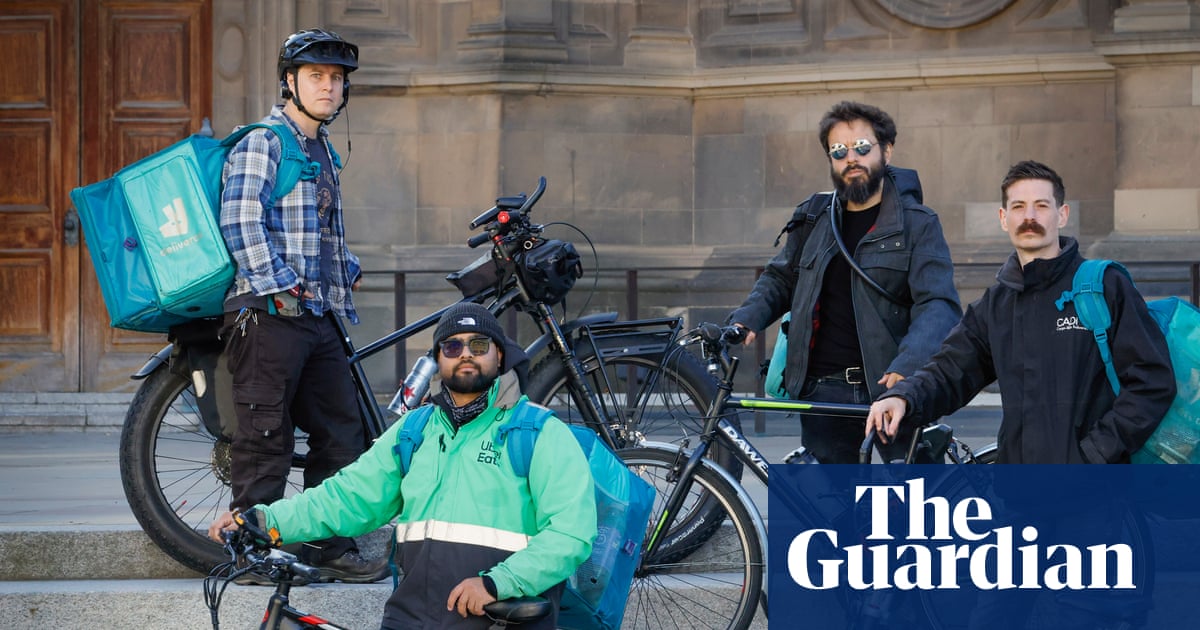
A group of food delivery riders in Edinburgh say their rates of pay have fallen and working conditions deteriorated at the same time as Deliveroo, Uber Eats and Just Eat, the three dominant gig economy platforms in the UK and Ireland, have increased their use of automation.
The introduction of a dynamic pricing algorithm in 2023 resulted in Uber drivers earning "substantially less" an hour, according to research from the University of Oxford and New York's Columbia business school.
Cailean Gallagher, director of the Workers' Observatory and a lecturer at St Andrews university business school, said there is so much infrastructure of knowledge and data that is concealed by the platforms, leaving gig economy riders working in the dark.
Dylan has ridden for Deliveroo in Scotland for more than five years and, since mid-2023, has kept meticulous records tracking his monthly income, number of orders delivered and average pay per order.
The number of orders Dylan delivers each hour has remained constant between 3.6 and 3.8 for the past three years.
Distinct publishers with included, body-backed reporting in this cluster.
1 article · September 4, 2026
Follow any of these and your For You feed starts watching them — no settings page required.
product
Serve adds Grubhub, and sidewalk delivery quietly becomes a shared utility1 distinct publisher
product
Uber buys drone exposure rather than drones, and one number now carries the deal3 distinct publishers
invest
Gig platforms top the SNAP employer table, and that ranking is now a regulatory input1 distinct publisher
leadership
Retention plans keep pricing a loyalty that has been draining for three decades1 distinct publisher
Evidence-backed comparisons of source perspectives and observed adoption signals. Read the methodology
Which Builder, Operator, and Investor concerns the observed source mix emphasized—not a truth score.
Evidence, demonstrated adoption, hype gap, incentives, and confidence are assessed independently, each on its own current evidence. How these are measured.
One spreadsheet, one newsroom
The quantitative spine is a courier's tax spreadsheet: £3.67 per order in 2023, then £3.63, £3.51 and £3.42, against a delivery rate that barely moves. Its keeper is pseudonymous and nobody has audited the file. The Oxford and Columbia work on Uber's 2023 dynamic pricing is summarised in a sentence, without title or sample, and it studies drivers rather than couriers. What the platforms contribute is two denials and a marketing description of Frank, which leaves the mechanism in dispute unexamined.
Production algorithms, artisanal measurement
Pricing automation here is production infrastructure across the three platforms that between them dominate UK and Irish delivery, with Deliveroo naming its dispatch model and Uber running dynamic pricing since 2023. The counter-measurement sits at an entirely different scale: one charity, one coordinated log-on in a Fife town, one courier's ledger. The decade of funding just secured shows the small side intends to grow; whether it has is a separate question the story does not answer.
Causation borrowed from a different fleet
The framing hands the pay decline to AI while the sourcing hands it to riders' own accounts. In between sit a per-order fee curve down about seven percent over four years and a study of ride-hailing drivers. The story ties none of the drops to a change to Frank, a policy update or a rate card, and rider supply is never examined as an alternative explanation. Deliveroo's "super smart" remains the most confident technical claim on the page, and it belongs to the company being criticised.
Funded researchers, litigants and defendants
Every voice here has a case in play. The Observatory has just banked ten years of funding to research this exact question and supplies most of the story's witnesses; the unions want dynamic pricing outlawed; the Amsterdam claimants want billions. Uber's denial comes from the defendant, and Deliveroo's account of Frank was written to sell reliability to customers. The Guardian names each of these positions, which is what makes the interests declared rather than buried.
Plausible, unaudited
Nothing here is implausible and nothing here is settled. The base is one newsroom's afternoon in Bristo Square, an unaudited spreadsheet kept by a pseudonymous courier, and three companies that answered on the narrowest point available to them. The Observatory's Dunfermline test is the closest thing to controlled measurement in the story, and it turned on a handful of riders logging on together for a short period.