Science1 publisher2 min readPublished
Fram2's crew took usable diagnostic X-rays in orbit after four hours of training
MinXray's portable unit flew on the private Fram2 mission in March 2025, and radiologists on the ground called the crew's images clear enough to diagnose from. The report appeared in Radiology in July 2026.
The Scientist · Science desk
What happened
- Fram2, the privatized orbital mission SpaceX launched in March 2025, carried an ultra-portable, high-speed digital X-ray imager built by MinXray, a Chicago-area maker of battery- and solar-powered units.
- None of the Fram2 crew were professional radiologists, and they had about four hours of training on the device before using it in flight.
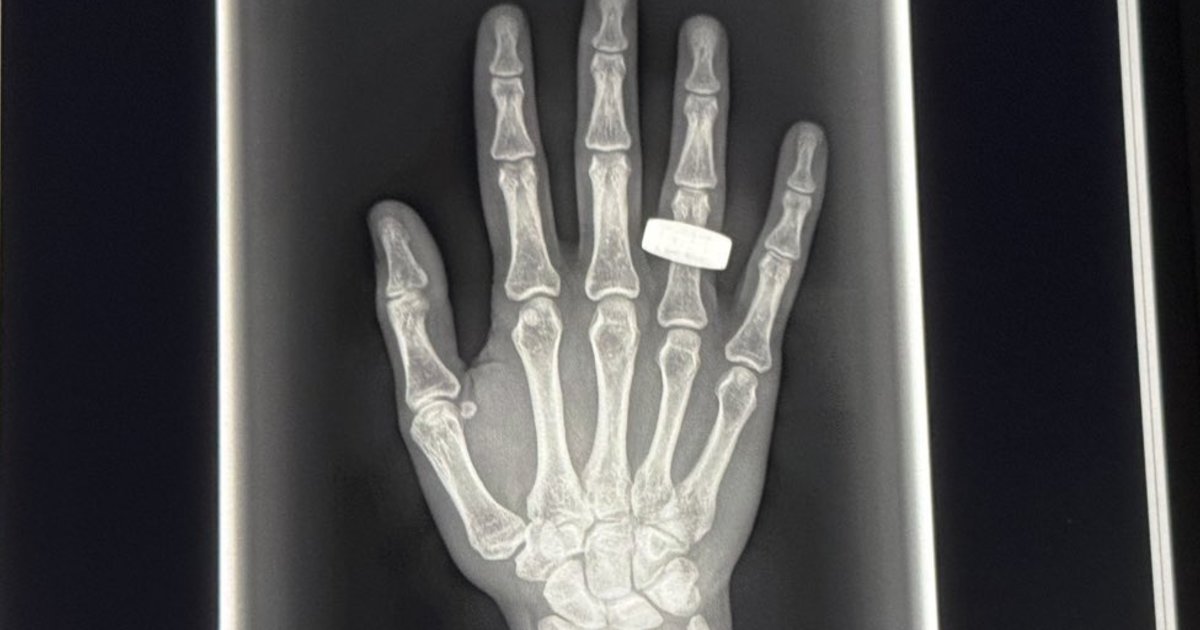
- Working in microgravity, they captured clear pictures of bones in a human hand, torso and pelvis.
- Radiologists back on Earth reviewed the digitally recorded images and confirmed they were clear enough to be useful in a diagnostic setting, with the results published in July 2026 in Radiology.
- Until this flight, astronauts had mainly relied on ultrasound aboard the International Space Station and on other missions.
Compiled by The ScientistSomething wrong?How this is made
Why it matters
- capability Crews now have a way to look at bone and other hard tissue that ultrasound handles poorly, and the operator does not need the years of training a sonographer does.
- constraint The diagnostic judgement was made by specialists on the ground, so the capability as demonstrated depends on a link that can move images to Earth in useful time.
- decision Anyone specifying a medical kit for a long-duration mission now has to weigh an imager's mass, power and launch survivability against a diagnostic reach ultrasound cannot supply.
- precedent Discover frames the same hardware as a route into remote clinics on Earth.
Mass, power draw and the chance of breaking the hardware on launch or re-entry kept most X-ray machines off spacecraft [5]. The other problem was motion.
"Also, in microgravity, when everything and everyone is moving, getting a clear, non-blurry X-ray of a person or object was considered challenging at best," Sheyna Gifford, a physician and assistant professor of aerospace, occupational, and preventive medicine at Mayo Clinic, told Discover [6][8]. MinXray, the Chicago-area company working with the SpaceXray initiative Gifford belongs to, builds portable imagers that run on battery or solar power [9][10].
The route to orbit ran through a parabolic flight in 2022. Gifford volunteered her own hand as the subject, and Discover describes the result as the first clear X-ray of human bones taken in such an environment [12].
"The main challenges have revolved around technology and training," Gifford told Discover. She said it takes good equipment that is relatively easy to use in microgravity, plus a crew that can be trained to use the device [11]. Four hours covered operating the device. Ultrasound, by the same account, can take extensive training both to use properly and to interpret [3].
Discover describes the pictures and their review but does not say how many exposures the crew took, or how many came out unusable [23].
Bone is why hard-tissue imaging matters on a long flight. NASA puts the loss at as much as 1 to 2 percent of bone density per month on long-duration missions [4]. Compounded across twelve months, and assuming that monthly rate holds throughout, the range works out to roughly 11 to 22 percent [22].
The crew also used the imager on hardware. They imaged the interior of small equipment and tools, including a smartwatch [15], and Discover notes that imagers of this kind could examine equipment, systems and samples collected during missions [20]. "For a long time, the assumptions were that X-ray imaging in space just wasn't going to work. As we're showing now, that's not really the case," Gifford said [7].
What to watch
- A follow-up paper that publishes exposure counts and a reject rate would allow a real comparison with ultrasound's training burden.
- Whether a later mission trains crew to interpret images onboard instead of downlinking them to radiologists.
- Whether the same class of portable unit reaches remote terrestrial clinics, as Discover suggests it could.