Invest1 publisher3 min readPublished
Brookings paper warns financing for a $10.3 trillion AI buildout is moving off balance sheets
Stijn Van Nieuwerburgh's Brookings paper projects $10.3 trillion in US AI investment through 2032, 3.63% of GDP a year against the railroads' 2.24%. It warns that more of the money is moving into off-balance-sheet vehicles that can hide correlated exposures before a downturn.
The Investor · Invest desk
What happened
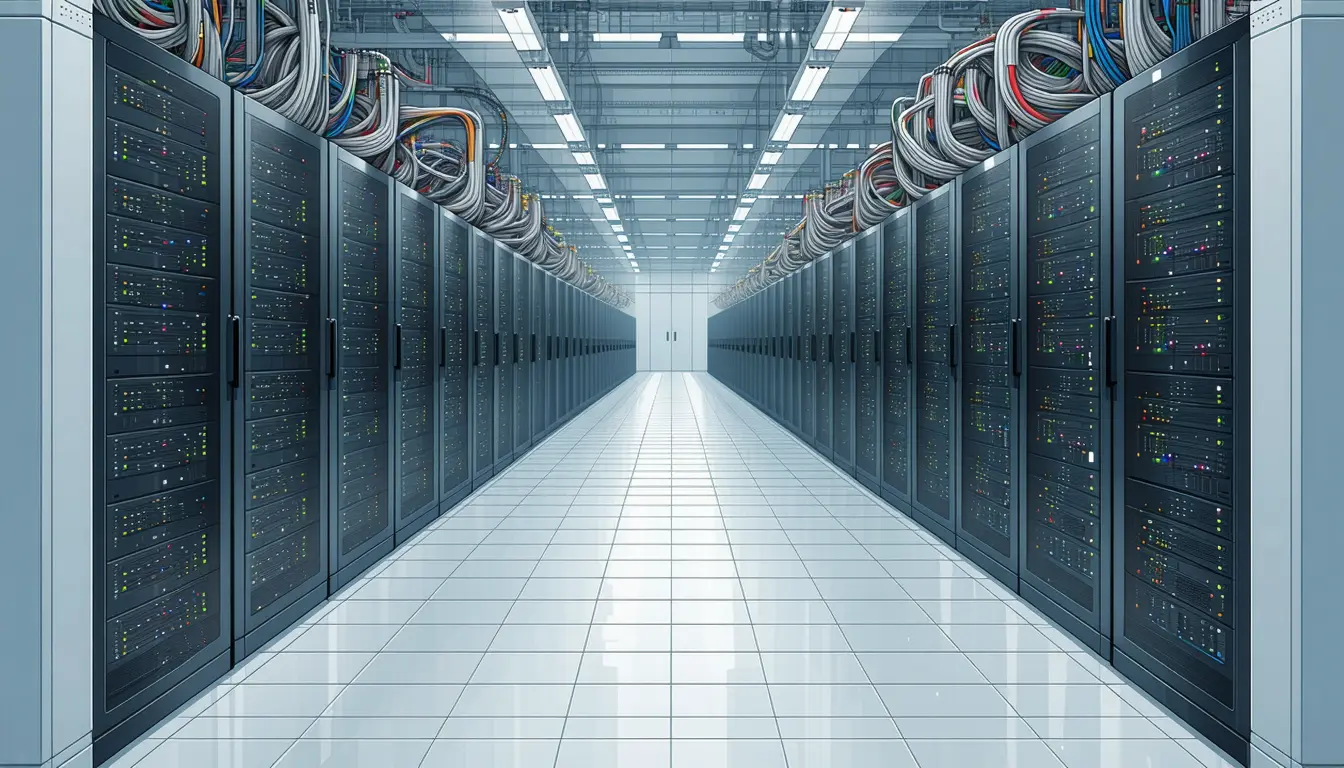
- Columbia economist Stijn Van Nieuwerburgh's Brookings paper, "Financing the AI buildout," covers US spending on data center buildings, power systems, networking and specialized chips from 2025 to 2032.
- The paper says the financing is moving off corporate balance sheets into joint ventures, private credit, securitization, special purpose vehicles and lease commitments.
- Elon Musk quote-posted investor Andrew Chen's chart of the 3.63% figure on X on Thursday with a one-line remark about a "K2 economy".
Compiled by The InvestorSomething wrong?How this is made
Why it matters
- exposure Lenders to data center vehicles are tied to the credit of a few tenants, and when several lend against the same names, none of them may see the overlap until a downturn.
- decision Reading AI exposure off corporate capex understates spending routed through leases, securitizations and joint ventures, so credit investors have to underwrite the vehicles themselves.
- cost Each upward revision, such as the $2.1 trillion added between drafts, raises the sum outside lenders and partners must supply inside the same 2025 to 2032 window.
Spread over the eight years from 2025 to 2032, $10.3 trillion comes to about $1.29 trillion a year [2][1]. The 3.63% average share is about 1.6 times what the railroads absorbed from 1870 to 1890, and 3.3 times the telecom and fiber build of 1996 to 2003 [1][4][4][6]. "The projected buildout would be larger relative to the economy than the major U.S. canal, railroad, electrification, highway, and telecommunications investment booms," Van Nieuwerburgh wrote [3].
The estimate grew between drafts. The March version put the total at about $8.2 trillion, or 2.8% of GDP [5], so the Brookings figure is roughly $2.1 trillion, or 26%, higher [2]. Both versions imply an average US economy of $35 trillion to $37 trillion a year, so nearly all of the rise in the share comes from the spending estimate [3].
For an investor, where the money sits matters more than the total. Van Nieuwerburgh describes financing moving from transparent corporate balance sheets into joint ventures, private credit, securitization, special purpose vehicles and lease commitments [6]. A company that leases a data center from a vehicle is not borrowing to build it; the debt sits with whoever lent to the vehicle [6]. He wrote that those structures depend on AI demand that is uncertain, on fast technological change, on getting power and hardware in time, and on the continued credit quality of a small number of data center tenants [7]. Cryptopolitan's account of the paper does not say how much of the $10.3 trillion runs through them.
The tenant clause is where the outcomes divide. If demand arrives and the few tenants keep paying, the vehicles are simply another way to fund buildings, and the opacity costs lenders little. If demand slips, losses land on private credit funds, securitization holders and joint-venture partners who lent against the same handful of tenants and could not see one another's positions [7][9]. The third path is the one the drafts already show, in which the estimate keeps climbing and each revision adds financing that has to be placed inside the same window [2].
I think the paper's real subject is concentration hidden by structure, and its author limits how far he pushes it. "It would be premature to conclude that AI infrastructure already poses systemic risk comparable to earlier credit booms," he wrote [8]. The structures matter, he added, "because they may make correlated exposures hard to observe before a downturn" [9]. The counter-case is that a few creditworthy tenants are what a lender wants behind a lease. The warning weakens if disclosure shows the off-balance-sheet share is small, or if the tenant list widens as spending grows.
Musk's post did not refer to the paper or its figures [12]. His "K2" is Type II on the Kardashev scale, a civilization using close to the entire energy output of its star [13]. The frame matches SpaceX's January pitch to the Federal Communications Commission for up to 1 million orbital data center satellites, Cryptopolitan reported [14]. The same outlet reported that the OECD lifted its 2026 global growth forecast to 2.9% on AI infrastructure spending [15].
What to watch
- Van Nieuwerburgh's presentation at Brookings' fall conference on Friday, and whether it sizes the off-balance-sheet share of the $10.3 trillion.
- Disclosure from data center joint ventures, private credit funds or securitizations showing how many tenants stand behind the leases.
- Whether later versions raise the total again from $10.3 trillion, as the Brookings version did from the March draft's $8.2 trillion.