Invest1 publisher2 min readPublished
Columbia economist sets a $3.7 trillion annual revenue bar for the $10.3 trillion US AI buildout
Columbia's Stijn Van Nieuwerburgh estimates the US AI build at $10.3 trillion through 2032, needing $3.7 trillion a year in revenue to pay off. The bar is 37 times the roughly $100 billion OpenAI and Anthropic book today, a gap the model gives about seven years to close.
The Investor · Invest desk
What happened
- Columbia Business School professor Stijn Van Nieuwerburgh estimates US AI infrastructure spending at about $10.3 trillion from 2025 to 2032, in a paper presented at the Brookings Papers conference.
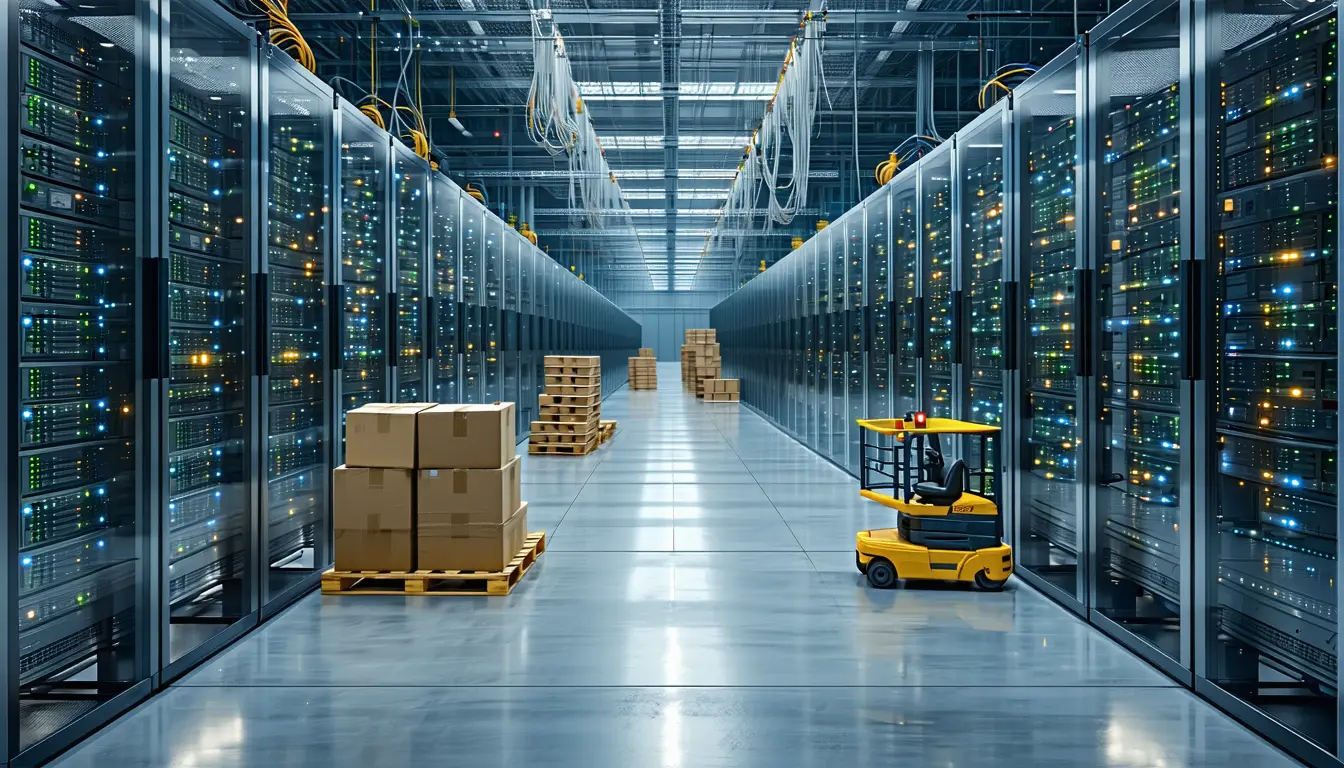
- The projection adds about 182.7 gigawatts of US data center capacity by 2032, investment equal to roughly 3.63% of US GDP each year.
- Hitting the target requires about 80% compounded annual revenue growth from a combined OpenAI and Anthropic run-rate of roughly $100 billion.
Compiled by The InvestorSomething wrong?How this is made
Why it matters
- decision Holders of the AI capex trade get yearly checkpoints: on the 80% path, today's roughly $100 billion must reach about $180 billion in one year and $324 billion in two.
- exposure Debt service falls due whether a GPU is rented or idle, so lenders to Microsoft, Amazon and Google now share the risk that demand lags the capacity being built.
- cost AI customers pay for the build: by 2032 they would spend about 9.2% of projected US GDP a year on AI services, nearly three times the average yearly capex of about $1.29 trillion.
The two GPU-hour figures are one number at two utilization rates. Divide $5.5 by 0.8 and the result, $6.875, rounds to the $6.9 the report gives for a fleet rented 80% of the time [7][4]. Required revenue per used hour moves with the inverse of utilization. On the same assumptions, a fleet busy 60% of the time would need about $9.2 an hour [5].
The growth rate takes more care, or rather its start date does. Moving from about $100 billion to $3.7 trillion is a 37-fold rise [3]. At the report's 80% compounded rate [9], $100 billion becomes about $3.4 trillion after six years and about $6.1 trillion after seven [6]. So the 80% figure fits six years of compounding. Spread over the roughly seven years the published account describes, the required rate is closer to 68% a year [7]. The base is also just two companies, OpenAI and Anthropic [10]. The account does not say whether cloud rental or other AI revenue counts toward the $3.7 trillion, and a wider starting base would lower the required rate.
At the model's 50% cash-flow margin, $3.7 trillion of revenue would leave about $1.85 trillion of cash a year [8][8]. That cash has to justify a cumulative outlay of $10.3 trillion at a 10% unlevered return [1][8].
The financing decides who carries a shortfall. According to the report, Microsoft, Amazon and Google are increasingly paying for the build with external debt and complex financial arrangements [11]. The report flags that interconnectedness as a possible source of systemic risk if demand for AI services grows more slowly than capacity [12]. Cryptobriefing's account of the paper adds that overcapacity funded by external debt is a very different problem from overcapacity funded by retained earnings [15].
Revenue can compound near the 80% path, in which case the $10.3 trillion earns its return [9]. It can grow while capacity grows faster, so utilization slides and each rented hour has to fetch more than $6.9 [7]. Or power, grid and permitting limits slow the 182.7 GW build [4][14], and a smaller build needs less revenue to pay off.
I think the second case is the one that borrowing makes costly, and the published account already calls 80% utilization the more realistic figure [7]. The counter-case is the third. Slow permits cap overcapacity before it gets financed, and the account says permitting for new power plants and transmission lines often runs past what the AI investment timeline demands [14]. This view is wrong if OpenAI and Anthropic keep compounding revenue near 80% a year while rented GPU-hours keep earning more than $6.9.
What to watch
- Market rental prices per GPU-hour against the model's $5.5 and $6.9 thresholds.
- The volume and terms of external debt Microsoft, Amazon and Google raise for data centers, the channel the report flags for systemic risk.
- Power-plant and transmission permitting timelines set against the 182.7 GW of capacity the model assumes by 2032.