Build1 distinct publisher3 min readPublished
R2 was co-designed with GAC Aion so 33 sensors could feed one computer across three vehicle domains, and the Beijing and Guangzhou trial tests whether owning the car and the dispatch network beats buying either, though no intervention rate came with it.
The Engineer · Build desk

Compiled by The EngineerSomething wrong?How this is made
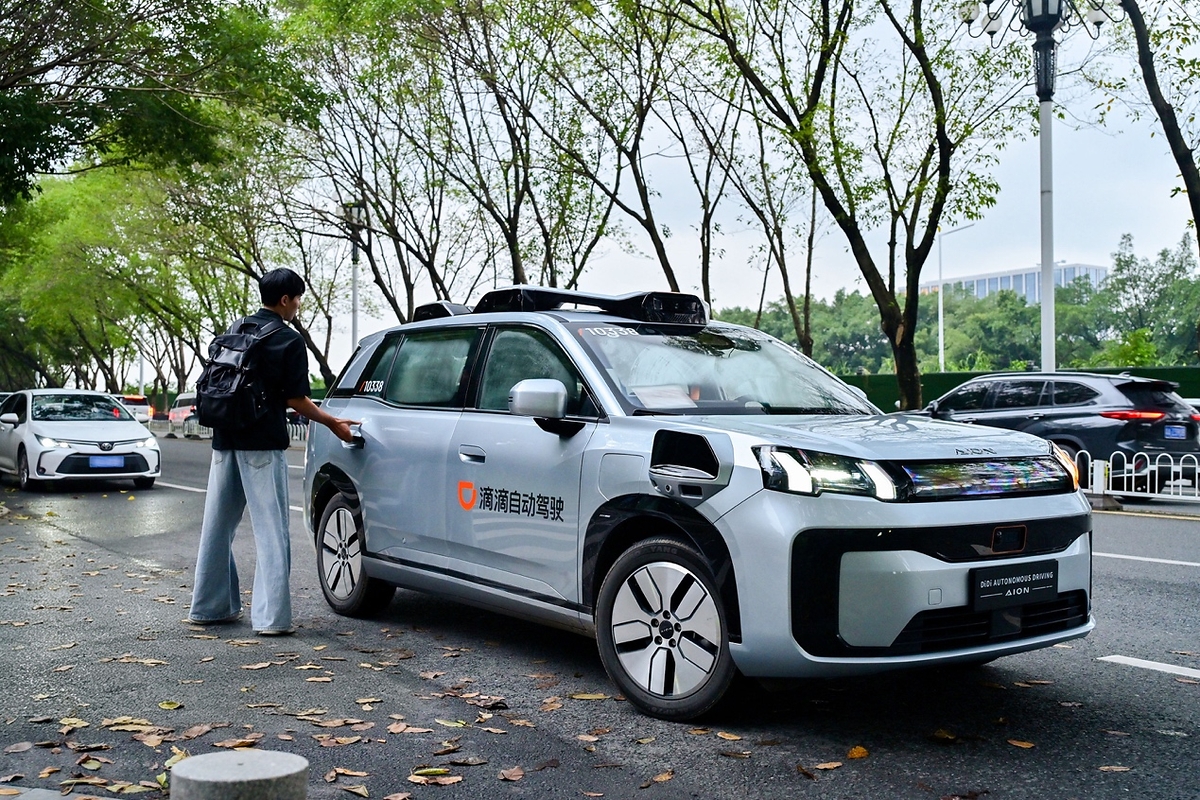
Start with the computer, because it explains the partner. R2 carries 33 sensors, DiDi's full-stack Level 4 software and one central computing platform that combines three vehicle domains, with multilayer hardware and software redundancy [5][6]. Collapsing three domains into a single box means touching the vehicle's electrical architecture along with its power and network budgets, which is a vehicle program decision rather than something you bolt onto a car you bought finished. That is the practical reason R2 was jointly developed with GAC Aion, the electric-vehicle arm of Guangzhou Automobile Group [4]. GAC is also on the cap table: GAC Group led DiDi Autonomous Driving's $298 million Series C in October 2024, with DiDi participating [21].
The second half of the integration argument is dispatch. Riders hail an R2 from the same app that already handles human-driven trips, and DiDi says it can point its existing dispatch, mapping and fleet-management systems at the autonomous fleet [9]. Mechanically, that turns a geofenced Level 4 fleet into a supply pool inside a matching problem the company already runs: requests whose pickup and drop-off both fall inside the operating area can be offered to an R2, and everything else stays with drivers, so no rider sees a failed match. DiDi Global's 2025 annual report goes further, saying the program uses traffic data from the shared-mobility network for localization, prediction and vehicle control [11], with commercial viability framed as arriving through integration with an existing mobility platform [10]. Telemetry from human-driven trips is genuinely useful for map freshness and behavior priors, though it says nothing about how often the planner needs help, and the announcement publishes no autonomous mileage [8].
Which brings up the one safety figure DiDi did publish. More than 2,200 consecutive days of safe autonomous operations through its Huiju Port operations center [20] works out to 6.02 years [22]. Taking January 2026, when R2 was delivered [14], as the earliest possible date for the announcement [25], the streak reaches back to within about five months of the unit becoming an independent DiDi business in August 2019 [23][2]. So the metric sits close to "nothing we count as an incident has happened since we started," with no miles, rides or interventions underneath it [20]. For that number to mean anything in a reader's risk model, DiDi would have to define the event that breaks the streak and publish a denominator. The five-star C-NCAP and Euro NCAP claim has the same shape, asserting the standard without citing independent test reports or detailed ratings [19].
The cabin work is the part I would copy. Voice control for verifying the trip PIN, starting the ride, air conditioning, windows and ambient lighting [16], plus planned horn and voice prompts to help a passenger find the vehicle [18], are answers to the specific failure modes an absent driver creates. Pre-ventilating the cabin before pickup [17] is the least glamorous line in the release and probably the one that saves the most support tickets.
My read: for an operator that already owns the demand, this stack is the right tradeoff, because thin autonomous supply can hide behind human supply while the operating area grows. Scoring it requires the six categories of operating data DiDi withheld [24][8], and the company's own filing still says the technology had not been commercialized at scale as of the end of 2025 [12].
Ranked by verification strength, evidence, and original report placement.
DiDi did not publish the number of R2 vehicles in operation, the size of the service areas, fares, passenger volume, autonomous miles, or the frequency of remote assistance and human intervention.
DiDi has not disclosed its current autonomous-driving headcount.
DiDi says R2 meets five-star standards under C-NCAP and Euro NCAP, although the announcement does not cite independent test reports or detailed ratings.
DiDi claims more than 2,200 consecutive days of safe autonomous operations through its Huiju Port operations center; the figure is a calendar streak and provides no mileage, ride or intervention denominator.
In October 2024, GAC Group led DiDi Autonomous Driving's $298 million Series C, with DiDi participating.
DiDi Autonomous Driving began fully driverless passenger trials with its R2 robotaxi in selected areas of Beijing and Guangzhou on August 31st, moving the vehicle from road testing into bookable rides through the DiDi app.
Distinct publishers with included, body-backed reporting in this cluster.
1 article · August 31, 2026
Follow any of these and your For You feed starts watching them — no settings page required.
invest
Pony.ai partners with KOSDAQ-listed Ponylink's FutureLink to bring 200 BAIC-built robotaxis to Seoul1 distinct publisher
build
Uber and Pony.ai's 2,000-robotaxi Europe number is a fleet-ownership signal, not a schedule2 distinct publishers
product
Uber made driverless the default in Dubai, not the option1 distinct publisher
leadership
Waymo pays $38,000 for a Chinese-built robotaxi, then pays more than that again in tariffs1 distinct publisher
Evidence-backed comparisons of source perspectives and observed adoption signals. Read the methodology
Which Builder, Operator, and Investor concerns the observed source mix emphasized—not a truth score.
Evidence, demonstrated adoption, hype gap, incentives, and confidence are assessed independently, each on its own current evidence. How these are measured.
One outlet, and behind it one company release
Follow any figure in this story to its origin and you arrive at DiDi: a PR Newswire announcement, relayed by RuntimeWire, with DiDi Global's own annual report as the only other document in play. That is a decent basis for dated, falsifiable facts — the trial start, the January 2026 delivery, the $298 million Series C — and a weak one for anything about how the car actually drives. To RuntimeWire's credit, it marks the crash-test and safe-days claims as uncorroborated rather than passing them through.
Real rides, unmeasurable footprint
Something concrete changed on August 31st: in parts of Beijing and Guangzhou a rider can now summon a car with nobody in it from the same app they use for a human driver, after seven months of road testing across several cities. That is further than a demo lap. But the trial has no published size — not one vehicle count, not one fare, not one completed ride — and Pony.ai's disclosed 1,400-plus fleet shows the sector can report these things when it wants to.
Two impressive numbers, neither checkable
The release's rhetorical weight sits on a full-stack Level 4 label and a streak of more than 2,200 consecutive safe days — roughly six years, which is nearly the entire life of the unit since it was spun out in August 2019, and which counts days rather than miles or interventions. Five-star crash performance is asserted without a test report. The overstatement is in the announcement, not in RuntimeWire's handling of it; the reporting names the gap and keeps score, which is the only reason this figure is not higher.
The manufacturer is also the lead investor
This is a company press release about a company product, and the interests behind it interlock unusually tightly: GAC builds the vehicle through Aion and led the $298 million round that funded its production, then came back for the Series D alongside Beijing municipal technology and AI industry funds. No participant in that arrangement gains from publishing an intervention rate or a per-ride cost before the fleet is large. The counterpressure is that DiDi Global has securities-filing language on record conceding the technology is not commercialised at scale.
Hold the dates, not the performance
Split this story in two and treat the halves differently. The dateable, checkable half — trial start, January 2026 delivery, the two funding rounds, the filing's own wording — is the kind of thing a company does not misstate cheaply, and I would rely on it. The other half is unverifiable by construction: no denominator behind the safety streak, no independent crash report, nothing about fleet size or intervention frequency. One outlet, one underlying release, and the next honest read comes only when someone publishes a number DiDi did not choose.