Invest2 publishers2 min readPublished
Hester Peirce's exit shrinks the SEC and CFTC to three commissioners across ten seats
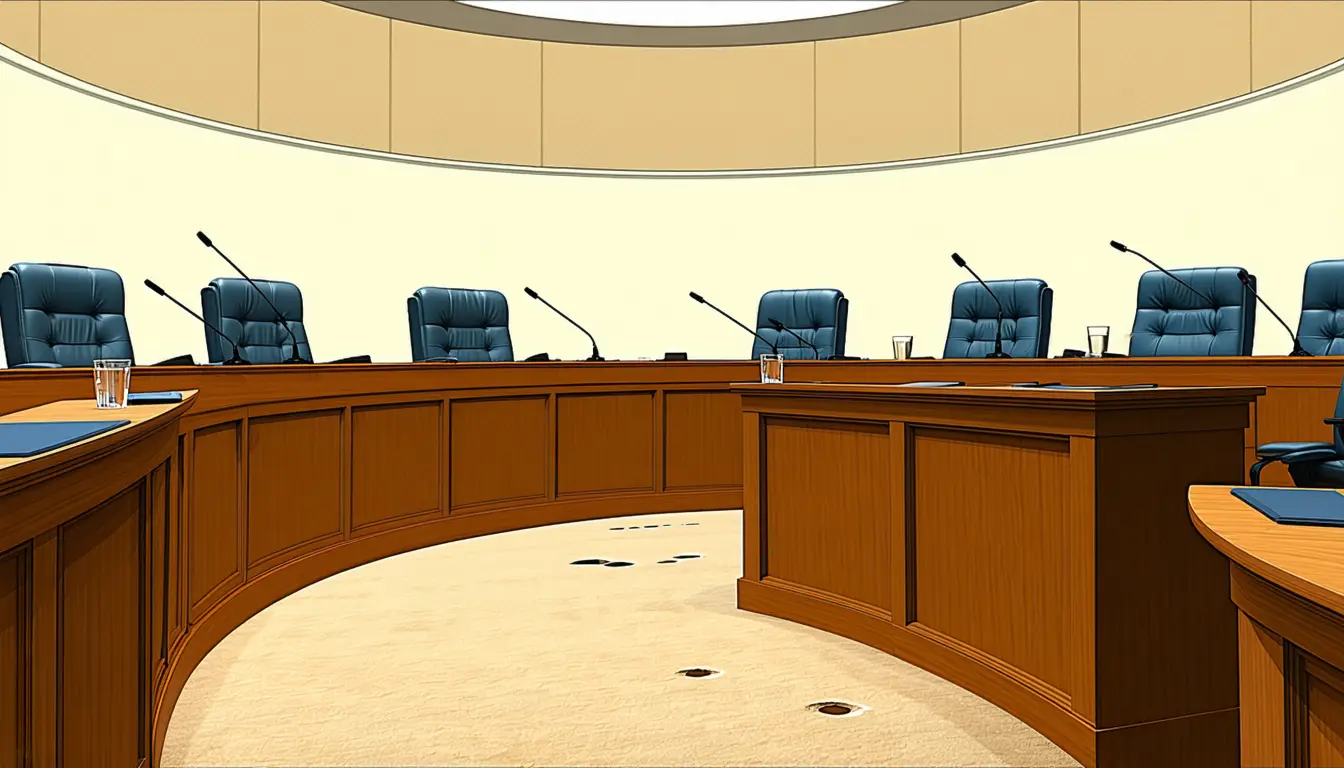
Hester Peirce exits the SEC on October 2, cutting it to two Republican commissioners with seven seats empty across the SEC and CFTC. Crypto Briefing warns that one recusal could then leave the commission short of a quorum on crypto and market rules.
The Investor · Invest desk
What happened
- Peirce's term expired on June 5, 2025, and she stayed on as a holdover for roughly 16 months before leaving.
- No successors have been publicly nominated for her seat or for any of the other vacant commissioner seats.
- From early 2025 Peirce ran the SEC's new Crypto Task Force, under which staff issued non-binding guidance on tokens, staking and DeFi.
- Major rulemakings, enforcement actions and policy shifts at the SEC all require a vote of the commission itself.
Compiled by The InvestorSomething wrong?How this is made
Why it matters
- exposure Businesses built on the task force's staff guidance rely on documents that lack a commission rule's legal weight and that later leadership can reverse more easily.
- constraint Firms planning around formal rules on token classification, exchange registration or custody face longer timelines, since those rules need votes a two-member commission may not be able to hold on every matter.
- decision The White House and Senate now set the pace of formal crypto rulemaking, because replacements for all seven seats each need a nomination and a confirmation vote.
Crypto Briefing counts three sitting commissioners across the SEC and CFTC once Peirce is gone, against seven vacancies, so the two agencies are staffed at three of ten seats [3][4][1]. The SEC keeps two of its standard five, Chairman Paul Atkins and Commissioner Mark Uyeda, or 40% of its designed bench [2][5][2]. Take those two out of the combined three and the CFTC has one commissioner, with four of its five seats empty [3][4].
The five-seat structure exists to give the SEC a spread of views and stop one faction from running policy, and with two Republicans left that partisan check is gone [6]. The recusal risk Crypto Briefing attaches to a two-member bench is plausible on its face [7]. The outlet does not cite the SEC's quorum rule or name a pending matter that either commissioner has stepped aside from [7].
The vacancies could cost less than the seat count implies. Two members of the same party can vote together on anything neither sits out, and Atkins has signaled general openness to the digital-asset sector [2][8]. A quick slate of nominees and confirmations would shorten the wait. The staff can also keep issuing guidance, which Crypto Briefing says can fill some gaps [11].
In my view the SEC's two seats are the smaller problem. The CFTC is down to one of five seats, or 20% of its bench [3][5]. That matters once Congress acts. The market structure and stablecoin bills Congress has been working on would require significant coordination between the two agencies [16]. That joint work, covering a crypto market the outlet puts at $3 trillion, would fall to three people [17][4].
The view is wrong if a recusal leaves a major SEC matter without a quorum before new commissioners arrive, because rulemakings and enforcement actions need a commission vote [7][13]. It is also wrong if a one-commissioner CFTC carries its share of joint rulemaking with the SEC at its current strength [3].
What to watch
- A White House nomination for Peirce's seat or any of the other SEC and CFTC vacancies.
- The first major SEC matter on which Atkins or Uyeda recuses, and whether the commission can still vote on it.
- Passage of a market structure or stablecoin bill, putting joint SEC-CFTC work on a CFTC with one commissioner.