Build1 distinct publisher3 min readPublished
The ThermalProtect cable carries a sensor 30mm behind the plug that pulls the 12V-2x6 sense lines past 65C, so the card shuts itself down. Enforcement moves off the user and onto a part you have to buy.
The Engineer · Build desk

build
Cooler Master's 3000W Platinum arrives with no price, no cord, and no 115 VAC mode1 distinct publisher
build
China's accelerator swap makes Cambricon supply, not export policy, your ship-date risk1 distinct publisher
build
Nvidia's 88-core Vera bets agentic serving runs out of bandwidth before it runs out of cores1 distinct publisher
build
Nvidia's power pitch: 40,000 Rubin GPUs in 100MW, or 2.5kW a GPU at the meter1 distinct publisher
Compiled by The EngineerSomething wrong?How this is made
Here the veto sits with the graphics card, not the power supply. ThermalProtect does not open a contactor and does not trip the supply's own protection. The sensor is wired into the 12V-2x6 sense pins, and at temperature it pulls those lines so the card shuts itself down [4][5]. The cable makes a request and the graphics card carries it out. Corsair puts that at milliseconds, and what the owner sees is a black screen [5]. A black screen looks identical whether the cause is a driver crash or a genuine protection trip, so the likely first response is a reboot and another attempt.
Then the geometry. The ThermalProtect lead is 650mm and the measuring point sits 30mm back from the graphics card connector [15][4], which leaves roughly 95 percent of the run on the far side of the sensor [2]. One sensor, one location, at the end where the heat is expected to appear. For a 65C trip to fire before a terminal is in trouble, heat from a degraded contact has to conduct back into the bundle quickly enough to lift the comb, and the offset between contact face and comb has to hold across seating conditions and cable dress. That is a defensible engineering assumption, and I would take the sensor over a warning leaflet. It is also precisely the figure a review with a thermocouple on the connector face could publish. Until someone does, 65C is a threshold set against Corsair's test connector, not yours.
The commercial shape matters as much as the physics. The monitored lead is rated 600W on a unit rated 1000W, so about 60 percent of the supply's output can pass through the sensed path [1]. Everything else leaves the supply unwatched. Meanwhile the box ships an AC cord, four mounting screws, a handful of zip ties and a booklet, with no Velcro straps, no spare combs and no tester, which Tom's Hardware calls stingy at the price [11]. That fits the stingy pattern already noted: the headline feature lives inside a comb, yet the box holds none in reserve.
Whether the 65C number transfers to your build depends on ambient temperature and on how the graphics card responds to pulled sense lines. The unit is specified for 50C ambient [6], and a case running near that will not behave like a 22C bench. And the shutdown depends on the card acting on pulled sense lines, so a card that responds slowly, or not at all, gets nothing from the sensor [5]. On the parts a reviewer can measure with instruments, the verdict is strong: efficiency, ripple and regulation all good, fan off up to 500W [13][7]. The millisecond trip time is a manufacturer figure in the material at hand [5], and the platform underneath is HEC's RMe, revised [1].
Ranked by verification strength, evidence, and original report placement.
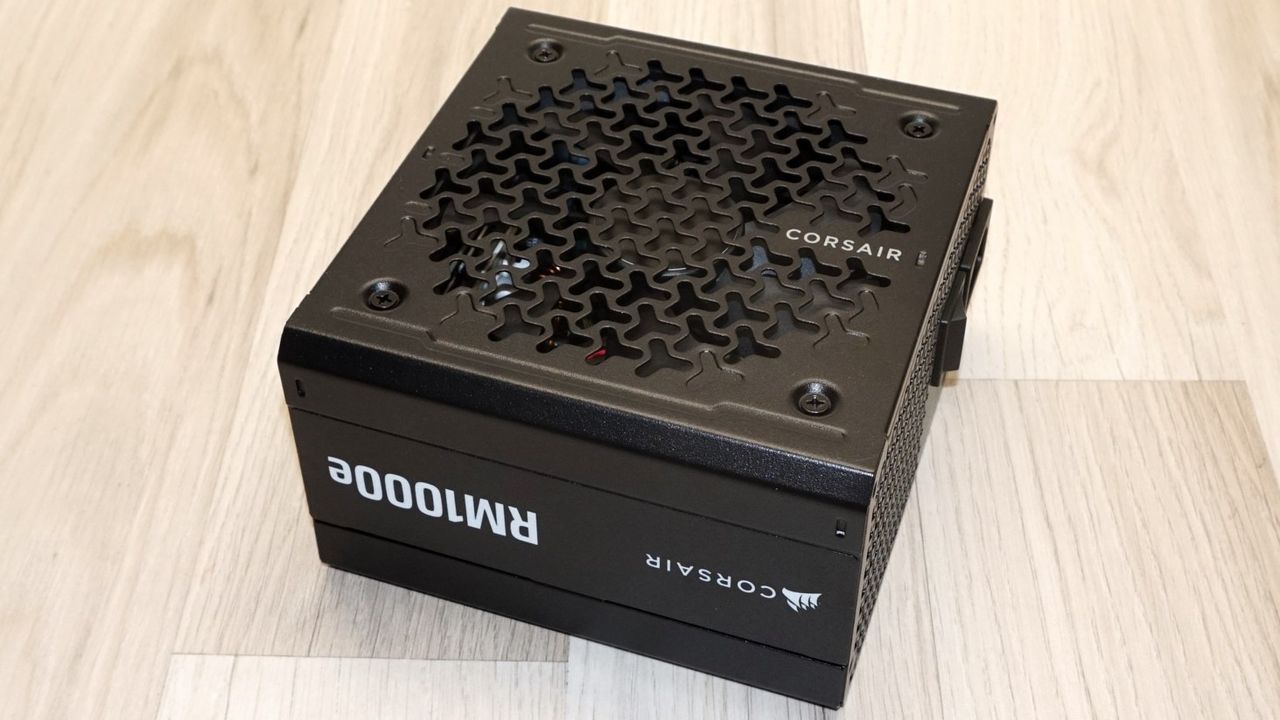
The Corsair RM1000e (2026) is built by HEC on the familiar RMe platform and adds Corsair's ThermalProtect 12V-2x6 cable, which cuts GPU power if the connector passes 65C.
A temperature sensor sits inside the comb 30mm back from the graphics card connector, wired into the 12V-2x6 sense pins.
If the cable passes 65C at that point it pulls the sense lines and tells the card to shut down, which Corsair says takes milliseconds; the user sees a black screen.
Efficiency, ripple and regulation are all strong, and electrical performance is listed among the pros.
The ThermalProtect 12V-2x6 cable is 650mm long.
The 2026 version of the RMe line launched on the 18th of August and brings just one significant change, the 12V-2x6 cable.
Distinct publishers with included, body-backed reporting in this cluster.
Follow any of these and your For You feed starts watching them — no settings page required.
Evidence-backed comparisons of source perspectives and observed adoption signals. Read the methodology
Which Builder, Operator, and Investor concerns the observed source mix emphasized—not a truth score.
Evidence, demonstrated adoption, hype gap, incentives, and confidence are assessed independently, each on its own current evidence. How these are measured.
One reviewer's hands, one vendor's number
The physical facts are the kind you cannot really get wrong with the product on the bench: sensor 30mm behind the plug, 650mm of cable, the badge strip on the box, the socket the adapter takes away. The claim the product is sold on is weaker. That the cable trips at 65C and drops the card in milliseconds is Corsair's figure repeated by Tom's Hardware, not something anyone has been shown triggering, and the text available to us stops before any load or ripple data appears.
On shelves, and that is the whole of it
What exists is a dated launch, two models and a price. The cable ships across the mainstream line rather than one halo unit, which is more than a technology demo, but no GPU maker, competing supply vendor, integrator or field report appears anywhere in this reporting. Nothing tells us how many of these are tripping in the wild, or whether anyone else is copying the approach.
A seatbelt strapped across 5% of the belt
'Corsair effectively invented the seatbelt for power-hungry GPUs' is Tom's Hardware's line, and the same review supplies the numbers that pull it back down: one sensor 30mm from the plug on a 650mm cable, 600W of a 1000W supply, no coverage of the card's own socket, and no function at all if you plug the cable in backwards. Genuine mitigation, marketed at the scale of a solved problem.
The remedy and the receipt come from the same company
Corsair's answer to a connector failure mode that has cost its customers graphics cards is a part you buy from Corsair, folded into a $180 supply in its highest-volume tier. The box tells a second story: 80 PLUS is gone entirely and a Cybenetics Platinum badge sits where Corsair's own marketing has long said Gold, following a company decision about which certifier to use. The review's promotional flourish about inventing the seatbelt is doing marketing work the measurements do not.
Detailed, unverified, and slightly at odds with itself
Specificity is high and the reviewer clearly had the unit in hand, which makes the hardware description credible. Against that: a single publisher, a safety threshold nobody outside Corsair has confirmed, and a verdict that says Gold where the body says Platinum. Enough to describe the product accurately; not enough to say whether it prevents melted connectors.