Science1 publisher2 min readPublished
One flu or COVID infection sped motor decline in ALS animal models through lasting spinal inflammation
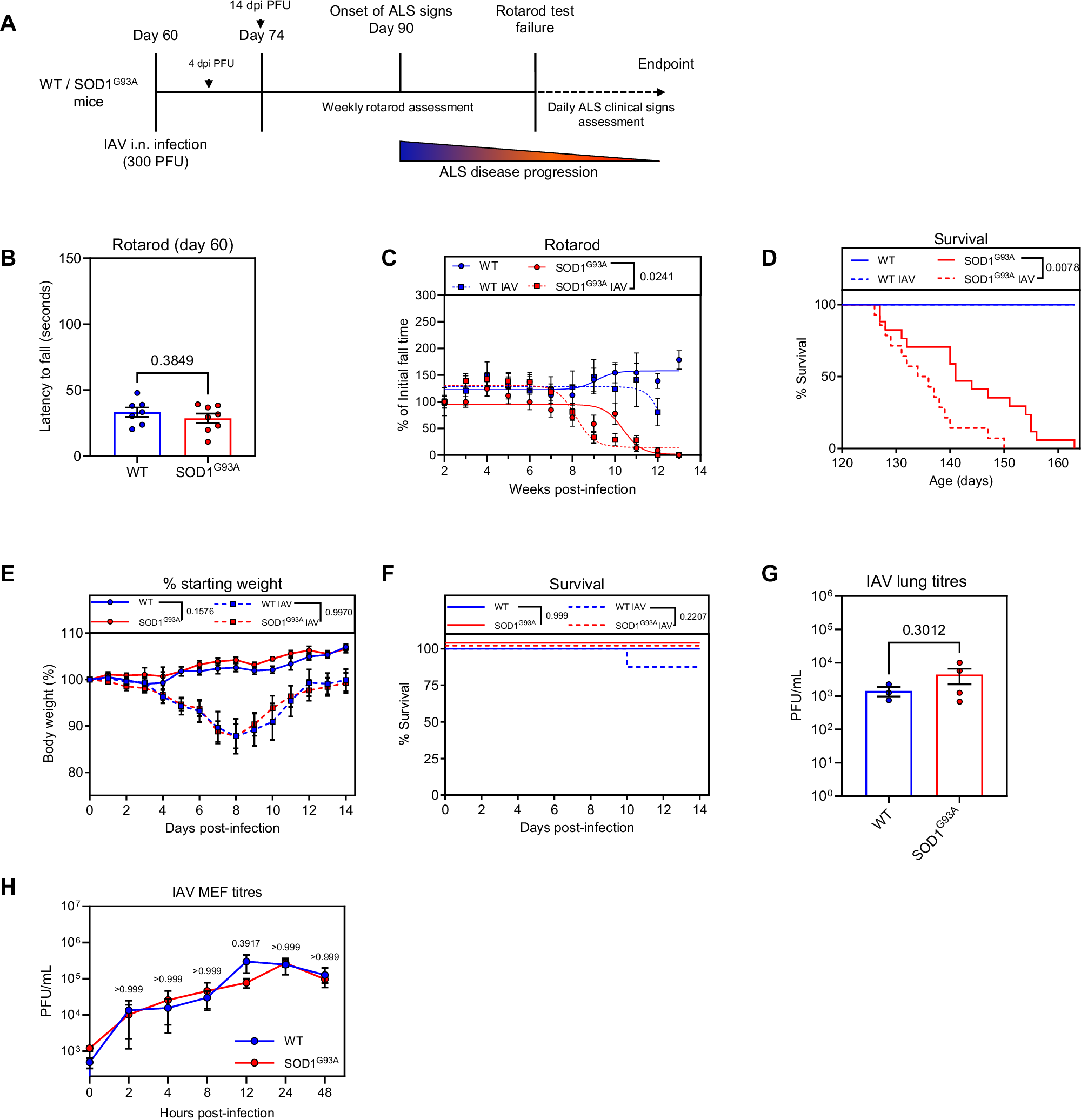
McMaster University researchers report that one flu or COVID infection sped motor decline in animal models of ALS. The work points to respiratory infection as an accelerant of the disease that treatment can blunt, but so far every result comes from animals.
The Scientist · Science desk
Drafted by a language model from the sources cited here and checked against its claim ledger before publication. How we use AISend a correction
What happened
- That spinal-cord gliosis stayed elevated long after the infection itself had resolved.
- Antivirals given to limit the infection, or anti-inflammatory drugs aimed at the lingering gliosis, substantially blunted the accelerated decline.
- The McMaster-led study, published in Nature Communications, reports that infection hastened ALS onset as well as functional decline.
Compiled by The ScientistSomething wrong?How this is made
Why it matters
- contradiction The account describes the treatment effect as blunting infection-driven acceleration in one place and as slowing the disease in another; only the first is clearly supported, so it is not yet an ALS therapy result.
- capability Because the inflammation outlasted the virus, an anti-inflammatory given after recovery could still reduce damage, giving a treatment window beyond the acute illness if it carries over to people.
- decision ALS trial designers now have an animal-based reason to test whether prompt treatment of patients' respiratory infections, or of the inflammation that follows, changes their rate of decline.
The design uses two different respiratory viruses. Tissue and molecular analyses found that neither influenza A nor SARS-CoV-2 entered neurons in the brain or spinal cord [3]. So whatever sped the animals' decline did not need the virus to reach a motor neuron. That addresses a question the human data left open. Epidemiological studies had linked many different viral infections with higher risk of neurodegenerative disease, even though most of those viruses never cross into neural tissue [9].
"A lot of the previous work in this area has been epidemiological in nature, without much focus on the molecular mechanisms that actually underpin the connection between infections and ALS," said co-first author Imran Ahmed, a master's student in the laboratory of principal investigator Matthew Miller [11][13][12].
The link the team proposes is gliosis: scarring and inflammation by the nervous system's own immune cells, set off by the body's wider immune response to a respiratory infection [4]. Reactive astrocytes and microglia are already a recognized feature of established ALS [8]. In these animals, one infection pushed that process higher and kept it there long after the virus had cleared [5].
The account's key facts say antivirals or anti-inflammatory drugs "substantially blunted the accelerated rate of ALS progression" [6]. Its opening summary says the treatments "significantly slowed disease progression in preclinical models" [7]. The first describes removing some of the extra decline an infection added. The second can be read as slowing ALS itself. The experiment as described supports the narrower reading.
The account does not give the species, the ALS model, the drugs, when they were given, how many animals were tested or how large any effect was. Without those, a reader cannot tell whether the blunting was partial or close to complete.
In my view the anti-inflammatory arm matters more for patients. An antiviral has to arrive while the virus is still replicating. The anti-inflammatory was aimed at gliosis that persisted after the infection resolved [6][5]. If that holds up, treatment would not have to start during the acute illness to help.
The researchers chose which animals were infected and compared them with uninfected controls [2]. In the animals, that settles cause and effect in a way the epidemiology could not. It does not say how much an ordinary winter flu adds to a person's decline. The assigned angle holds in animals: controlling infection or its aftermath changed the course of infection-accelerated disease. For patients it is a hypothesis with a mechanism attached. "Understanding what triggers or accelerates the disease could illuminate new strategies for slowing or even stopping it," Miller said [10].
What to watch
- Whether the Nature Communications paper reports effect sizes and survival, and whether the drugs slowed decline in uninfected ALS animals too.
- Human cohort data on whether a respiratory infection precedes a measurable change in an ALS patient's rate of progression.
- Which anti-inflammatory compounds were used, and whether any is already approved for use in people.