Product1 publisher3 min readPublished
A 17-column plant in Jiangxi turns lithium leftovers into 500 tonnes a year of rubidium and cesium
The demonstration line recovers 98 percent of the cesium and 95 percent of the rubidium from residue that lithium refiners used to discard, which ties two specialty metals to somebody else's lithium throughput rather than to their own demand.
The Product Desk · Product desk
What happened
- The CAS Institute of Process Engineering and Ganfeng Lithium are running a continuous extraction column line in Jiangxi that recovers rubidium and cesium from material left over during lithium processing.
- China Daily puts the demonstration line's annual capacity at 500 tons and says its products are already entering the market.
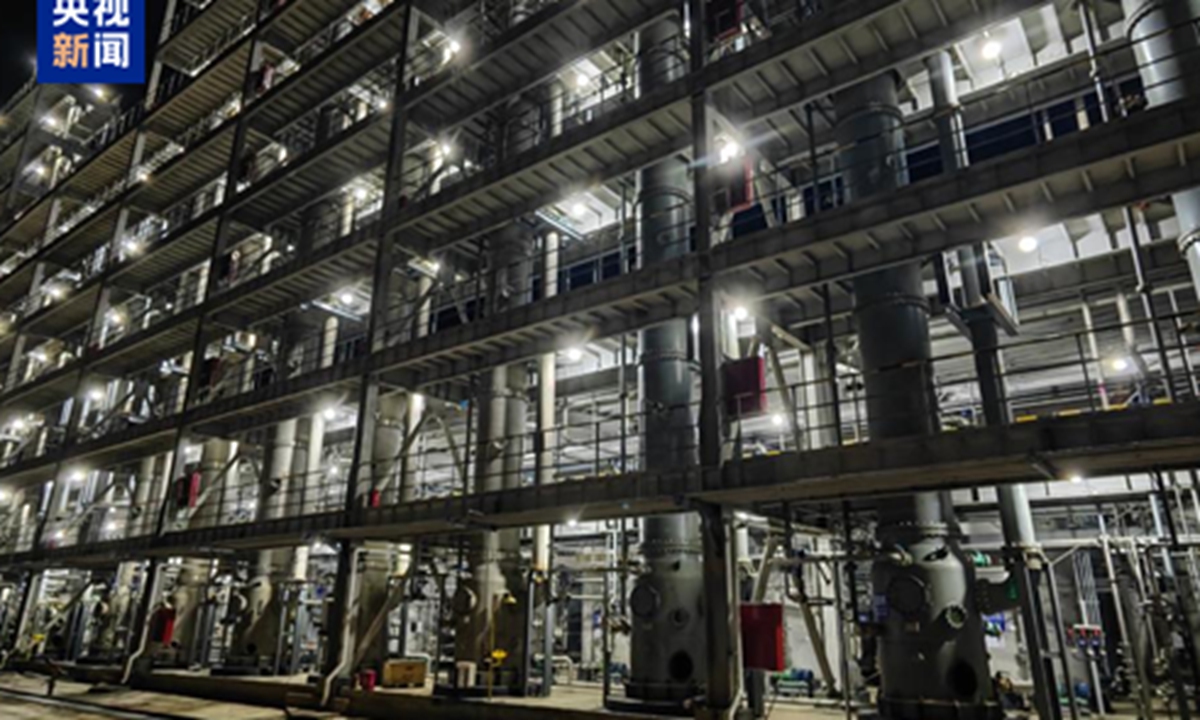
- The plant uses 17 extraction columns across extraction, scrubbing, stripping and de-oiling sections, where a conventional facility handling the same material would have needed more than 70 tanks.
Compiled by The Product DeskSomething wrong?How this is made
Why it matters
- constraint Supply that arrives as a lithium coproduct scales with lithium throughput, so a rubidium or cesium buyer cannot order more without a lithium refiner deciding to process more ore.
- exposure Teams that wrote a 99.9 percent cesium spec into a design now depend on a stream whose alternative source is pollucite ore that is rarely concentrated enough to mine on its own.
- decision With 4.3 times as much rubidium as cesium in the feed, anyone whose product needs cesium in particular has to decide whether to qualify byproduct material or pay for primary supply.
- precedent The same column design has already been pushed into zirconium and phosphoric acid work, which makes minor-stream recovery a plausible bolt-on for other refiners rather than a one-off.
Somebody specifying cesium carbonate at 99.9 percent for an atomic clock or a quantum sensing rig checks the certificate of analysis, then asks for a lead time. Purity is the easy part to verify. The feed rate behind it decides whether the second order gets filled.
Wang Yong, the CAS researcher who led the project, puts a typical tonne of lithium concentrate at 25 kg of lithium oxide, 7.8 kg of rubidium oxide and 1.8 kg of cesium oxide [7]. That is a 2.5 percent lithium oxide grade against 0.78 percent rubidium oxide and 0.18 percent cesium oxide [15]. Apply the reported recoveries of 95 and 98 percent [3] and each tonne of concentrate gives up about 9.2 kg of rubidium and cesium oxide [16]. If the 500 tonnes of annual capacity that China Daily reports [4] counts rubidium and cesium compounds in roughly that ratio, the line is sized to the residue of about 54,000 tonnes of lithium concentrate a year [17]. The reporting does not say what the 500 tonnes measures, so that is an order of magnitude, not a number to put in a model.
The ore ratio matters more than the headline capacity. There is 4.3 kg of rubidium oxide for every kilogram of cesium oxide in that concentrate [18], and cesium is the scarcer of the two, with pollucite as its main ore [10]. A buyer who needs cesium specifically is buying the minor fraction of a minor fraction, on a line whose economics are set by lithium.
What is being pitched is a tidier solvent circuit: 17 columns in place of the 70-plus tanks a conventional plant would need [5], one column doing the work of up to 15 conventional stages, solvent consumption down about 40 percent, footprint more than halved [6], and an enclosed system that cuts vapor, odor and fire risk [11]. What is being done is a change in cost basis. Metals that Wang says were previously discarded [8] now arrive as a scheduled coproduct of somebody's lithium plan.
The evidence stops short of the leverage story. Interesting Engineering, citing Global Times and China Daily, reports purity above 99.9 percent [2] and product already entering the market [4], and gives no price, no share of global rubidium or cesium output, no export terms and no named customer [20]. Anyone reading a chokepoint into this is adding to the figures on offer.
The useful cut for a team that buys either metal has two axes. First, is the input a primary product or a coproduct of a larger commodity. Second, do you hold a second source already qualified at your spec, not merely on a vendor list. Coproduct plus one source is where a design decision belongs rather than a purchasing one, because your available volume tracks a market you do not participate in. Primary plus one source is an ordinary contracting problem. Coproduct plus two sources reads safe until both sources hang off the same host commodity, which is a question for the certificate of analysis and not for the salesperson.
CAS has already moved the same column technology into zirconium separation and phosphoric acid purification, with nickel, cobalt and lithium extraction in development [13], and the whole system was designed and built in China after nearly two decades of work [12]. The next place this logic lands is whichever refiner has been washing a minor stream to waste and can now keep it.
What to watch
- Whether Ganfeng scales beyond the 500 tonne demonstration line, or licenses the column design to other lithium refiners.
- Any Chinese export licensing move covering rubidium or cesium compounds, which the current reporting does not address.
- Whether the same columns turn up in nickel and cobalt circuits, where the byproduct arithmetic applies to much larger feed volumes.