Build2 publishers3 min readPublished
S-AIDC's first satellite filters Earth-observation imagery before it reaches the downlink
S-AIDC's Supercomputing-1 pairs an optical camera with an AI computer so only selected detections travel down to the ground. CAS Space puts the cross-region gain at hours to minutes, with no operating results published.
The Engineer · Build desk
What happened
- S-AIDC, the Beijing computing-infrastructure company founded by Liu Mingtao, sent its first AI satellite into orbit on September 20th to process Earth-observation images close to where they are captured.
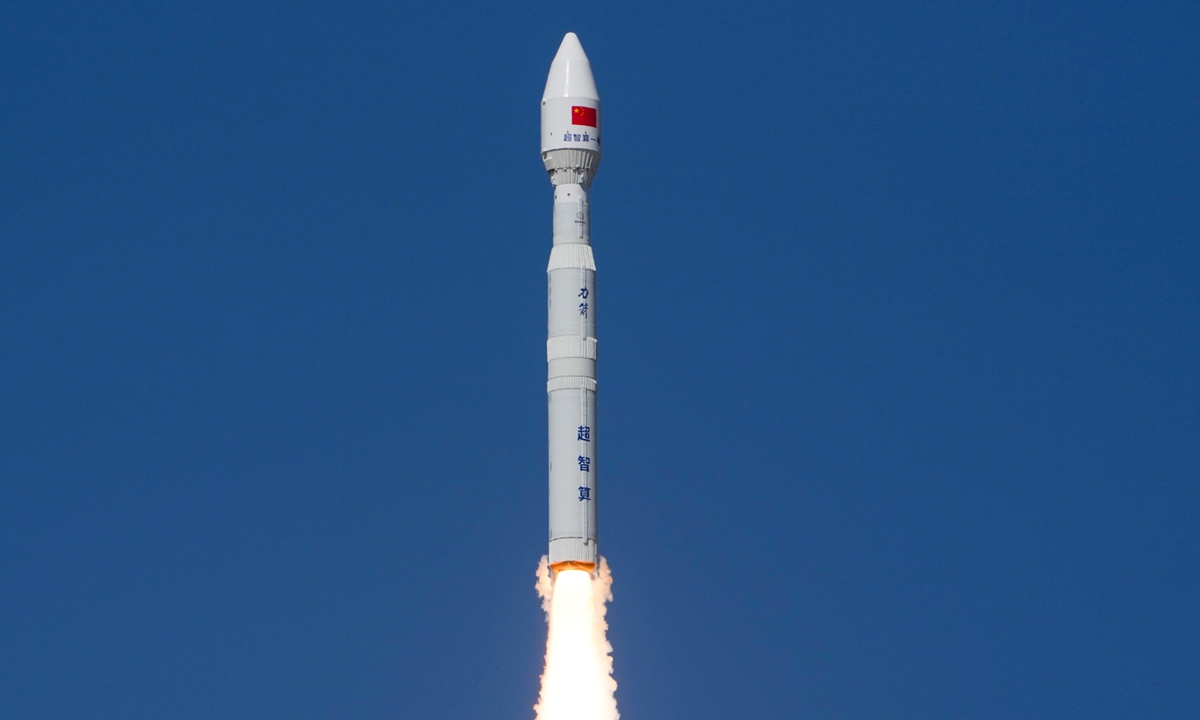
- CAS Space carried Supercomputing-1 and eight other satellites on its Lijian-1 Y18 rocket, also called Kinetica-1 Y18, from the Jiuquan Satellite Launch Center, according to Yicai.
- Yicai reported that CAS Space says onboard processing can cut cross-region response times from hours to minutes, and Beijing's government account gives the same target.
- The public accounts list intended uses including smart-city monitoring, agricultural surveys, ecological monitoring, natural-resource management and disaster response.
- China's municipal government described the mission as the country's first integrated commercial rocket-and-satellite space-computing project.
Compiled by The EngineerSomething wrong?How this is made
Why it matters
- decision Nobody can qualify this from the announcement: with no processor model, compute capacity, customer or pricing disclosed, an evaluation has to start with detection accuracy measured on the buyer's own targets.
- capability What becomes purchasable here is time-to-alert on a detected event, so the satellite competes with ground-station scheduling and bandwidth allocation.
- constraint Orbital edge filtering does nothing for the siting and power pressure that stopped $68 billion of terrestrial data centre projects in Q2 2026, so that fight stays on the ground.
Onboard, the order of operations decides the economics. The camera captures a scene, the AI computer runs detection on it, and only the selected information goes to the ground [4]. Ground processing cannot begin until imagery arrives, so what is saved is bits transmitted and the queue behind them. Filtering pays where bandwidth is scarce and an early alert is worth more than a full archive of raw images [24].
Anything the model does not select does not come down [4]. A false negative is therefore invisible from the ground. Detection accuracy is what a buyer would have to qualify, and none of the public accounts give a processor model, compute capacity, a customer, pricing or measured results from an operating service [7].
The hours-to-minutes target came from CAS Space, which is also the company that launched the satellite [5][3], and no operating results have been published behind it [6]. Whether the figure transfers to a buyer's workload depends on three conditions holding at once: the satellite is overhead when the event happens, the onboard model recognises the event, and the output reaches someone able to act on it [8].
Beijing's municipal account also says the spacecraft uses laser communications to connect to a high-speed space computing network [9].
Tom's Hardware, which reported the mission on September 23rd [15], set it beside SpaceX's AI1, a proposed orbital data centre rated at 150 kW of peak compute power. AI1 is part of a stated goal of 1 GW a year of space AI compute by 2027 requiring 6,000 satellites [16]. Spread 1 GW across 6,000 units and each averages about 167 kW, roughly 11 percent above the AI1 rating. The fleet count is consistent with AI1-class hardware and not with something larger [20]. SpaceX has begun constructing an 11-million-square-foot facility, Gigasat, to build them [16]. Tom's Hardware called a single edge-AI satellite "a far cry from an entire orbital data center" [19].
The orbital node sits on top of a ground-first plan. Liu Mingtao told Shanghai Securities News in June that S-AIDC would use outside partners for launch, satellite manufacturing and some components. It would keep control of its compute-scheduling system, the architecture connecting ground and orbit, and the operating layer [10]. He described the launch as a step toward making orbital computing an engineered service [11]. In May the company announced a Series A described as worth several hundred million yuan, co-led by Yuanhe Puhua and Fanyu Capital. Proceeds go to compute technology, scheduling systems and its national network [12]. Its website describes a planned network exceeding 50,000 petaflops alongside compute centres in several Chinese cities. Those are company plans; the installed capacity has not been independently verified [13].
The case for moving compute off the planet is a terrestrial one. Tom's Hardware cites residents blocking $68 billion worth of new data centre projects in Q2 2026 [17]. An image filter in orbit takes image processing off the ground station. It takes none of that load off the grid. In early June the Chinese government approved the Space Computing Industry Innovation Center, meant to bring rocket and satellite manufacturers, semiconductor fabs and AI companies together on a space computing network [18].
What to watch
- Published detection results or a named paying customer for Supercomputing-1 would turn an intent claim into a service.
- Throughput figures for the laser interlink: the faster the downlink, the less the onboard filter saves.
- Whether the Gigasat facility and the 6,000-satellite plan produce flight hardware on the 2027 schedule SpaceX stated.