Invest1 publisher3 min readPublished
ServiceNow counts twelve companies running AI agents for every one that redesigned its workflows
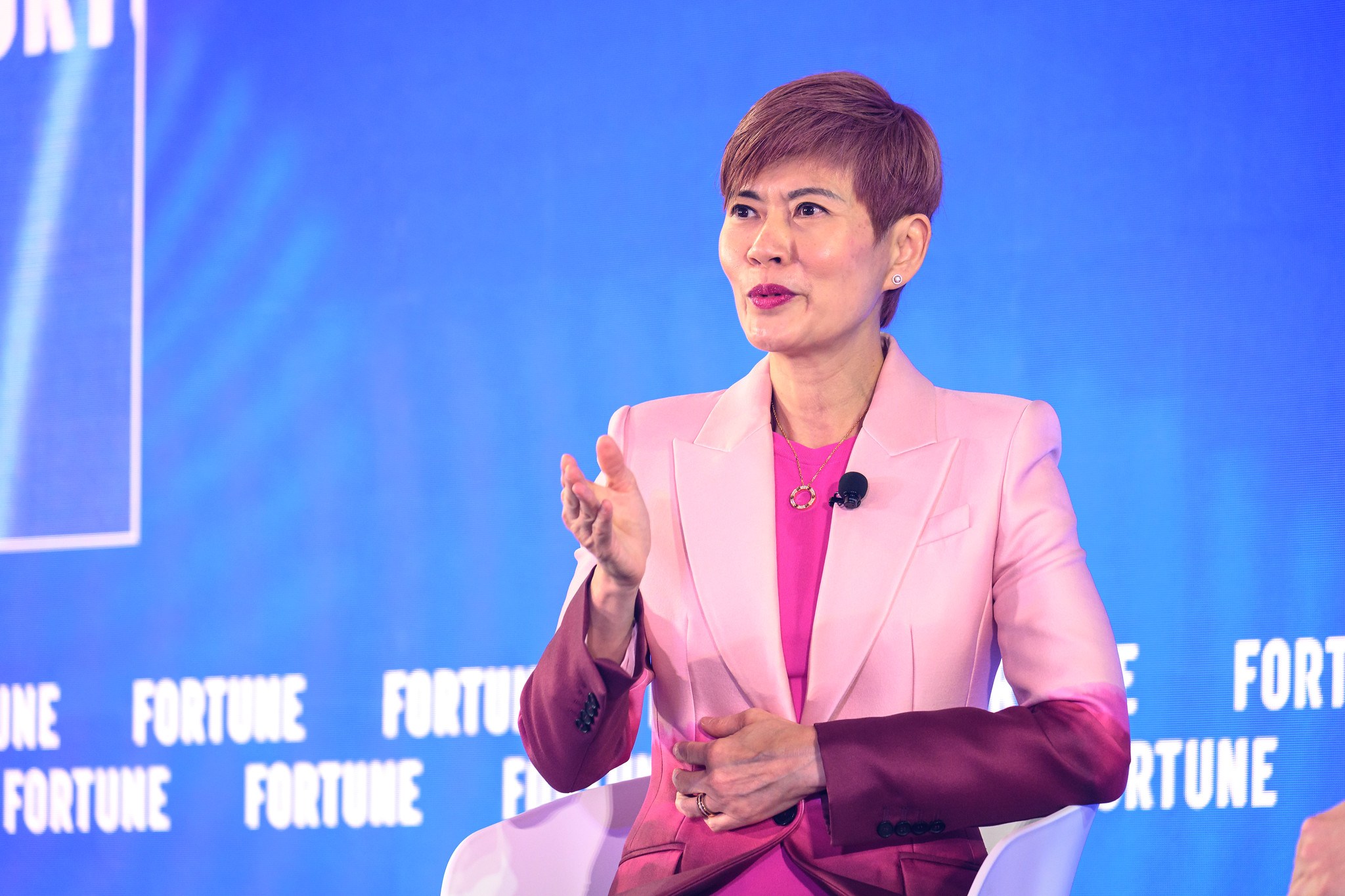
At a Fortune forum in Macau, ServiceNow's Asia managing director put agent adoption at about 60% of companies and workflow redesign at 5%. Both figures come from ServiceNow's own research.
The Investor · Invest desk
What happened
- ServiceNow's Asia managing director Melissa Ries said the company's research finds about 60% of companies have AI agents while only 5% have redesigned their workflows.
- The figures were given at the inaugural Fortune Leaders Forum in Macau, which brought together Fortune Global 500 executives, founders, experts and policymakers.
- Yuxiang Zhou of Black Lake Technologies, which builds manufacturing agents, said his agents train his sales teams and beat human managers in blind testing.
Compiled by The InvestorSomething wrong?How this is made
Why it matters
- cost Closing the gap is paid in systems retirement and reorganisation of the sort Syngenta describes as moving from monolithic systems to modular pieces, and that lands in operating costs long before it lands in revenue.
- decision A board treating the 5% as a warning about itself is accepting a supplier's count of its market as a diagnosis of its own process debt.
- contradiction The forum's strongest growth figure is credited to data, AI and human decision-making together, so it cannot be used to price what redesign contributed.
- capability If judgment is the scarce input once analysis is cheap, hiring and promotion specs can be rewritten this year, which is faster than any workflow rebuild.
Divide the adoption figure by the redesign figure and you get twelve to one [1]. Stated as a share of adopters, and assuming every redesigner also runs agents, 55 in every 60, about 92%, bought the software and left the process where it was [2].
Both figures are ServiceNow's own, quoted by Melissa Ries, its Asia managing director [1][2]. Fortune's account, filed from Macau by Asia editorial director Lee Williamson, does not include the sample size or dates of the survey [3][4][21].
The split follows the cost of each move. An agent is a procurement decision with a licence at the end of it. A redesigned workflow means retiring systems, moving people between functions, and carrying the disruption in this year's operating costs.
Malina Ngai, group CEO of the 185-year-old health and beauty retailer AS Watson, put it in the plainest terms of the day: the biggest risk, she said, is using AI to improve today's processes and ending up with a better version of yesterday [5][6]. She said that path "loses sight of how we can use AI... to help us to reinvent how we serve our customers" [7]. AS Watson's measure of success is a "customer love score", which the company sees improving as AI tools give staff more time to spend serving customers [8]. HP's Asia head Michael Boyle made the same point about systems that combine human talent with machine automation instead of "re-engineering the same thing with AI" [15].
There is no currency in a love score, and there is a second reading of the 92%. Bolting an agent onto an existing process is cheap and reversible; a redesign commits capital years before anyone knows which agent capabilities hold. On that reading the 55 are waiting, and the licence fee is small enough to be worth paying while the capabilities settle.
The largest operating number in the room came from Walmart China, which grew last quarter at roughly eight times the rate of Walmart U.S. [3]. The two markets are at different stages of maturity, so that gap cannot be read as a result of workflow redesign. Walmart China's president and CEO, Christina Zhu, said "with AI, humans actually become more important, not less so" [10], and "My boss is the Chinese consumer" [13]. On what the machine cannot supply: "The data only tells you what customers have chosen... it doesn't tell you the unmet needs," she said [14].
I'd expect the 5% to rise slowly, because the work is organisational and the cheap part of the budget is already committed. If a named Global 500 company puts a margin number next to a rebuilt workflow, I'm wrong.
What to watch
- The Fortune Southeast Asia 500 Summit in Ho Chi Minh City on Nov. 3, where leaders of ASEAN's largest companies face the same questions.
- Whether Black Lake Technologies publishes the blind-test results behind Zhou's claim that agents out-train his human sales managers.
- Whether a later wave of the ServiceNow research moves redesign into the mid-teens while agent adoption holds near 60%.