Product1 publisher3 min readPublished
Charter-Cox clears California, and half the footprint's broadband buyers lose a second vendor
The CPUC approved the $34.5bn merger on August 13, clearing the last major hurdle to a 37-million-subscriber operator. The enforceable conditions attached to it are almost entirely residential.
The Product Desk · Product desk
Drafted by a language model from the sources cited here and checked against its claim ledger before publication. How we use AISend a correction
What happened
- The California Public Utilities Commission approved the proposed $34.5 billion merger between Charter Communications and Cox Communications, confirmed on August 13.
- The CPUC approval was described as the last major hurdle required ahead of the merger being pushed through.
- As part of the deal, Charter will acquire Cox's residential cable, commercial fiber, and managed IT and cloud businesses.
- Charter has 31 million customers and Cox has six million.
- The combined subscriber base is approximately 37 million.
Compiled by The Product DeskSomething wrong?How this is made
Why it matters
The California Public Utilities Commission approved the $34.5bn merger of Charter Communications and Cox Communications on August 13, which datacenterdynamics describes as the last major hurdle before the deal is pushed through [1][2]. Because Charter is acquiring Cox's commercial fiber and managed IT and cloud businesses alongside the residential cable operation, the practical result inside the combined footprint is that two vendors on a last-mile or managed-service bid sheet become one counterparty [3].
The scale is straightforward. Charter's 31 million customers plus Cox's six million produce a combined base of roughly 37 million, which the CPUC filing coverage says will make it the largest cable operator in the US and the largest internet and video provider by subscriber base [4][5][6]. The two announced a definitive agreement in May of last year [7]. The FCC signed off in March on conditions including onshoring jobs to the US, increased rural infrastructure investment, and anti-discrimination protections [8].
California's conditions are worth reading for what they cover and what they do not. The CPUC said its approval is subject to two settlement agreements and a set of enforceable conditions designed to protect consumers, expand broadband access, and advance digital equity [9]. The specifics named include multiple California LifeLine service tiers and standalone broadband plans available for five years, $30m for digital inclusion work such as digital literacy training and device access, and $275m to upgrade the company's California network [10][11][12]. That is $305m in named California commitments, or about 0.9 percent of the headline transaction value [13][14]. Commissioner Matthew Baker said the decision "secures significant commitments that will benefit Californians" and that public interest benefits are "backed by enforceable conditions" [15]. Commissioner Christine Harada said Southern California customers "deserve to see those promises translate into results" [16].
None of the highlighted conditions address commercial or enterprise pricing. The businesses moving to Charter's control include Cox's advertising and enterprise units and its Segra, UPN and RapidScale operations, which is where fiber transport and managed cloud contracts sit [17]. Enterprise buyers get the consolidation without the offsetting commitments that residential customers got.
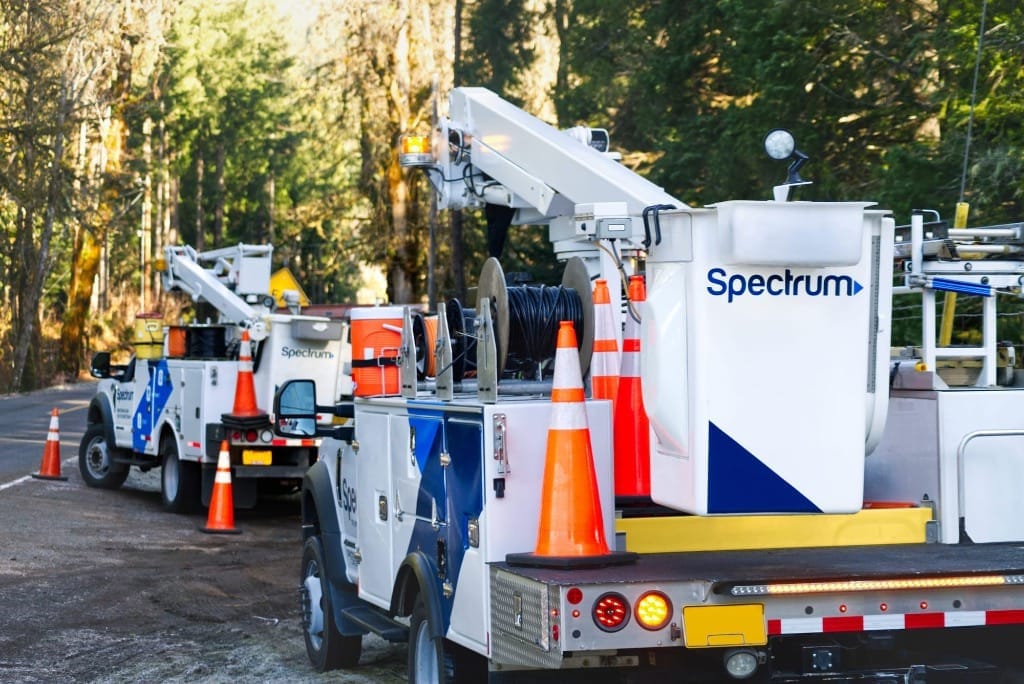
The corporate housekeeping is settled. The combined company will use the Cox Communications name while the consumer brand stays Spectrum, headquarters remain in Stamford, Connecticut alongside Cox's Atlanta campus, and Cox Enterprises will hold about 23 percent of fully diluted shares based on Charter's share count as of March 31, 2025 [18][19][20]. Charter and Cox expect the merger could close before the end of the month [21].
Three things to track. First, where the $275m California network upgrade actually lands, since that money is the only capital commitment in the California package and nothing in the announced conditions ties it to commercial capacity [12]. Second, renewal terms on Cox commercial fiber and RapidScale contracts as they come up under a single owner [17]. Third, whether the CPUC's enforcement mechanism produces published compliance reporting, because the commission's own framing rests on the conditions being enforceable rather than aspirational [9][15]. For operators with circuits from both carriers in the same metro, the diversity assumption in the resilience plan is now a paperwork exercise rather than a fact [3].