Product1 publisher2 min readPublished
Navy's $562m MQ-25 award brings 14 of a planned 76 tankers under contract
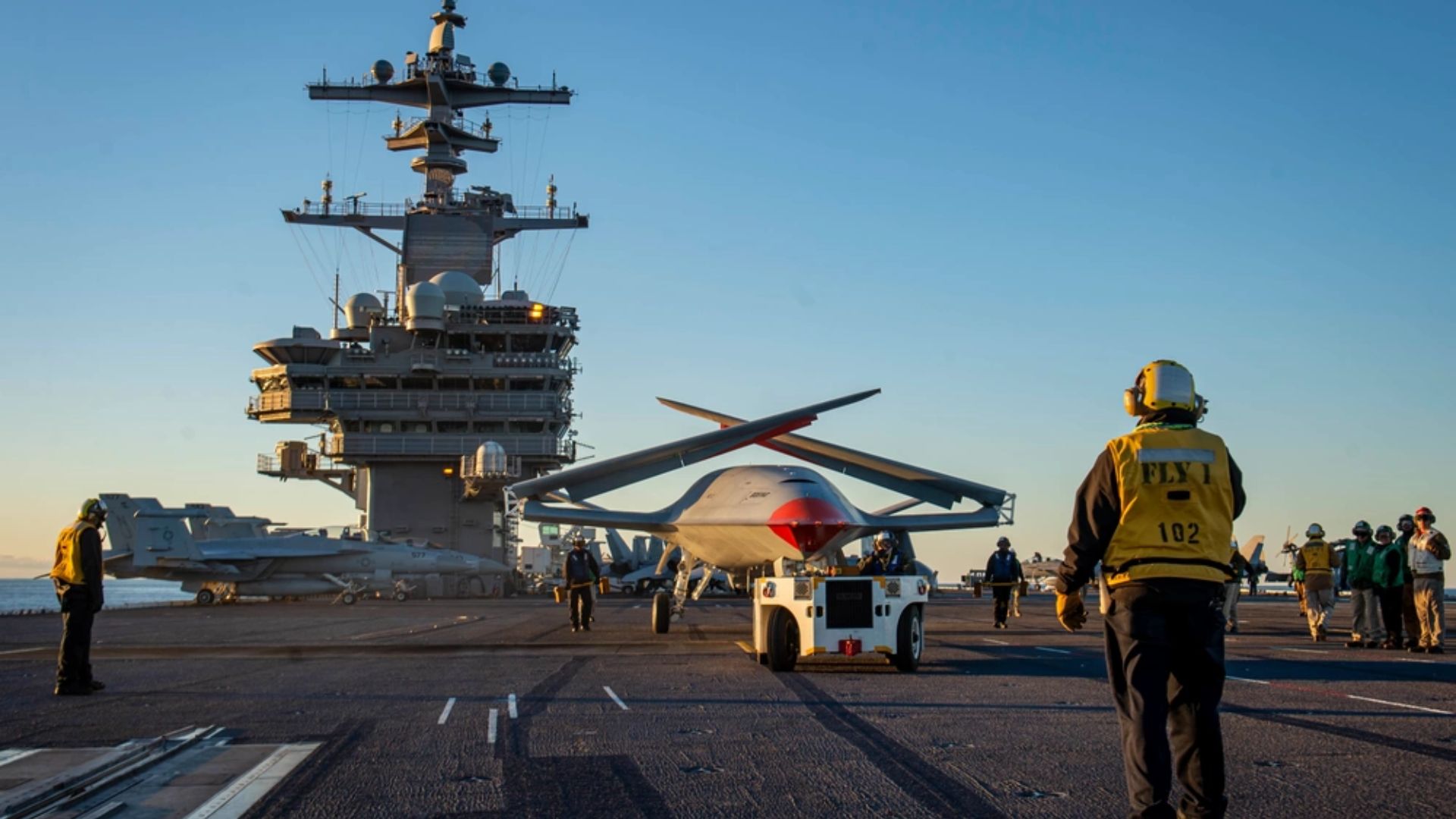
Boeing gets three Lot 1 aircraft plus long-lead parts for three more, with first deliveries due in 2029. That is also the year the Navy now expects the unmanned tanker to reach initial operational capability, four years late.
The Product Desk · Product desk
What happened
- The fixed-price incentive award covers three Lot 1 aircraft and long-lead components for three Lot 2 airframes, with the first Lot 1 deliveries expected in 2029.
- Boeing says the award takes the number of Stingrays under contract to 14, against a program of record of 76 operational, development and test airframes.
- The Pentagon's April 2026 Selected Acquisition Report cited technical risks and a Boeing labor strike among the factors behind a schedule that now puts initial operational capability in 2029, four years late.
- Navy Times reported that USS Theodore Roosevelt became the first carrier fitted with an Unmanned Air Warfare Center supporting MQ-25 operations in March.
Compiled by The Product DeskSomething wrong?How this is made
Why it matters
- constraint With 62 airframes still unbought, the 2029 date covers three aircraft, and the fleet timeline depends on appropriations that have not been made.
- capability Every tanking sortie an MQ-25 flies is airframe life a Super Hornet keeps, and that saving is the return the Navy has promised the air wing for the program.
- contradiction The same record puts first deliveries and initial capability in 2029, so any further slip on Boeing's line moves the operational date with it.
- precedent Having cast this aircraft as the pathfinder for autonomous aviation at sea, the Navy has made its deck record the reference point for whatever unmanned type it proposes next.
Tanking off a carrier deck is currently done in part by F/A-18E/F Super Hornets, which burn their own airframe hours passing fuel to other fighters [4]. The Navy's argument for the MQ-25A is that giving the job to an unmanned aircraft keeps more Super Hornets available for strike work and takes some flying hours off the fighter fleet [5]. The Government Accountability Office has reported the requirement as at least 14,000 pounds of fuel transferred at 500 nautical miles [6].
Divide the award by the three Lot 1 aircraft and you get about $187 million each [15]. Spread it across all six airframes the contract touches and it is about $94 million each [16]. Neither figure is a unit price, because the Lot 2 money buys long-lead components and not finished aircraft [2].
The quantity under contract is a fraction of the plan. Fourteen under contract against 76 in the program of record leaves 62 aircraft, roughly 82 percent of the total, to be bought in lots that have not been signed [14].
Then the dates. Lot 1 deliveries begin in 2029 [3], and initial operational capability is now expected in 2029 as well, four years later than the program's original target [11]. That original target was 2025 [17]. So the first production airframes arrive in the same year the Navy intends to declare the capability, with no slack between the two [18].
What has been demonstrated so far is one flight. On April 25 the aircraft taxied, took off, flew and landed autonomously while operating with the Navy's Unmanned Carrier Aviation Mission Control System [10], which was enough for the Navy to grant Milestone C in May and clear the program into low-rate production [9]. The production decision moved the dates on the technical risks identified in the Pentagon's most recent acquisition report without closing them [11].
The share of the program of record actually under contract is 14 of 76 [8][7]. The gap between first delivery and declared capability is zero years [18]. The Navy describes the MQ-25 as the first operational carrier-based unmanned aircraft and a pathfinder for putting autonomous aircraft into future carrier air wings [13]. At 18 percent of the aircraft bought and no margin between first arrival and readiness, the program's risk now sits on Boeing's production line instead of in development [14].
What to watch
- Whether the Navy funds the three Lot 2 airframes beyond long-lead parts, and at what price each.
- The next Selected Acquisition Report, and whether the technical risks named in April 2026 are closed or carried forward again.
- Which carriers after Theodore Roosevelt are fitted with an Unmanned Air Warfare Center.