Invest1 publisher3 min readPublished
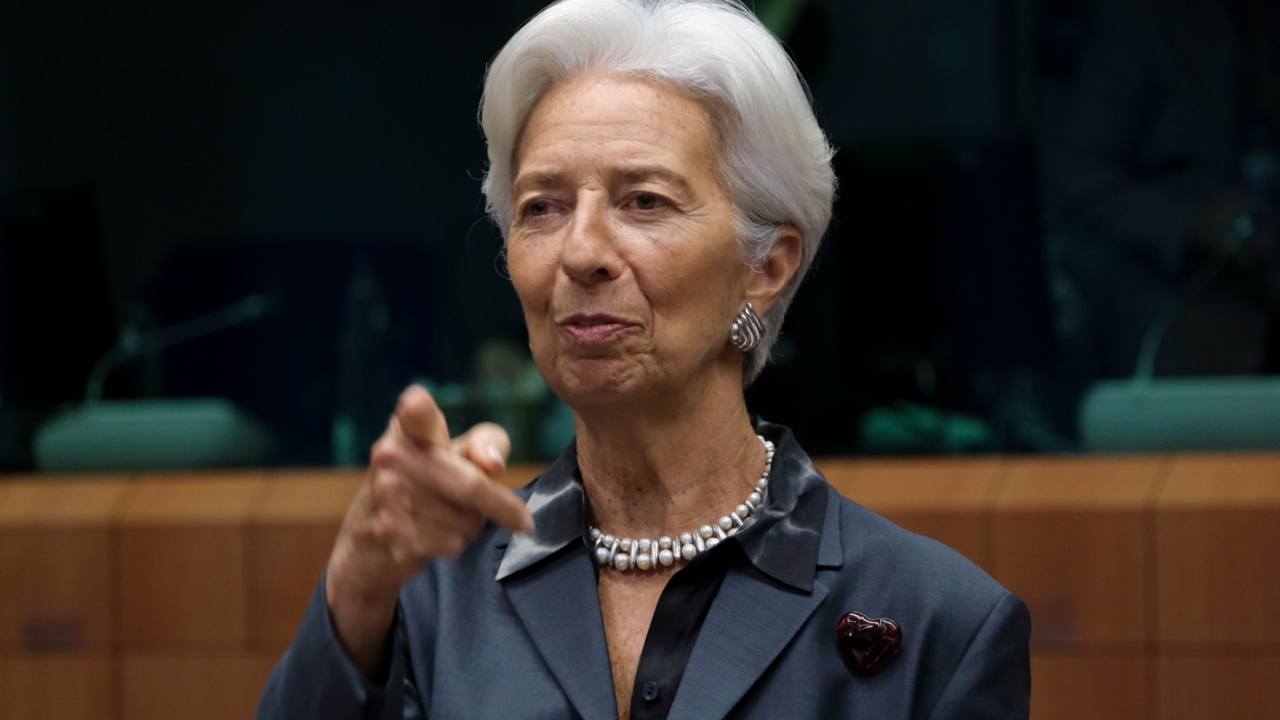
WSJ puts Lagarde inside a Greek licensing call the ECB has no power to make
Binance spent about 18 months on its Greek MiCA file and withdrew it on June 24, a week before the deadline, after Greek officials had already told ESMA the regulator intended to approve.
The Investor · Invest desk
What happened
- The Wall Street Journal reported on Sept. 18 that ECB President Christine Lagarde personally pressed Greek Prime Minister Kyriakos Mitsotakis not to approve Binance's MiCA application during June licensing talks.
- A vice chair of Greece's Hellenic Capital Market Commission told Binance that Lagarde had made the request of Mitsotakis, according to the newspaper.
- Greek officials had told the European Securities and Markets Authority in early June that the Hellenic Capital Market Commission intended to approve Binance's application.
- Binance withdrew the application on June 24 before any formal rejection, said it would pursue authorization in another EU member state, and did not identify which one.
Compiled by The InvestorSomething wrong?How this is made
Why it matters
- contradiction Reuters' account of a regulator preparing to reject and Binance's account of a completed, compliant review cannot both describe the same file, and which one holds decides whether MiCA's fitness test worked or was bypassed.
- cost Binance's European customers are the ones affected: the exchange is trading in the bloc without a passport and has warned them that available services may change by country and account status.
- precedent The unresolved negotiation over moving CASP supervision to ESMA now has a live example to argue from, in which a national approval stalled outside the national process.
A MiCA authorization from any single member state lets a crypto-asset service provider offer covered services across the EU [5], so the file sitting with Greece's Hellenic Capital Market Commission was worth the whole bloc. The ECB does not issue those authorizations [4]. Licensing still rests with national regulators, and the reform that would move supervision to ESMA is still being negotiated [6].
By the Journal's account Binance was close enough to done that it had drafted a release calling the expected approval a "Major Milestone", with co-CEO Richard Teng due in Athens for a meeting and a photograph with Mitsotakis [7]. Greek officials told ESMA in early June that the HCMC intended to approve [8]. The withdrawal came on June 24, seven days before the July 1 deadline [9][30].
Reuters reported on June 16 that the Greek regulator was preparing to reject the application, citing two people familiar with the process [13]. Binance said that same week that its understanding was that the HCMC had finished its review and considered the file compliant with MiCA, and that it had been reviewed at ESMA level [14]. The regulator had given "no formal indication" otherwise, it said [15]. The HCMC declined to discuss the case, citing confidentiality rules [16].
The stablecoin concern the Journal attributes to Lagarde [22] matches what she said in public on May 8. She put stablecoin supply above $300 billion, overwhelmingly dollar-denominated, with Tether and Circle controlling nearly 90% of the market [23]. That is roughly $270 billion of it with two issuers of dollar tokens [31]. She said Europe faces a risk of "digital dollarisation and a loss of monetary sovereignty" if foreign-currency stablecoins become deeply embedded in its financial system [24]. She did not call for a ban, arguing instead for public settlement infrastructure anchored in central bank money with regulated private tokenized money operating inside it [25]. The ECB's own instrument runs on a longer clock: a pilot in 2027, and technical readiness for a possible first issuance in 2029 if lawmakers adopt the legislation [26].
Binance says it worked with regulators for around 18 months and submitted what it considered a complete application [17]. After the July 1 deadline it holds no MiCA authorization [11] and is absent from Europe's authorized CASP register [12]. It has yet to name the member state where it will file next [10]. It told users their assets would remain safe and accessible, while warning that services available to some customers could change depending on country and account status [29]. "We will not comment on speculation," a Binance spokesperson said of the report [27], adding that "In Europe, Binance remains committed to operating on a long-term, compliant basis under the EU's Markets in Crypto-Assets Regulation" [28].
In my view the useful lesson for anyone choosing where to file is about where the political cost of approving a large applicant lands: on one national regulator and, by the Journal's account, one prime minister who took a call from Frankfurt [1][2]. A small member state has less capacity to absorb that cost than a large one. The counter-reading is that the fitness test simply worked, late and out of sight. Binance pleaded guilty in 2023 to Bank Secrecy Act violations, failure to register as a money transmitting business and sanctions violations, settling for more than $4 billion, or roughly $4.3 billion by one account [19][20]. Reuters reported that the exchange's legal history and corporate structure were among the issues European regulators examined in Greece [21].
The political-veto reading fails if Binance is authorized in another member state on substantially the same file, which would make Greece one regulator's judgement. It also fails if the HCMC or ESMA ever sets out a fitness-based reason for the rejection that was never formally issued [9]. Neither Lagarde, the ECB nor the Greek regulator has confirmed the account on the record [3].
What to watch
- Whether Lagarde, the ECB or the HCMC answers the Journal's account on the record.
- Where the negotiation to move CASP supervision from national regulators to ESMA lands.
- Whether EU lawmakers adopt the digital euro legislation the 2027 pilot and 2029 issuance timetable depends on.